Temple Shrines
Bali, Indonesia
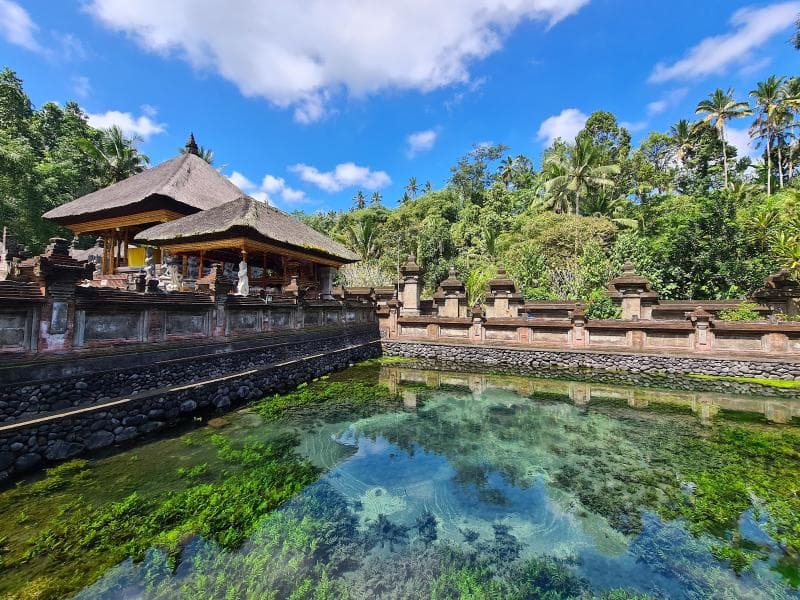
Explore the sacred Temple Shrines within Tirta Empul Temple in Bali, Indonesia – a 10th-century site of purification and devotion.
Overview
Deep within the heart of Bali, Indonesia, lies the ancient Tirta Empul Temple, a revered Hindu Balinese water temple. Among its sacred grounds, the 'Temple Shrines' stand as profound testaments to Balinese spiritual devotion. These shrines form the inner sanctum, known as the Jeroan, where the spiritual journey culminates after visitors and devotees partake in the sacred purification rituals of the holy springs. The entire complex, including these important shrines, dates back to 926 AD, making it over a millennium old and a living monument to Bali's rich cultural and religious heritage.
History & Cultural Background
The origins of Tirta Empul Temple are deeply rooted in Balinese history and mythology, founded during the Warmadewa dynasty in the 10th century. The temple's name, meaning 'holy spring,' directly refers to the natural spring that continuously feeds its purification pools. The creation of this sacred spring is immortalized in a compelling legend involving the revered Hindu god Indra and the malevolent King Mayadenawa. According to the tale, Mayadenawa poisoned the water sources to defeat Indra's troops. In response, Indra struck the earth with his staff, causing the holy spring to emerge, providing healing waters that revived his army. This divine intervention established Tirta Empul as a site of profound spiritual significance, symbolizing the triumph of good over evil and a place of healing and balance. The shrines within the temple complex serve as enduring dedications to these powerful deities and the foundational myths that shape Balinese Hinduism, anchoring the human world to invisible, powerful forces.
What Makes It Special
The Temple Shrines, nestled within the innermost courtyard, or Jeroan, are what truly elevate Tirta Empul beyond a mere bathing site. This secluded space is considered the holiest part of the temple, reserved for deep prayer and solemn religious ceremonies. Unlike the more active purification pools, the Jeroan offers a tranquil atmosphere, inviting introspection and reverence. Here, visitors will discover a collection of beautifully crafted Hindu shrines dedicated to several significant deities, including Vishnu—the temple's primary patron—as well as Shiva, Brahma, Indra, and even Mount Batur, a sacred volcano in Bali. Each shrine is a masterpiece of traditional Balinese architecture, adorned with intricate stone carvings and ornamentation that reflect centuries of artistic mastery and devotion. These structures are not merely decorative; they are focal points for offerings and prayers, representing the ultimate spiritual destination for devotees who have undergone the purification rituals, seeking blessings and closer connection with the divine.
Stories, Fun Facts & Local Details
The mythology surrounding Tirta Empul's shrines is rich with narrative. Beyond the epic battle of Indra and Mayadenawa, the very act of constructing these shrines reflects the Balinese Hindu belief in connecting with the divine through sacred spaces. The continuous flow of water from the natural spring, believed to have healing properties, is intrinsically linked to the spiritual power emanating from these shrines, reinforcing the idea of holistic purification—not just of the body, but of the mind and spirit. The existence of shrines dedicated to multiple Hindu gods within Tirta Empul underscores the comprehensive nature of Balinese Hinduism, which integrates various aspects of the divine. The temple's role in the 'subak' system—Bali's traditional cooperative irrigation system—also highlights how spiritual practices, symbolized by the water and the shrines, are deeply integrated into the agricultural and daily life of the Balinese people. This intertwining of faith, nature, and community makes a visit to the shrines a profound cultural immersion.
Visitor Perspective
For visitors, approaching the Temple Shrines in the Jeroan is an experience of quiet awe and respect. After observing or participating in the vibrant purification ceremony in the Jaba Tengah, the inner sanctum offers a stark contrast of serenity and deep reverence. While direct participation in prayers at the shrines is typically reserved for Balinese Hindus, visitors are welcome to respectfully observe the devotion and intricate rituals performed by local worshippers. It is customary to dress modestly, often requiring a sarong and sash, which are typically provided at the temple entrance, as a sign of respect for the sacredness of the area. The quiet atmosphere allows for reflection on the spiritual significance of the place and the enduring faith it represents. Exploring these shrines offers a unique opportunity to witness the living traditions of Balinese Hinduism and gain a deeper appreciation for the island's spiritual heart.
Coordinates: 115.315, -8.4144
View on Google Maps💬 How Travelers Describe This Place
Based on community votes
Interesting
791Photogenic
514Unique
457Beautiful
252Must See
19
Traveler Stories
Discover memorable experiences shared by travelers who have visited this place.
No traveler stories yet.
Be the first traveler to share what made this place memorable.

Tour
By
Spot
Discover amazing places around the world. Your journey starts here.
Explore
© 2026 TourBySpot. All rights reserved.