Temple of Zeus Solymeus
Antalya, Turkey
Explore the Temple of Zeus Solymeus, the sacred heart of the ancient Pisidian city of Termessos in Antalya, Turkey, dedicated to its chief mountain god.
Overview
Nestled high in the Taurus Mountains, approximately 30 kilometers northwest of Antalya, Turkey, lies the ancient Pisidian city of Termessos. Often referred to as 'The Eagle's Nest' due to its formidable, elevated position, Termessos holds a special place in history as one of the few cities Alexander the Great chose not to conquer. Within the extensive ruins of this resilient mountain fortress stands the site of the Temple of Zeus Solymeus, a significant religious structure dedicated to the chief deity of the Termessians. While today only fragments remain, the temple's presence speaks volumes about the spiritual heart of this extraordinary city, inviting curious travelers to delve into a past where gods and mortals intertwined amidst dramatic natural beauty.
History & Cultural Background
The origins of Termessos are deeply rooted in the history of the Solymi people, an ancient Anatolian tribe mentioned even by Homer in the Iliad. It is from this indigenous people that the city's patron deity, Zeus Solymeus, derives his unique identity. The Solymi revered an Anatolian god named Solymeus, who was later syncretized with the Greek king of the gods, Zeus, creating the powerful hybrid deity known as Zeus Solymeus. This amalgamation reflects the blend of local traditions with Hellenistic influences that characterized the region. Zeus Solymeus became the principal god of Termessos, embodying the spirit and strength of the mountain dwellers. His importance is evident in the city's coinage, which frequently depicted his image, often without the portraits of emperors, underscoring Termessos's fiercely independent status, even during its alliance with the Roman Republic, which granted it autonomy in 71 BC.
What Makes It Special
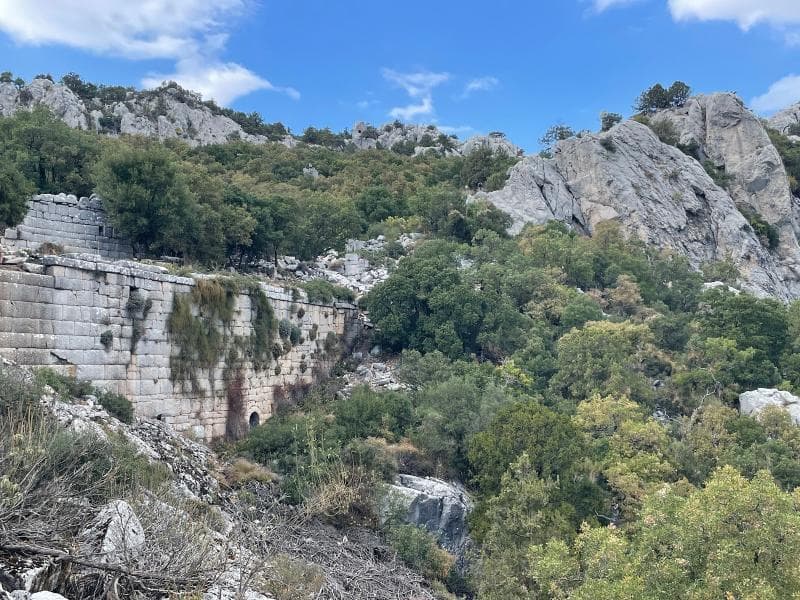
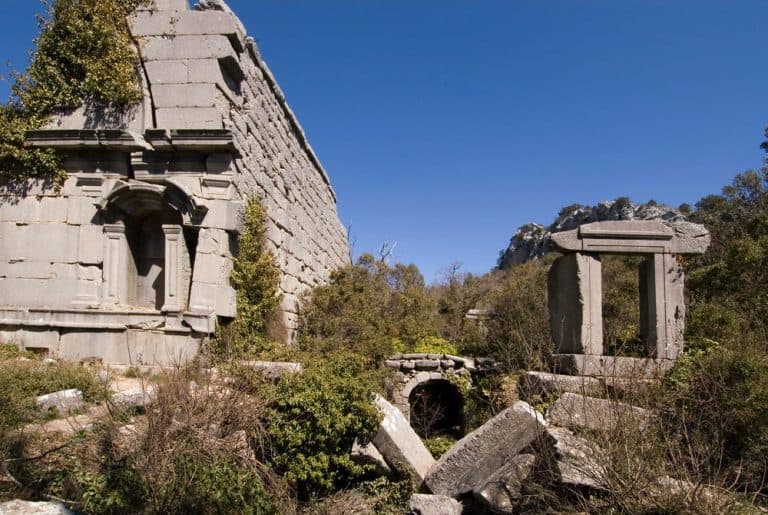
The Temple of Zeus Solymeus is considered by many researchers to have been the primary sanctuary of Termessos, dedicated to its most revered god. Situated directly behind the Odeon, in what would have been a central sacred precinct, the temple's location alone signifies its importance. Although time has taken its toll, leaving only substantial cella walls, some reaching five meters in height, and foundational elements, the imagination can still reconstruct its past grandeur. Architectural remains suggest it featured a raised terrace and Doric column drums. Perhaps the most fascinating surviving details are the reliefs from its frieze, depicting the Gigantomachy – the epic battle between the Olympian gods and the Giants. These striking carvings show Zeus and Apollo valiantly fighting snake-legged giants, drawing stylistic comparisons to the famous reliefs of the Altar of Zeus Soter in Pergamon, though crafted from local limestone rather than marble. This artistic connection speaks to the cultural exchange and shared mythologies of the ancient world, even in such a secluded mountain stronghold.
Stories, Fun Facts & Local Details
The very name 'Solymeus' links the Termessians directly to their mountainous home, as they believed their ancestor, Solymos, a son of Zeus, dwelled atop their sacred peak, much like Zeus on Mount Olympus. This deep connection between the deity, the people, and the land forged a unique cultural identity. A fascinating aspect of Termessos's autonomy, even under Roman influence, was its continued minting of coins featuring Zeus Solymeus, often alongside the word 'Autonomous', rather than Roman emperors. This was a powerful statement of their enduring independence and devotion to their ancestral god. The journey to Termessos itself adds to the mystique; winding roads lead to the national park, followed by a hike through pine forests to reach the city, a testament to its naturally fortified and isolated nature. Finding the remains of such a pivotal temple within this dramatic landscape connects visitors to a profound sense of ancient piety and a civilization that truly lived by its own rules and honored its mountain god.
Visitor Perspective
Visiting the Temple of Zeus Solymeus within Termessos offers a truly evocative experience. As you explore the sprawling, remarkably well-preserved ruins of the city, from its impressive theater overlooking the Pamphylian plain to its intricate streetscapes, you eventually arrive at the sacred area near the Odeon. Here, the remains of the temple stand as a silent testament to the city's spiritual heart. Surrounded by the dense, wild vegetation of Mount Güllük-Termessos National Park, the atmosphere is one of profound tranquility and historical resonance. It is a place where one can easily imagine the ancient rituals and prayers offered to Zeus Solymeus, the guardian of this unconquered city. The sparse remains encourage reflection, inviting you to piece together the grandeur that once was, connecting with the Pisidian people's unwavering devotion to their chief deity amidst their formidable mountain sanctuary.
Coordinates: 30.46385, 36.981911
View on Google Maps💬 How Travelers Describe This Place
Based on community votes
Beautiful
996Unique
726Interesting
717Photogenic
335Must See
193
Traveler Stories
Discover memorable experiences shared by travelers who have visited this place.
No traveler stories yet.
Be the first traveler to share what made this place memorable.

Tour
By
Spot
Discover amazing places around the world. Your journey starts here.
Explore
© 2026 TourBySpot. All rights reserved.