Temple of the Descending God
Cancún, Mexico
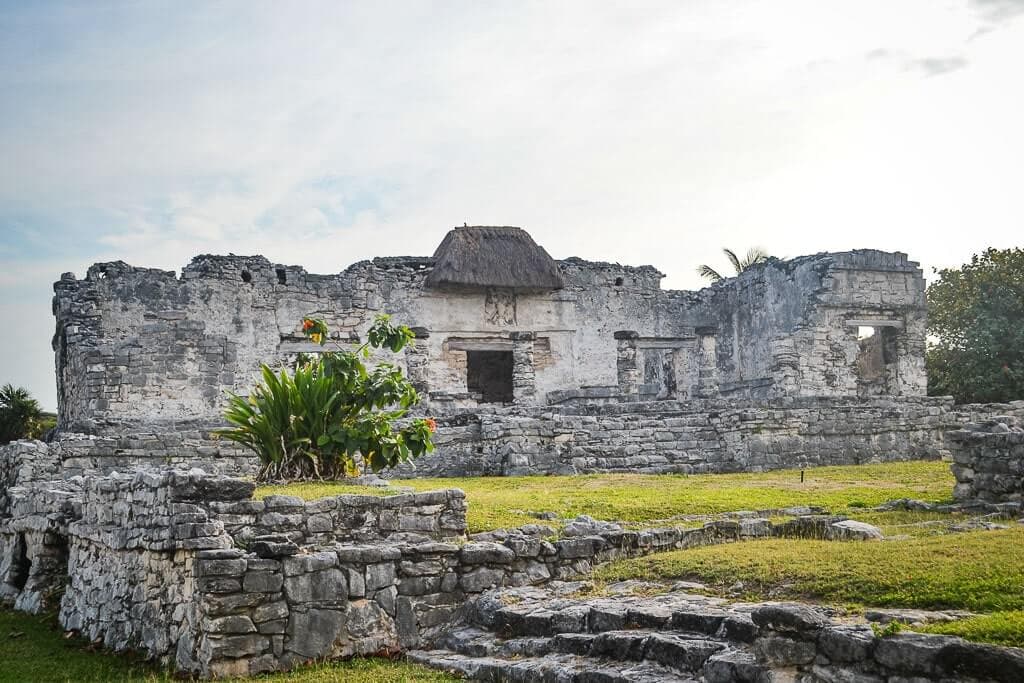
Discover the Temple of the Descending God in Tulum Ruins, Cancún, Mexico. Explore Mayan history, unique architecture, and cultural significance.
Overview
Perched majestically on a 12-meter (39 ft) cliff overlooking the turquoise Caribbean Sea, the Temple of the Descending God is a focal point within the ancient walled city of Tulum, Mexico. This remarkable structure, officially known as 'Templo del Dios Descendente' in Spanish, is a testament to the advanced astronomical and spiritual understanding of the Maya civilization. Tulum, originally called Zama, meaning 'City of Dawn,' flourished as a significant port city during the Late Postclassic period, between the 13th and 15th centuries. [7, 17, 20] The Temple of the Descending God, though not the largest structure, stands out due to the unique carved figure above its entrance, depicting a deity in a headfirst, diving pose, as if descending from the heavens. [3, 4, 5, 11, 14, 16] Its captivating blend of history, mystery, and stunning natural beauty makes it an unforgettable stop for any traveler exploring the Yucatán Peninsula.
History & Cultural Background
The Temple of the Descending God was constructed during the Late Postclassic period, a time when Tulum was a bustling and influential coastal city. [5, 17] The distinct figure of the Descending God, characterized by its lowered head, bent legs, and often winged appearance, is not exclusive to this temple. It appears across several structures within the Tulum archaeological site, including El Castillo and the Temple of the Frescoes, but this particular temple is considered its most sacred expression. [4, 6, 15] Mayan cosmology heavily influenced the architecture and iconography found here. The true identity of this descending deity remains a subject of academic debate. Many scholars associate it with Ah Muzen Cab, the Maya Bee God, symbolizing fertility and the vital importance of stingless bees, which were cultivated for honey—a key trade commodity. [3, 4, 6, 10, 14] Honey was used as a sweetener, antibiotic, and in traditional drinks like balché. [3] Other interpretations suggest the deity represents the setting sun or the planet Venus, a celestial body of immense significance to the Maya. [3, 4, 6, 8, 10, 14, 15] Mayan astronomers observed Venus with great intensity, even associating it with Kukulkan, the Feathered Serpent god. [3] The temple's alignment with the rising sun and Venus at specific times reinforces its deep connection to celestial events and their integration into Maya religious practices. [4, 8]
What Makes It Special
The Temple of the Descending God's most striking feature is the iconic carved figure positioned above its main doorway. This unique depiction of a deity diving headfirst, with arms often hanging down and legs bent upwards, gives the temple its name. [3, 4, 5, 11, 14, 16] This pose is so distinctive that it has become an emblematic symbol of the Costa Maya Oriental region. [6] Another remarkable architectural detail is the deliberate tilt of the temple's walls and door; they are not perfectly vertical, and this was an intentional design choice, not a result of time or decay. [3, 4, 11, 16] This sophisticated engineering likely contributed to its longevity against coastal winds and salt air. [4] Furthermore, the temple's strategic location offers unparalleled views of the Caribbean Sea, embodying the Maya's profound respect for the interplay between earthly realms and the cosmos. [4] Light from the rising sun would illuminate the carved relief, transforming it into a celestial spotlight and highlighting the deep astronomical knowledge embedded in its construction. [4] Inside, the temple once boasted vibrant frescoes, painted in red and blue pigments, suggesting a much more colorful and lively appearance centuries ago. [3, 4, 11, 15, 16]
Stories, Fun Facts & Local Details
The concept of a 'Descending God' was a widespread and significant belief across Mesoamerica, not just in Tulum. [2, 8] The carving above the temple entrance has been described as resembling a child being born, head down, further emphasizing themes of descent and emergence. [8] The identification of the Descending God with Ah Muzen Cab, the Bee God, offers a fascinating glimpse into Maya daily life and economy. Stingless bees were highly valued, and their honey was a crucial resource. [3, 10] Mayan beliefs about Venus are particularly intriguing; the planet, when appearing as the Morning Star (Xux Ek or 'Wasp Star'), was considered a powerful, sometimes vengeful, entity. Ancient Maya sometimes even hid when it first appeared, reflecting their deep reverence and fear of celestial phenomena. [3] Offerings found within the temple, such as shells, coral, and jade beads, highlight the city's connection to both the sea and the sky, underscoring Tulum's role as a maritime trading hub and spiritual observatory. [4] The presence of the Descending God motif in other prominent structures like El Castillo and the Temple of the Frescoes further illustrates its central role in Tulum's religious landscape. [4, 6, 15]
Visitor Perspective
A visit to the Temple of the Descending God offers a chance to connect with Tulum's rich sacred history. You'll find this poignant structure within the Tulum Archaeological Zone, situated to the southwest of the larger El Castillo pyramid. [4] To experience its mystique fully and avoid the largest crowds, planning your visit for early morning or late afternoon is recommended. During these times, the sun is lower, casting golden shadows that enhance the ancient carvings and the natural beauty of the site. [4] Take a moment to observe the intricate relief above the doorway, a testament to Maya artistry that has endured for centuries. [4] Despite its modest size, the temple exudes a magnetic energy, inviting contemplation of the deep spiritual and astronomical connections held by the ancient Maya. [4] As you stand before it, with the Caribbean breeze carrying the scent of salt and limestone, it's easy to imagine this place as a sacred threshold, where messages from the cosmos met the rhythms of the earth and sea. [4] Exploring the Temple of the Descending God provides a unique opportunity to appreciate the profound cultural heritage of this ancient civilization.
Coordinates: -87.4294, 20.213
View on Google Maps💬 How Travelers Describe This Place
Based on community votes
Interesting
886Photogenic
564Beautiful
443Must See
310Unique
233
Traveler Stories
Discover memorable experiences shared by travelers who have visited this place.
No traveler stories yet.
Be the first traveler to share what made this place memorable.

Tour
By
Spot
Discover amazing places around the world. Your journey starts here.
Explore
© 2026 TourBySpot. All rights reserved.