Tallinn City Wall
Tallinn, Estonia
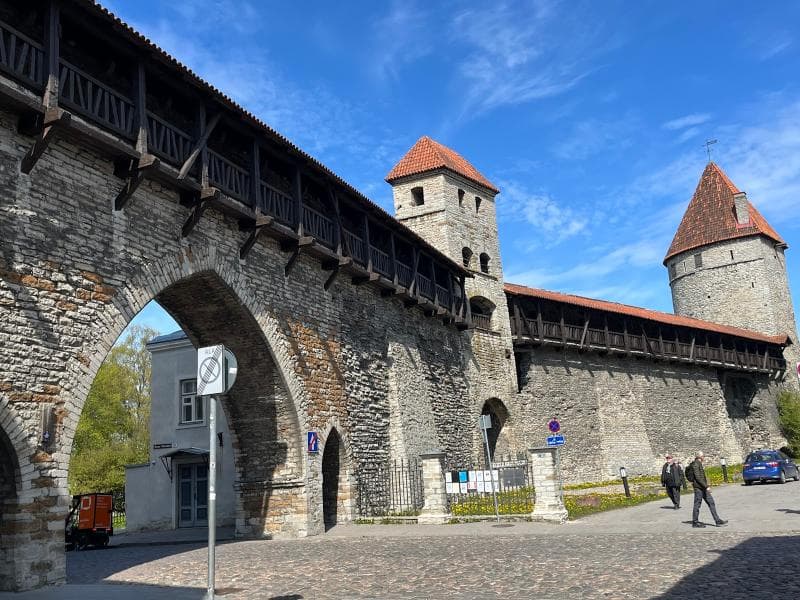
Explore Tallinn City Wall, a remarkably preserved medieval fortification in Tallinn Old Town, Estonia. Discover its history, towers, and panoramic views.
Overview
Stepping into Tallinn Old Town, Estonia, is like wandering onto the pages of a medieval fairytale, and at the heart of this enchantment stands the magnificent Tallinn City Wall. This remarkably preserved defensive structure is not merely a relic of the past but a vibrant part of the city's living history. With nearly two kilometers of its original length still standing and dotted with more than twenty defensive towers, it represents one of Europe's most complete and impressive medieval fortifications. Encircling the Old Town, a UNESCO World Heritage Site since 1997, the City Wall offers a tangible connection to Tallinn's rich Hanseatic past and its enduring resilience.
History & Cultural Background
The story of Tallinn's City Wall began in 1265 when construction of the first fortifications was ordered by Margaret Sambiria, Queen of Denmark. This initial structure, known affectionately as the 'Margaret Wall', was a modest defense, less than five meters high and about 1.5 meters thick. As Tallinn flourished as a vital Hanseatic trading city, the need for stronger protection grew. Throughout the 14th and 15th centuries, the walls were extensively enlarged and strengthened, transforming into a formidable barrier that reached up to sixteen meters in height in some sections. During this period, the city's inhabitants were even required to perform guard duty, donning their armor and standing ready to defend against invaders. The fortifications proved their worth during significant historical conflicts, such as the Livonian War (1558–83), when they successfully withstood attacks from the forces of Ivan the Terrible, cementing Tallinn's reputation as a well-defended stronghold.
What Makes It Special
What truly sets the Tallinn City Wall apart is its extraordinary state of preservation. While many European medieval walls have succumbed to time or modernization, Tallinn's walls have largely remained intact, offering an unparalleled glimpse into medieval urban defense. The sheer number of surviving towers, each with its unique character and history, contributes to its special allure. From the towering Kiek in de Kök, a cannon tower now housing a museum, to the numerous smaller guard towers, each element tells a story of strategic design and steadfast protection. The wall is not just an external boundary but is intricately woven into the very fabric of the Old Town, with sections of medieval stonework often forming the rear walls of buildings or appearing unexpectedly within courtyards, showcasing a seamless integration of ancient and modern life.
Stories, Fun Facts & Local Details
- The 'Margaret Wall': The wall's initial phase, ordered in 1265 by Queen Margaret Sambiria, still carries her name, linking it directly to its royal origins.
- Citizen Defenders: In the 14th century, it was a civic duty for Tallinn's residents to participate in guard duty, underscoring the collective effort required for the city's defense.
- Kiek in de Kök: One of the most famous towers, Kiek in de Kök, translates from Low German as 'peek into the kitchen,' referring to the soldiers' ability to peer into the kitchens of nearby houses from its height. Today, it's a popular museum.
- Architectural Evolution: The wall's varying thickness and height reflect centuries of constant adaptation and improvement in response to evolving siege warfare technologies.
- Red-Tiled Roofs: From the wall's elevated walkways, visitors are treated to picturesque views of the Old Town's iconic red-tiled roofs, a visual spectacle that transports one back in time.
Visitor Perspective
Exploring the Tallinn City Wall is a captivating experience for any curious traveler. While the entire perimeter can be admired at street level, several sections offer opportunities to walk along the battlements and climb inside the towers. A popular accessible section is the tower walk on Laboratooriumi Street, where three connected towers – Nunna, Plates (sometimes referred to as Sauna Tower), and Golden Foot (Kuldjala) – allow visitors to traverse the wall and enjoy panoramic views. Another accessible point is the Hellemann Tower, where a section of the wall connects it to Munkadetagune Tower, often housing an art gallery and offering steep stairs to viewing platforms. The Kiek in de Kök Fortifications Museum is a must-visit for deeper insights into Tallinn's military history and includes access to fascinating bastion passages. For breathtaking views of the wall and the Old Town skyline, the Patkuli viewing platform on Toompea Hill is highly recommended, providing an ideal vantage point for photographers and history enthusiasts alike. Visiting the City Wall offers not just historical understanding, but also stunning photographic opportunities and a unique appreciation for Tallinn's enduring medieval charm.
Coordinates: 24.745278, 59.437222
View on Google Maps💬 How Travelers Describe This Place
Based on community votes
Unique
685Photogenic
472Beautiful
446Interesting
399Must See
33
Traveler Stories
Discover memorable experiences shared by travelers who have visited this place.
No traveler stories yet.
Be the first traveler to share what made this place memorable.

Tour
By
Spot
Discover amazing places around the world. Your journey starts here.
Explore
© 2026 TourBySpot. All rights reserved.