Survivors’ Stairs
New York, United States
Explore the Survivors' Staircase at the 9/11 Memorial & Museum in New York, United States – a powerful symbol of hope and resilience from 9/11.
Overview
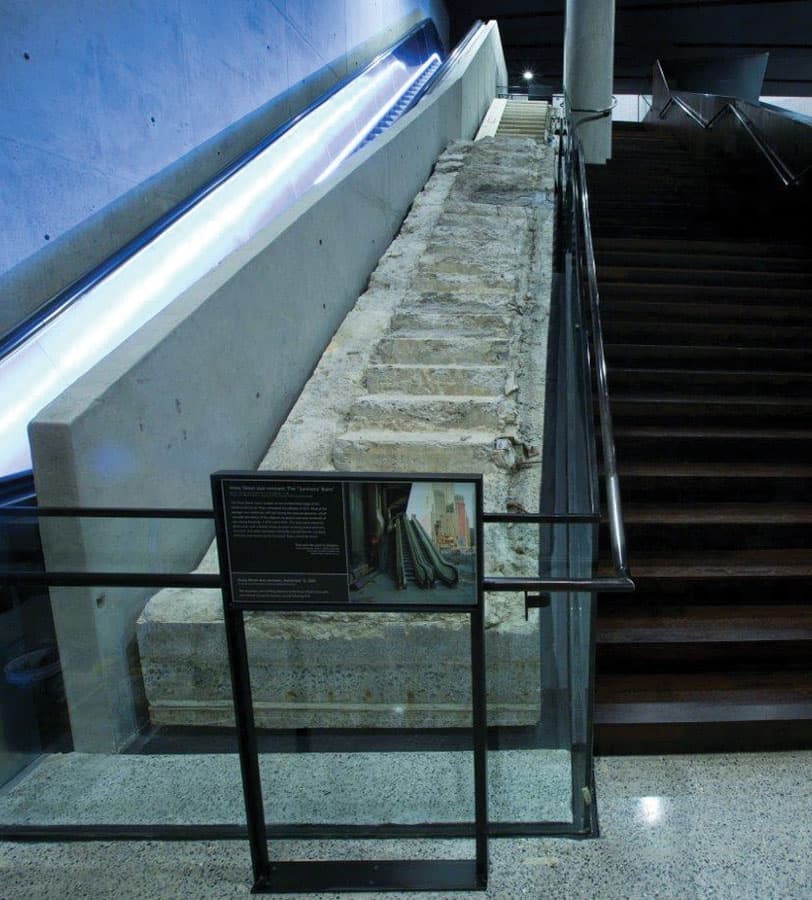
Deep within the solemn spaces of the 9/11 Memorial & Museum in New York, United States, lies a profoundly moving artifact known as the Survivors’ Staircase. More than just a set of steps, this granite and concrete stairway stands as a powerful symbol of hope, resilience, and the sheer human will to survive. It is one of the most poignant remnants of the original World Trade Center complex, preserving a tangible connection to the events of September 11, 2001. As visitors descend into the museum, they walk alongside this historic structure, experiencing a journey that mirrors the escape of hundreds on that fateful day.
History & Cultural Background
The Survivors’ Staircase was originally located at the northeastern edge of the World Trade Center complex, connecting Vesey Street to the elevated Austin J. Tobin Plaza. Constructed in the mid-1970s as part of the broader World Trade Center development, it was an outdoor stairway comprising two flights and 37 steps, rising approximately 22 feet. On September 11, 2001, as chaos unfolded and the Twin Towers faced catastrophic attacks, this unassuming staircase transformed into a lifeline. Hundreds of individuals, many evacuating from the nearby 5 World Trade Center building, found an unobstructed escape route down these very steps. Crucially, the staircase was partially covered by an overhang from the plaza, offering a fleeting moment of protection from falling debris as people fled to safety.
After the towers' collapse, the Survivors' Staircase remained standing, a remarkable and solitary visible fragment of the original World Trade Center above ground. Its unexpected survival underscored its significance, but its future was uncertain. Initial plans for the redevelopment of Ground Zero called for its demolition, prompting strong opposition from preservationists and survivors. Groups like the New York Landmarks Conservancy and the National Trust for Historic Preservation advocated fiercely for its protection, recognizing its profound historical and emotional value. In 2006, it was even listed as one of America's Most Endangered Places.
A compromise was eventually reached: the staircase would be preserved and integrated into the planned 9/11 Memorial & Museum. In 2008, a complex engineering feat saw the massive granite and concrete structure, weighing 65 tons, carefully cut from its original site and relocated by crane to its current home. By 2010, it was permanently installed, becoming a central feature of the museum and ensuring that its story of survival would be told to future generations.
What Makes It Special
What makes the Survivors’ Staircase so special is its dual nature as both an architectural artifact and a deeply symbolic relic. It is a tangible link to one of the most pivotal moments in modern history, bearing silent witness to both destruction and salvation. Unlike many other remnants of that day, this staircase literally facilitated the escape of human lives. Visitors to the museum descend a ramp that leads them past the staircase, intentionally designed to evoke the experience of those who evacuated on 9/11. This immersive presentation ensures that the stairs are not just viewed, but felt, as a pathway to survival.
The staircase's resilience, enduring the immense force of the tower collapses when so much else was pulverized, makes it a powerful metaphor for human perseverance. It symbolizes the indomitable spirit of New Yorkers and Americans in the face of unimaginable tragedy. Its preservation was a testament to a collective desire to honor the past and learn from it, ensuring that acts of heroism and the sheer will to live are never forgotten.
Stories, Fun Facts & Local Details
Countless personal stories are intertwined with the Survivors’ Staircase. Evacuees have recounted being directed to these specific stairs by first responders or by instinct, finding temporary shelter beneath the plaza’s overhang before continuing their perilous journey to safety. The shared experience of descending these steps created a common thread among many survivors, solidifying the staircase's role as a symbol of shared resilience. Many survivors credit these very stairs with saving their lives, a detail often recounted in their narratives.
A remarkable 'fun fact' – if such a term can be applied to such a somber context – is the incredible engineering effort involved in its relocation. The staircase had to be extracted as a single, massive piece, highlighting the dedication to preserving its authenticity and impact. It was one of the first major artifacts installed in the museum, placed there even before the surrounding memorial plaza and museum pavilion were fully constructed, demonstrating its prioritized status in the memorial’s design.
For visitors, observing the staircase today offers a profound sense of connection to the past. It’s an opportunity to reflect not just on the tragedy of 9/11, but on the profound courage and quick thinking that allowed so many to survive. It serves as a reminder of the quiet heroes—the ordinary people who became extraordinary in a moment of crisis, guiding others to safety via these very steps.
Visitor Perspective
Experiencing the Survivors’ Staircase as a visitor to the 9/11 Memorial & Museum is a deeply emotional journey. As you move through the museum's thoughtful exhibits, the sight of these original stairs, stark yet solid, arrests your attention. It's a powerful moment of quiet contemplation, allowing you to imagine the fear, the determination, and ultimately, the relief felt by those who used it. The staircase is purposefully integrated into the museum's architecture, guiding visitors on a symbolic descent into the historical narrative of 9/11.
Walking beside it, you are encouraged to consider the fragility of life and the immense strength of the human spirit. It serves as a poignant reminder that even amidst unimaginable destruction, pathways to survival can emerge. The Survivors' Staircase is not merely an exhibit; it is an experience, inviting reflection on the past while honoring the enduring legacy of hope and resilience that defines the spirit of New York and the nation. It stands as a testament to the fact that even in the darkest hours, there is always a way forward.
Coordinates: -74.01317, 40.71156
View on Google Maps💬 How Travelers Describe This Place
Based on community votes
Interesting
494Must See
242Photogenic
193Unique
125Beautiful
82
Traveler Stories
Discover memorable experiences shared by travelers who have visited this place.
No traveler stories yet.
Be the first traveler to share what made this place memorable.

Tour
By
Spot
Discover amazing places around the world. Your journey starts here.
Explore
© 2026 TourBySpot. All rights reserved.