Surrounding Parks
Baku, Azerbaijan
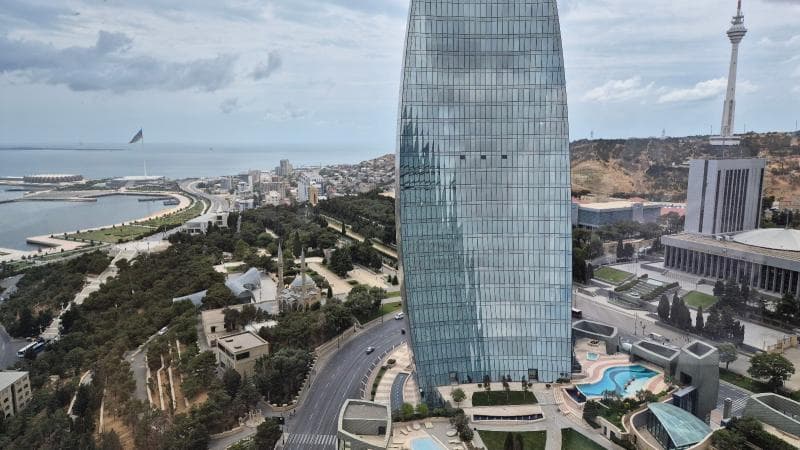
Explore Highland Park in Baku, Azerbaijan, a historic green space offering panoramic views of the Flame Towers and Caspian Sea. Discover its poignant history and serene atmosphere.
Overview
Perched majestically on a hilltop overlooking Baku, Azerbaijan, Highland Park, also known as Dağüstü Park or Upland Park, serves as a breathtaking natural complement to the iconic Flame Towers. This verdant expanse is not merely a park; it is a significant historical site and a prime vantage point offering unparalleled panoramic views of Baku's vibrant cityscape, the shimmering Caspian Sea, and, of course, the magnificent Flame Towers themselves. It is a place where tranquility meets grandeur, inviting visitors to stroll through its shaded alleys and reflective memorials.
Strategically located, the park is directly adjacent to the Flame Towers, making it an essential part of the experience for anyone visiting these architectural marvels. It provides a peaceful retreat from the bustling city below, while simultaneously offering the most spectacular perspectives for appreciating Baku's unique blend of ancient history and modern development.
History & Cultural Background
The history of Highland Park is deeply intertwined with Baku's tumultuous past, reflecting various epochs and transformations. Its origins trace back to the late 1900s, when the hill served as a burial ground for both Muslim and Christian communities. It also became the resting place for victims of the Armenian-Azeri massacre of 1918, and Turkish and British soldiers who perished during the battle for Baku in September 1918.
During the Soviet era, starting in 1935, the area was transformed into a park, primarily designed by architect Lev Ilyin. It was initially known as Kirov Park, named after the Bolshevik Sergei Kirov, whose monument stood prominently within its bounds until the fall of the Soviet Union. Interestingly, during its construction, the Soviet government reportedly used tombstones from the destroyed cemeteries due to a shortage of building materials.
After Azerbaijan regained its independence, the park underwent significant changes, including the dismantling of Kirov's monument and its renaming to Highland Park. Today, it holds profound cultural significance as home to the Alley of Martyrs (Şəhidlər Xiyabanı), a solemn memorial dedicated to those who lost their lives during the Soviet intervention in January 1990 and the Nagorno-Karabakh conflict. It also features a Turkish Martyrs' Memorial (erected in 1999) and a British Military Memorial, honoring the fallen soldiers of various historical periods.
What Makes It Special
Highland Park's most compelling feature is undoubtedly its unparalleled panoramic views. From its elevated position, visitors can gaze upon the entire expanse of Baku – from the historic Old City (Icherisheher) to the modern Baku Boulevard along the Caspian Sea, all framed by the majestic Flame Towers. At night, this view becomes even more magical as the Flame Towers illuminate the sky with dazzling light displays, depicting flickering flames and the Azerbaijani flag.
Beyond the vistas, the park's historical gravitas, particularly the Alley of Martyrs with its eternal flame, creates a deeply moving experience. It serves as a poignant reminder of Azerbaijan's struggle for independence and sovereignty, inviting quiet contemplation and respect.
The journey to the park itself can be an attraction. The Baku Funicular offers a charming and scenic 10-minute ride from near the Carpet Museum at Baku Boulevard, providing unique perspectives of the city as you ascend. This makes the park easily accessible while adding an element of enjoyment to the visit.
Stories, Fun Facts & Local Details
The park has carried several names throughout its history, from 'English Park' due to the burial of British soldiers, to 'Kirov Park' during the Soviet era, and sometimes 'Stalin Park' before its current designation as Highland Park or Dağüstü Park, which literally means 'Upland Park' in Azerbaijani.
A poignant detail from its Soviet-era construction is the rumored use of old tombstones for building materials, a stark testament to the attempts to erase previous histories. Today, this hidden past adds a layer of solemnity to the park's serene atmosphere. The presence of both Turkish and British military memorials underscores Baku's strategic historical importance and its complex international relations through the centuries.
Locals often visit Highland Park not just for its beauty but also for reflection, especially on national holidays. It's a place where families gather, couples enjoy romantic evenings, and individuals seek peace, reinforcing its status as a vital part of Baku's urban identity.
Visitor Perspective
Visiting Highland Park is an experience that caters to various interests. For those seeking stunning photography opportunities, especially at sunset when the city lights begin to twinkle and the Flame Towers come alive, it is an unparalleled location. The park is open 24 hours a day, seven days a week, and there is no entrance fee, allowing for flexible visits.
Accessibility is convenient, whether by a short taxi ride from the city center, a 25-minute walk from Icherisheher Metro Station, or the scenic Baku Funicular. For those feeling energetic, grand staircases also lead up from the National Seaside Park, offering rewarding climbs. Within the park, paved walkways, benches, and lighting after dark ensure a comfortable experience. There are also cafes and restaurants where visitors can relax and enjoy a cup of Azerbaijani tea with local sweets while taking in the views.
Given its elevated location and the presence of inclined paths and stairs, wearing comfortable shoes is advisable. While the park provides a tranquil escape, it is also a place of remembrance, especially near the Alley of Martyrs, where quiet and respectful behavior is expected.
Coordinates: 49.8315, 40.3644
View on Google Maps💬 How Travelers Describe This Place
Based on community votes
Must See
904Interesting
758Photogenic
755Beautiful
224Unique
190
Traveler Stories
Discover memorable experiences shared by travelers who have visited this place.
No traveler stories yet.
Be the first traveler to share what made this place memorable.

Tour
By
Spot
Discover amazing places around the world. Your journey starts here.
Explore
© 2026 TourBySpot. All rights reserved.