Street Art
Warsaw, Poland
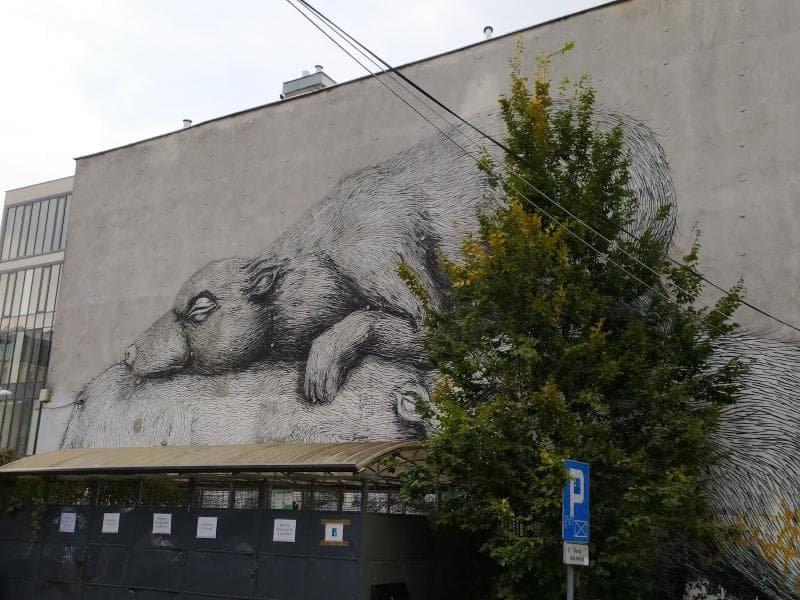
Explore the unique street art of Nowy Świat Street in Warsaw, Poland, from the iconic artificial palm tree to poignant murals, blending history with modern urban expression.
Overview
Nowy Świat Street, one of Warsaw, Poland's most distinguished thoroughfares, is celebrated for its elegant architecture, lively atmosphere, and historical significance. While not a dedicated street art district in the vein of the Praga neighborhood, this iconic street, part of the Royal Route, offers a unique blend of history and contemporary urban expression. Visitors exploring Nowy Świat will discover select, impactful pieces of street art that punctuate its classicist facades, adding layers of meaning and modern commentary to the city's richly storied past. These artistic interventions invite travelers to look closer, connecting the street's enduring spirit with its dynamic present.
History & Cultural Background
Nowy Świat, meaning 'New World,' boasts a history stretching back to the 17th century when it began as a main road leading to aristocratic estates outside Warsaw's city walls. By the 18th century, it had transformed into a densely urbanized area with palaces and cobblestone streets. Tragically, like much of Warsaw, Nowy Świat was almost entirely destroyed during World War II. Its meticulous post-war reconstruction aimed to restore its pre-war charm, primarily in a classicist style, largely limited to two-story buildings. This resilience and rebirth are central to Warsaw's identity, and street art here often resonates with this narrative of memory, resistance, and renewal.
The presence of street art on Nowy Świat, therefore, isn't merely decorative; it's a testament to the city's ongoing dialogue with its past. These artworks are integrated into a landscape that has been painstakingly rebuilt, offering contemporary reflections amidst historical echoes. They provide a modern lens through which to view Warsaw's complex cultural fabric, embodying its capacity for artistic expression even in the most hallowed historical spaces.
What Makes It Special
What sets the street art on Nowy Świat apart is its intentionality and often profound symbolism, rather than sheer volume. Perhaps the most famous and thought-provoking piece is 'Greetings from Jerusalem Avenue,' a permanent artificial palm tree installation by Polish artist Joanna Rajkowska, situated at the Charles de Gaulle Roundabout where Nowy Świat intersects with Jerusalem Avenue. Erected in 2002, this unusual artwork serves as a powerful anti-monument, designed to draw attention to 'the absence of the Jewish community in Poland' and metaphorically bring 'vanished Jews back into the landscape of contemporary Poland.' Its location and meaning have made it an iconic site for social and political activism, symbolizing both remembrance and the evolving social landscape.
Beyond this prominent installation, Nowy Świat features other notable pieces. For instance, a 'Soviet-era mural celebrating an act of Polish resistance against the Nazis' can be found, linking the street's narrative to wartime heroism. Additionally, urban art aficionados might discover a distinctive piece by the acclaimed Belgian street artist ROA, located at Nowy Świat 22C, near Bar Zyrafa. These individual artworks, though fewer in number compared to dedicated art zones, are significant for their artistic merit and the unique historical context they inhabit, often appearing as 'smaller, yet equally artistic surprises' within the city center.
Stories, Fun Facts & Local Details
The 'Greetings from Jerusalem Avenue' palm tree carries a particularly rich story. Initially, its modern aesthetic and symbolic message sparked debate and even opposition from certain political factions, who preferred traditional Christmas decorations in its place. Yet, over two decades, it has firmly established itself as one of Poland's most recognizable public art projects. Its base often serves as a silent protest site, witnessing various social and political movements, from women's rights to environmental activism, constantly evolving its public meaning.
Nowy Świat itself is steeped in stories. In the 19th century, it was known as Warsaw's 'salon,' where one could confidently expect to meet friends and personalities from politics and the arts. Before World War II, it was home to 'Pod Picadorem,' a famous artistic café frequented by leading Polish poets. The street's resilient reconstruction, relying on pre-war paintings by Canaletto for the Old Town, is a testament to Warsaw's determination to reclaim its heritage. Discovering these modern artworks amidst such profound historical depth creates a compelling dialogue between past and present.
Visitor Perspective
Experiencing the street art of Nowy Świat is less about a structured tour and more about serendipitous discovery. As you stroll along this elegant street, perhaps pausing at its numerous cafes or browsing its shops, these unexpected artistic expressions emerge as integral parts of the urban fabric. The artificial palm tree offers a striking visual landmark and a point of reflection, while other murals and installations invite closer inspection, revealing their stories and connections to Warsaw's enduring spirit. It's an opportunity to engage with the city's modern artistic pulse while immersed in its majestic history, offering a deeper, more nuanced understanding of Warsaw's character as a city of contrasts and continuous transformation. It highlights how art, even in a rebuilt landscape, can provoke thought and contribute to a vibrant, living history.
Coordinates: 21.0208, 52.2317
View on Google Maps💬 How Travelers Describe This Place
Based on community votes
Beautiful
972Unique
787Must See
720Interesting
85Photogenic
73
Traveler Stories
Discover memorable experiences shared by travelers who have visited this place.
No traveler stories yet.
Be the first traveler to share what made this place memorable.

Tour
By
Spot
Discover amazing places around the world. Your journey starts here.
Explore
© 2026 TourBySpot. All rights reserved.