Storytelling Chambers
Edinburgh, United Kingdom
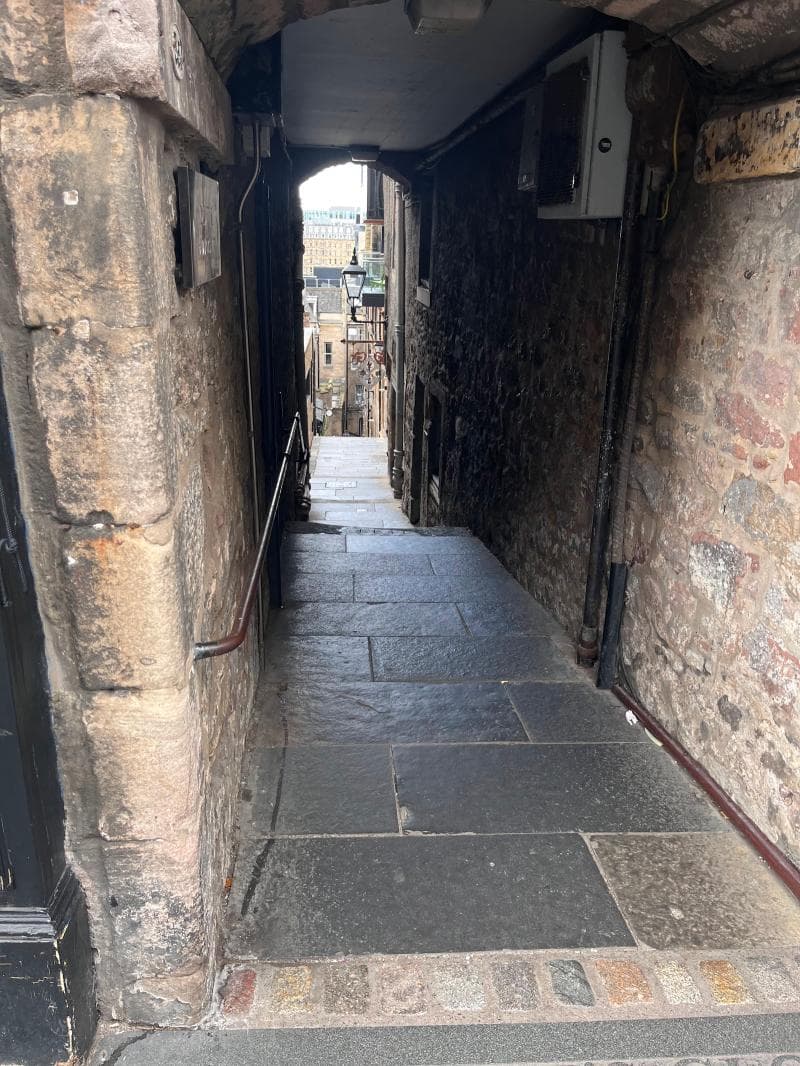
Explore Edinburgh's hidden Storytelling Chambers within The Real Mary King's Close, United Kingdom, and uncover centuries of history and tales.
Overview
Deep beneath the bustling streets of Edinburgh's historic Royal Mile lies a hidden world, preserved almost exactly as it was centuries ago: The Real Mary King's Close. Within this labyrinthine network of subterranean alleyways and homes are what one might call the 'Storytelling Chambers' – every preserved room and passageway acts as a stage where the compelling, often poignant, narratives of Edinburgh's past come alive. It is not a single designated room, but rather the entire close itself that serves as this immersive storytelling experience, offering a unique and authentic journey into the city's hidden history.
Once a vibrant, densely populated thoroughfare, The Real Mary King's Close was partially demolished and built over in the 18th century to make way for the Royal Exchange (now the City Chambers), effectively burying it beneath the modern cityscape. Closed to the public for many years, it reopened in 2003, allowing visitors to step back in time and explore this remarkably preserved relic of 17th-century Edinburgh.
History & Cultural Background
The Close takes its name from Mary King, a successful merchant burgess who resided there in the 17th century. Notably, Mary King held a rare privilege for a woman of her time: the right to vote on the city council. Her story, and those of countless others, paint a vivid picture of life in Old Town Edinburgh, a period characterized by close-knit communities, thriving commerce, and also challenging living conditions. The narrow, crowded closes, typical of Edinburgh's Old Town, were often unsanitary, reflecting the realities of urban life in the 16th and 17th centuries.
Perhaps the most infamous chapter in the Close's history is its association with the Great Plague of 1645. This devastating epidemic ravaged Edinburgh, its spread exacerbated by the crowded tenements. While urban myths persist of plague victims being cruelly walled up and left to die, historical accounts suggest that the Close was eventually partially demolished and built over, not used as a mass burial or quarantine site in the mythical sense. Nevertheless, the stories of those who suffered during this dark period are an integral part of the historical narrative told within these ancient walls.
What Makes It Special
What truly sets The Real Mary King's Close apart as a series of 'Storytelling Chambers' is its extraordinary state of preservation. Visitors are not merely viewing exhibits; they are walking through actual 17th-century streets and homes, seeing original stonework and structures that offer an unparalleled glimpse into a bygone era. The immersive experience is further enhanced by character guides, often in period dress, who embody former residents and bring the past to life with compelling narratives. This authentic approach ensures that the focus remains on the real people who lived, worked, and died here, transforming history from abstract facts into tangible, human stories. The atmosphere – dark, cramped, and sometimes dusty – adds to the powerful sense of stepping into another time, making every corner a 'Storytelling Chamber' in its own right.
Stories, Fun Facts & Local Details
The Real Mary King's Close is a treasure trove of individual histories and fascinating anecdotes. One of the most famous tales revolves around the ghost of 'Annie,' a young girl said to have lost her doll during the plague. Visitors often leave toys, trinkets, or coins for Annie in her room, a poignant tradition whose donations are regularly collected and given to local children's charities. Beyond the ghostly legends, the Close reveals details of everyday life, including glimpses into the various social strata that coexisted. You might hear about the 'gardyloo' warning, a cry (from the French 'garde à l'eau') given before residents emptied their chamber pots from windows onto the street below. Remnants such as historic hand-painted wallpaper, the workshop of a saw maker named Andrew Chesney, and even a 'thunderbox' toilet offer tangible links to the lives of those who once inhabited these underground spaces.
Visitor Perspective
A visit to The Real Mary King's Close typically involves a guided tour lasting between 50 minutes and an hour. The experience is renowned for being informative, engaging, and atmospheric, focusing on historical accuracy and compelling storytelling rather than jump scares. While deeply fascinating, potential visitors should be aware that the underground environment, with its narrow passages and sometimes damp conditions, might not be suitable for those with severe claustrophobia or certain breathing difficulties. Photography is generally not permitted inside the Close, encouraging visitors to fully immerse themselves in the moment and the stories being shared. Due to its immense popularity, booking tickets in advance is highly recommended to secure your journey into Edinburgh's buried past.
Coordinates: -3.1905063, 55.949921
View on Google Maps💬 How Travelers Describe This Place
Based on community votes
Beautiful
972Unique
787Must See
720Interesting
85Photogenic
73
Traveler Stories
Discover memorable experiences shared by travelers who have visited this place.
No traveler stories yet.
Be the first traveler to share what made this place memorable.

Tour
By
Spot
Discover amazing places around the world. Your journey starts here.
Explore
© 2026 TourBySpot. All rights reserved.