Stone Tower Exterior
Podgorica, Montenegro
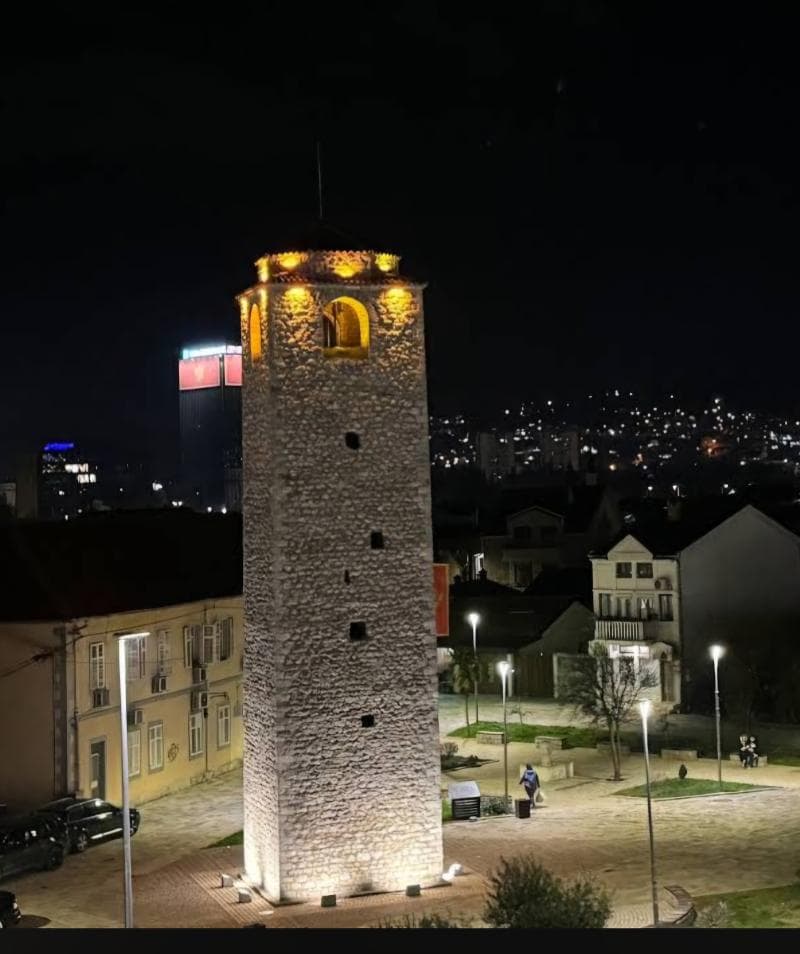
Explore Podgorica's historic Stone Tower Exterior of the Clock Tower (Sahat Kula), a 17th-century Ottoman landmark in Montenegro's Old Town.
Overview
In the heart of Podgorica's Old Town, known as Stara Varoš, stands the venerable Stone Tower Exterior of the Clock Tower, or Sahat Kula. This enduring landmark, rising majestically from Bećir Beg Osmanagić square, serves as a tangible link to the city's rich past. Its distinctive stone facade, a testament to Ottoman architectural traditions, has witnessed centuries of change and played a central role in the daily life of Podgorica. Standing approximately 19 meters tall, the tower's robust stone structure offers a striking visual anchor in the cityscape, inviting curious travelers to delve into its storied history.
The Stone Tower Exterior is more than just a historical edifice; it is a symbol of resilience, having remarkably survived the extensive bombings that devastated much of Podgorica during World War II. As one of the few remaining Ottoman structures in the Montenegrin capital, it provides a unique window into a pivotal era of the region's cultural development. Visitors today can admire its architectural integrity and appreciate its continued presence as a protected cultural monument of Montenegro.
History & Cultural Background
The Sahat Kula was constructed in 1667 by Adži-paša Osmanagić, a prominent citizen during Podgorica's Ottoman period. Its establishment marked a significant moment in the city's urban development, providing the community with its first public clock. For generations, this clock tower regulated the rhythm of daily life, signalling prayer times, market openings, and working hours for the city's inhabitants.
The tower's design is characteristic of Ottoman clock tower architecture, featuring a solid square base that tapers upwards, adorned with arched windows, and culminating in a pyramidal roof. The construction utilized local limestone, giving the exterior its characteristic durable and imposing appearance. While its original clock mechanism was Austrian, it was replaced in 1890 with one crafted by the Pietro Colbachini foundry in Italy. This mechanical heart faithfully kept time until a modern electric mechanism was installed in 2012, preserving the original for historical purposes.
A notable addition to the tower's silhouette occurred around 1890: a metal cross was placed at its apex. This cross symbolized the city's transition from Ottoman rule into the hands of Christian Montenegrins, reflecting the complex layers of cultural and political history embedded within Podgorica's landscape.
What Makes It Special
The Stone Tower Exterior of Podgorica's Clock Tower is special not only for its age but for its remarkable endurance. It stands as a solitary sentinel, one of the very few Ottoman landmarks that withstood the intense Allied bombings of Podgorica during World War II, which razed much of the city. This survival makes it an invaluable historical artifact and a powerful symbol of the city's ability to persevere through adversity.
Its distinct architectural style, a fine example of 17th-century Ottoman construction, sets it apart from the more modern cityscape that surrounds it. The use of robust local stone gives the tower an authentic, timeless quality. From its square foundation to its tapered body and subtly arched windows, every element of the exterior tells a story of craftsmanship from a bygone era. It offers a tangible connection to Podgorica's multicultural heritage, representing centuries where Islamic and later Christian influences shaped the city's identity.
Stories, Fun Facts & Local Details
Local lore suggests that the original clock mechanism for the Sahat Kula might have been imported from Italy, underscoring the tower's importance and the resources invested in its creation even in its early days. For centuries, it was the only public timepiece in Podgorica, making it an indispensable part of daily life and a central meeting point. Imagine a time before personal watches or smartphones, when the chiming of this single clock dictated the pace of an entire city.
The clock tower's survival during World War II is often regarded as almost miraculous, given the widespread destruction across Podgorica. This resilience has embedded it deeply within the local consciousness as a symbol of continuity and strength. Its presence in the Stara Varoš neighborhood means it is surrounded by some of the city's oldest remaining streets and buildings, offering a sense of stepping back in time as one explores the area. While visitors cannot typically enter the tower, its exterior provides ample opportunity for appreciation, serving as a reminder of Podgorica's diverse cultural layers and its enduring spirit.
Visitor Perspective
Approaching the Stone Tower Exterior of the Clock Tower in Podgorica is like walking into a living history book. Situated in the charming, albeit small, Old Town district, its presence commands attention amidst the more contemporary urban fabric of Podgorica. As you stand before it, the rough-hewn local stone of its facade seems to whisper tales of Ottoman merchants, daily prayers, and wartime endurance.
There's a quiet dignity to the structure. Its simple yet powerful design invites contemplation on the passage of time and the history it has overseen. The architectural details, such as the subtle arches of its windows and the sturdy construction, are best appreciated up close, allowing one to observe the craftsmanship that has kept it standing for over three and a half centuries. Though primarily viewed from the outside, the Stone Tower Exterior offers a profound connection to Podgorica's past, serving as a peaceful focal point in a bustling city. It's a place to pause, reflect, and appreciate a genuine piece of Montenegrin heritage.
Coordinates: 19.260014, 42.435557
View on Google Maps💬 How Travelers Describe This Place
Based on community votes
Interesting
915Must See
211Unique
123Beautiful
74Photogenic
53
Traveler Stories
Discover memorable experiences shared by travelers who have visited this place.
No traveler stories yet.
Be the first traveler to share what made this place memorable.

Tour
By
Spot
Discover amazing places around the world. Your journey starts here.
Explore
© 2026 TourBySpot. All rights reserved.