Stone Staircases
Split, Croatia
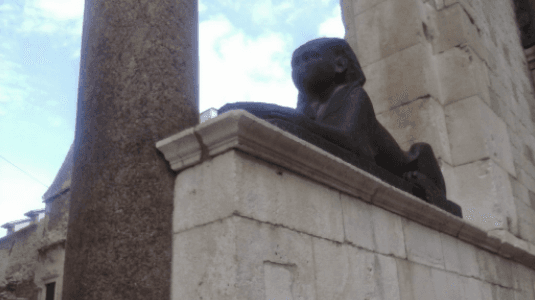
Explore the historic Stone Staircases of Peristyle Square in Split, Croatia. Delve into Roman history and experience vibrant local culture.
Overview
Nestled within the ancient heart of Split, Croatia, the Stone Staircases of Peristyle Square offer more than just a means of passage; they are an integral part of the city's living history. These remarkable stairs serve a dual purpose: providing access to the atmospheric subterranean chambers of Diocletian's Palace and forming a unique, informal amphitheatre where visitors and locals alike gather to soak in the vibrant energy of the square. They are a tangible link to the Roman past, yet actively participate in the present-day cultural tapestry of Split.
As you step onto Peristyle Square, a UNESCO World Heritage site, the stone staircases immediately draw your eye. On one side, a grand set descends into the palace's basements, inviting exploration into the foundational layers of this imperial residence. On the other, the steps that line the square itself transform into impromptu seating, an age-old tradition that allows for a truly immersive experience of this historic space. They are a testament to how the past and present seamlessly intertwine in this extraordinary city.
History & Cultural Background
The history of the Stone Staircases is intrinsically tied to Emperor Diocletian's Palace, constructed between 295 and 305 AD. The grand staircase leading from Peristyle Square down to the palace's basements dates back to this original Roman era. These subterranean vaults were essential for supporting the imperial residential quarters above and served as storage. Walking down these ancient steps, built around 300 AD, one is transported directly into the architectural genius of the Roman Empire.
Over the centuries, as Diocletian's Palace transitioned from an imperial residence to a bustling medieval and then modern city, the functionality and cultural significance of the staircases evolved. The steps ringing the Peristyle Square, while perhaps not all original Roman structures in their current form, have become a cornerstone of Split's public life. They embody the adaptive spirit of the city, where Roman foundations provide the stage for contemporary social interaction. The enduring presence of these stone elements highlights how the city of Split was built directly into and around the palace, preserving its ancient core.
What Makes It Special
What truly distinguishes the Stone Staircases of Peristyle Square is their dynamic role in shaping the visitor's experience and the city's identity. Unlike static historical relics, these steps are alive with daily activity. The grand staircase descending to the basements offers a direct physical connection to the ingenious Roman engineering beneath the palace. These basements, often cool and atmospheric, reveal the original layout of Diocletian's imperial apartments in 'negative', providing a rare glimpse into the palace's structural brilliance.
Above ground, the steps encircling the Peristyle redefine public space. They are not merely architectural features but communal benches, inviting rest, observation, and participation. Here, the red granite columns and the ancient sphinx brought from Egypt frame a unique setting where history breathes. The worn grooves on the stone are subtle indicators of countless footsteps over millennia, a silent narrative of emperors, citizens, and travelers who have trod these very paths.
Stories, Fun Facts & Local Details
The Stone Staircases hold many unspoken stories. Imagine Emperor Diocletian himself, making his ceremonial appearances from the central part of the Prothyron, with subjects approaching him, perhaps kneeling, on these very stones. The red color of the granite columns further emphasized the imperial presence, as purple became the imperial color during his reign.
A delightful local tradition sees visitors and locals occupying the steps around the Peristyle, especially in the evenings. Instead of sitting in traditional cafes, people often grab a drink and find a spot on the ancient steps, often accompanied by live music, soaking in the ambiance. This informal seating arrangement transforms the entire square into an open-air theatre, particularly during summer months when performances and cultural events animate the space. The acoustics of the square are exceptional, making it a perfect venue for such gatherings. It is said that Pope John Paul II, amazed by the sheer depth of history, remarked, 'Dear God, how many feet have stepped through here,' a sentiment echoed by many who experience the Peristyle's profound sense of continuity.
Visitor Perspective
For any curious traveler, engaging with the Stone Staircases is an essential part of the Split experience. Descending into the cellars provides a cool, quiet respite from the bustling square above, offering a profound sense of stepping back in time to the Roman era. The well-preserved substructures are a marvel, reflecting the palace above and offering insight into its original grandeur.
Conversely, taking a seat on the steps that flank the Peristyle offers a vibrant, front-row view of modern Split. It's an opportunity to observe the daily ebb and flow of life, watch street performers, listen to local musicians, or simply enjoy a coffee while being surrounded by 1,700 years of history. This dual perspective – from the silent depths of the Roman past to the lively surface of contemporary culture – makes the Stone Staircases a truly memorable and meaningful encounter in Split, Croatia. It allows for an intimate connection with the city's soul, bridging epochs with every step and every moment of contemplation.
Coordinates: 16.43915, 43.50891
View on Google Maps💬 How Travelers Describe This Place
Based on community votes
Must See
673Photogenic
336Interesting
219Unique
186Beautiful
80
Traveler Stories
Discover memorable experiences shared by travelers who have visited this place.
No traveler stories yet.
Be the first traveler to share what made this place memorable.

Tour
By
Spot
Discover amazing places around the world. Your journey starts here.
Explore
© 2026 TourBySpot. All rights reserved.