Stone Passageways
Split, Croatia
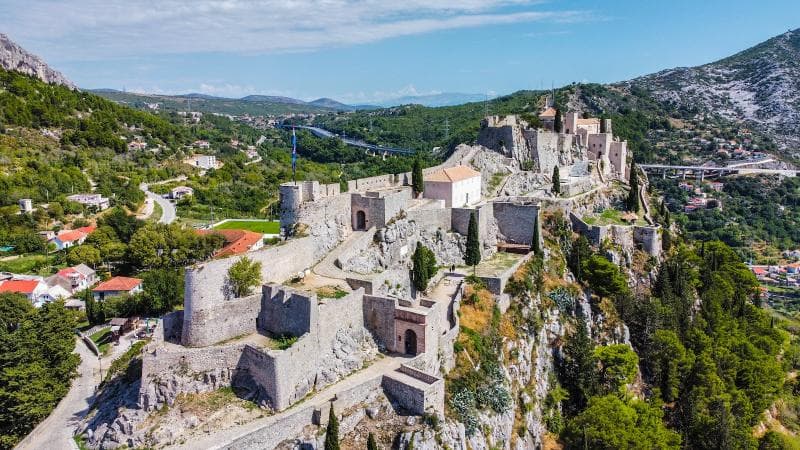
Explore the historic stone passageways of Klis Fortress in Split, Croatia. Discover centuries of defense, fascinating history, and stunning views.
Overview
Perched dramatically on a rocky ridge above the village of Klis, near Split, Croatia, Klis Fortress stands as a formidable testament to centuries of strategic importance and military ingenuity. This ancient stronghold, often called the 'Key to Dalmatia,' guarded a crucial mountain pass between the coast and the Dalmatian hinterland. Within its robust stone walls lies a labyrinth of stone passageways, an integral part of its defensive architecture, which allowed movement, defense, and communication across its multi-layered structure. These passageways are not a single named attraction, but rather the very veins of the fortress, shaping the visitor's experience as they explore this historical site. [15, 19]
The Klis Fortress offers breathtaking panoramic views of Split, the Adriatic Sea, and the surrounding islands, rewarding those who navigate its intricate paths. Its strategic location meant that controlling Klis was paramount for anyone seeking to dominate the region, making its stone passages silent witnesses to countless conflicts and shifting empires. [8, 12, 22]
History & Cultural Background
The history of Klis Fortress, and by extension its stone passageways, stretches back over two millennia. Its origins trace to an Illyrian stronghold built by the Dalmatae tribe around the 2nd century BC. Romans later fortified the site to protect routes to their provincial capital of Salona. [5, 8, 13]
During the early medieval period, Klis rose to prominence as a royal castle and, at times, the seat of Croatian dukes and kings from the 9th to the 11th centuries. It played a pivotal role in the formation of Croatian statehood. The fortress's defensive architecture, including its internal stone routes, evolved significantly during this era. [4, 5]
Klis is perhaps best known for its epic resistance against the Ottoman Empire in the 16th century. For over two decades, Croatian captain Petar Kružić and his Uskoks valiantly defended the fortress, using its complex layout and narrow passages to their advantage against the Turkish advance. Though it eventually fell to the Ottomans in 1537, its recapture by the Venetians in 1648 and subsequent modifications by Austrian rulers further layered its architectural narrative. The stone passageways we see today bear the marks of these various historical phases, reflecting continuous adaptation for warfare and survival. [4, 5, 8, 9, 12, 19]
What Makes It Special
The 'Stone Passageways' of Klis Fortress are special precisely because they are not merely decorative elements but functional components that dictated the ebb and flow of battle and daily life within the stronghold. They represent a tangible connection to the fortress's enduring purpose: defense. As you walk through these narrow, winding paths, you are treading the same ground where Illyrian warriors, Roman legionaries, Croatian knights, Ottoman soldiers, and Venetian defenders once stood. [15, 19, 21]
The fortress is designed with multiple defensive lines and three main entrances from different periods, each featuring its own set of internal passages. For instance, near the first main entrance, built by the Austrians, there's a narrow, vaulted corridor known as a casemate. Below Bastion Malipiero, there's another vaulted passage stretching to the eastern position Maggiore. These passageways are not just simple corridors; they are strategic arteries that connected various towers, bastions, and courtyards, allowing for rapid deployment of troops, hidden movements, and fortified firing positions. [4, 9, 11]
Stories, Fun Facts & Local Details
The stone passageways themselves tell stories of strategic genius and human resilience. Imagine the Uskoks, an elite Croatian militant group, navigating these very paths in the dead of night, preparing for a surprise sortie against the besieging Ottoman forces. The design of these paths, with their uneven surfaces and sharp turns, was deliberately meant to disorient and slow down invaders, forcing them to look at their feet while arrows rained down from above. [23]
A unique cultural detail is the presence of the Church of St. Vitus within the fortress, which was originally built on the foundations of an older Croatian chapel, then converted into a mosque during Ottoman rule, and finally back into a Catholic church by the Venetians. While not a passageway itself, its location amidst the fortress's internal structure highlights the constant transformations witnessed by these stone edifices. [4, 8, 11, 15]
Today, the fortress is also famously recognized as a filming location for the city of Meereen in the popular television series 'Game of Thrones.' While the show added elements like dragons, the real drama lies in the historical narratives etched into every stone, especially within these ancient passageways that have echoed with footsteps for millennia. [5, 16, 19, 21]
Visitor Perspective
Exploring the stone passageways of Klis Fortress is an immersive experience. It's not a passive visit but an active journey through history. Visitors are encouraged to walk the ramparts, ascend the narrow stairs, and navigate the internal routes. The feeling of moving through these confined yet purposeful spaces offers a powerful sense of the fortress's strategic layout and the lives of those who defended it. [19, 21]
As you traverse these ancient paths, you can almost feel the whispers of the past, the urgency of guards patrolling, and the steadfast determination of a people protecting their homeland. The commanding views available from various points along these routes provide not just photographic opportunities, but also a deeper appreciation for why this location was so fiercely contested. The stone passageways are more than just architecture; they are key to understanding the spirit and enduring legacy of Klis Fortress. [22]
Coordinates: 16.523, 43.5605
View on Google Maps💬 How Travelers Describe This Place
Based on community votes
Unique
639Interesting
526Must See
421Beautiful
366Photogenic
181
Traveler Stories
Discover memorable experiences shared by travelers who have visited this place.
No traveler stories yet.
Be the first traveler to share what made this place memorable.

Tour
By
Spot
Discover amazing places around the world. Your journey starts here.
Explore
© 2026 TourBySpot. All rights reserved.