Stone Bridge
Dubrovnik, Croatia
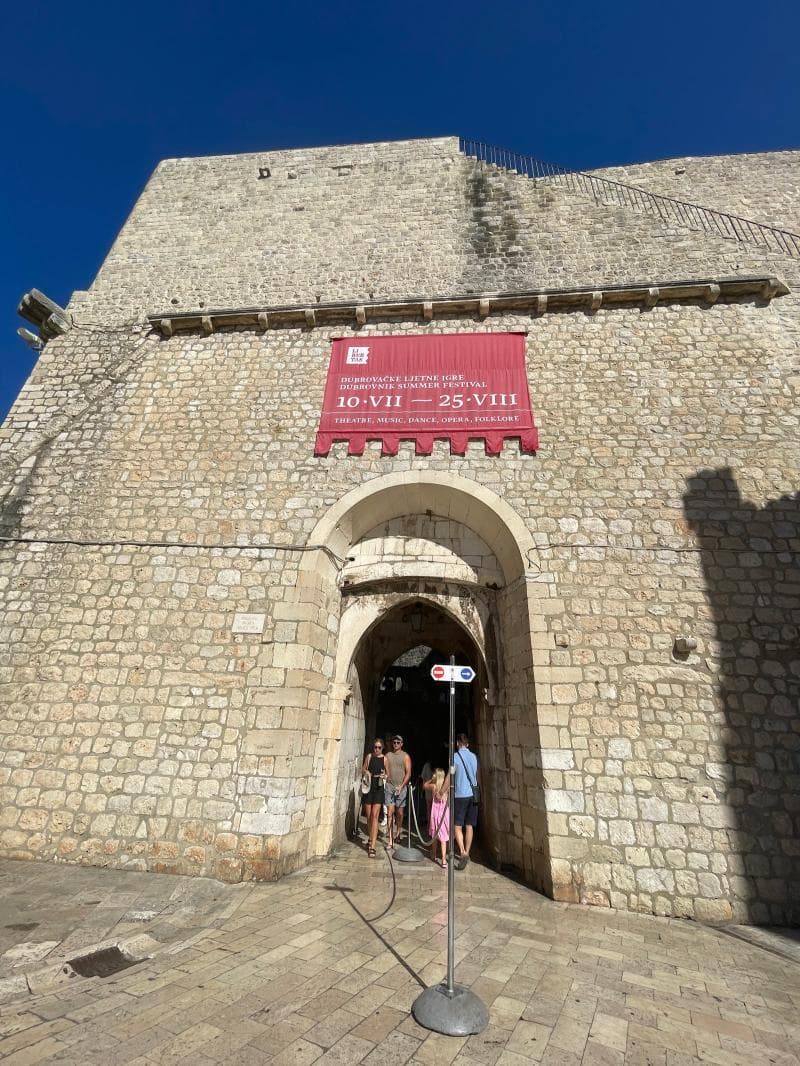
Discover the historic Stone Bridge at Pile Gate in Dubrovnik, Croatia, the grand entrance to the Old Town. Explore its rich history and cultural significance.
Overview
As you approach the ancient heart of Dubrovnik, Croatia, your journey into history begins at the monumental Pile Gate, the city's primary western entrance. Integral to this grand gateway is a remarkable stone bridge, serving as a powerful introduction to the UNESCO-listed Old Town. This beautifully preserved structure, with its three distinct arches, gracefully spans what was once a defensive moat, now transformed into a serene green garden. The Stone Bridge at Pile Gate is more than just a crossing; it is a symbolic threshold, inviting travelers to step back in time and immerse themselves in centuries of rich history and culture.
Functioning as the main entry point, the bridge leads you through a series of formidable fortifications that once guarded the prosperous Republic of Ragusa. Today, it stands as a testament to medieval engineering and a bustling meeting point for visitors eager to explore Dubrovnik's iconic streets and historical landmarks. From here, the city's main promenade, Stradun, beckons, promising an unforgettable adventure through a living museum.
History & Cultural Background
The history of the Pile Gate complex, and consequently its Stone Bridge, is deeply intertwined with Dubrovnik's strategic defense and its evolution as an independent maritime republic. The Pile Gate itself developed in several phases between the 13th and 16th centuries.
While the outer gate in its Renaissance arch form was built in 1537, the stone bridge that precedes it has an even earlier history. It was constructed in 1471 by the renowned city engineer Paskoje Miličević. This triple-arched stone bridge initially connected the outer fortifications to a wooden drawbridge. This wooden drawbridge was famously raised every night, effectively sealing off the city and symbolizing the careful vigilance required to protect Dubrovnik from unwelcome intruders. The mechanical counterweights used to operate this drawbridge are still visible today, offering a tangible link to the city's defensive past.
Before the stone bridge's construction, a simpler wooden drawbridge would have been in place, a typical medieval defense mechanism. The later addition of the sturdy stone bridge by Miličević further solidified the gate's defenses, showcasing the Republic of Ragusa's commitment to protecting its wealth and sovereignty. The entire gate complex, including the bridge, played a crucial role in safeguarding the city until its final days as an independent republic.
What Makes It Special
The Stone Bridge at Pile Gate is special not only for its historical significance but also for the unique architectural transition it facilitates. It marks the precise point where the vibrant, modern energy of Dubrovnik's outer city gives way to the timeless, pedestrian-only cobblestone streets of the Old Town.
Approaching the gate, you first encounter the impressive triple-arched stone bridge, a beautiful example of 15th-century craftsmanship. Beneath its arches, the former defensive moat, which once held water, is now a tranquil green area, offering a pleasant contrast to the imposing stonework above. This blend of formidable defense and natural beauty is truly captivating. As you cross the bridge and pass through the Renaissance-style outer gate (built in 1537), you are greeted by a statue of Saint Blaise, Dubrovnik's revered patron saint, looking down from above the inner Gothic arch, which dates back to 1460.
This sequence of historical layers – the 15th-century bridge, the 16th-century outer gate, and the 15th-century inner gate – creates a profound sense of entering a different era. The Stone Bridge, in particular, offers a moment of reflection on the ingenious ways ancient cities protected themselves, while simultaneously acting as a welcoming portal to the wonders within Dubrovnik's walls.
Stories, Fun Facts & Local Details
The Stone Bridge and the Pile Gate complex hold many stories, some rooted in history and others woven into the fabric of popular culture. One of the most fascinating historical details is the nightly ritual that once took place here. Every evening, the wooden drawbridge, which followed the stone bridge, would be raised, and the keys to the city were ceremoniously handed to the Rector for safekeeping. This act was a powerful symbol of Dubrovnik's independence and its constant vigilance against threats. Imagine the creaking of chains and the thud of the bridge as the city closed itself off for the night.
In more recent times, the iconic appearance of Pile Gate and its surroundings, including the Stone Bridge, has made it a recognizable filming location for the immensely popular television series 'Game of Thrones'. Fans often delight in recognizing King's Landing's gates as they cross this very bridge.
A charming detail is the transformation of the once-functional defensive moat beneath the bridge into a lush green garden. It's a peaceful spot, providing a moment of calm before the bustling Stradun, and a testament to the city's ability to adapt and repurpose its ancient defenses. Visitors can also still spot the mechanical counterweights from the original drawbridge system, a subtle nod to the engineering marvels of the past.
Visitor Perspective
For many travelers, crossing the Stone Bridge at Pile Gate is their very first experience of Dubrovnik's Old Town, and it sets a memorable tone for their visit. As you walk over the sturdy stone arches, you can almost feel the weight of history beneath your feet, imagining countless merchants, dignitaries, and citizens who have passed this way over centuries. The transition from the modern world outside to the ancient, car-free city within is immediate and palpable.
The bridge often bustles with activity, especially during peak tourist seasons. While the crowds can be substantial, particularly in the middle of the day, visiting early in the morning or later in the evening offers a more tranquil experience, allowing for clearer views and a deeper appreciation of the architecture. From the bridge, you get an initial glimpse of the grandeur of the city walls and the intricate details of the gate, with the statue of Saint Blaise presiding over the entrance. This vantage point also provides a sense of anticipation for the famous Stradun, Dubrovnik's main street, which lies just beyond the inner gate. The Stone Bridge truly acts as a theatrical curtain, revealing the magnificent stage of Dubrovnik's Old Town.
Coordinates: 18.10685, 42.641738
View on Google Maps💬 How Travelers Describe This Place
Based on community votes
Must See
722Interesting
595Unique
358Photogenic
196Beautiful
19
Traveler Stories
Discover memorable experiences shared by travelers who have visited this place.
No traveler stories yet.
Be the first traveler to share what made this place memorable.

Tour
By
Spot
Discover amazing places around the world. Your journey starts here.
Explore
© 2026 TourBySpot. All rights reserved.