Stockholm Cathedral
Stockholm, Sweden
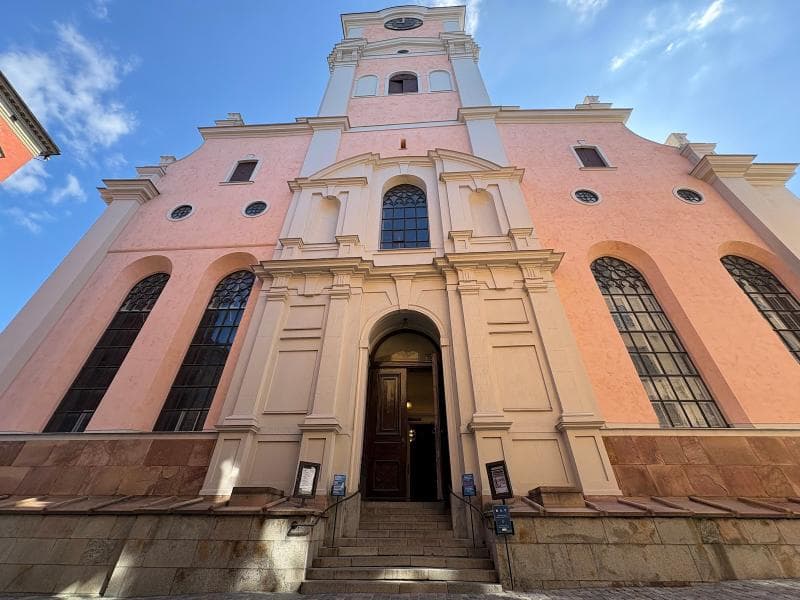
Explore Stockholm Cathedral (Storkyrkan) in Gamla Stan, Stockholm, Sweden. Discover its rich history, royal connections, and iconic artworks like Saint George and the Dragon.
Overview
Nestled in the heart of Gamla Stan, Stockholm's charming Old Town, stands Storkyrkan, officially known as Stockholm Cathedral or Sankt Nikolai kyrka (Church of Saint Nicholas). As the oldest church in Stockholm, it is a living testament to centuries of Swedish history, culture, and faith. More than just a place of worship, Storkyrkan serves as Sweden's national cathedral, holding immense significance as the venue for numerous royal coronations, weddings, and other state ceremonies. Its imposing presence, situated between the Royal Palace and the bustling Stortorget square, makes it an unmissable landmark for anyone exploring the historical core of the city.
History & Cultural Background
The origins of Stockholm Cathedral trace back to the 13th century, with its consecration documented in 1306, making it Stockholm's most ancient surviving building. Initially a Roman Catholic church dedicated to Saint Nicholas, it served as Stockholm's sole parish church for centuries, reflecting the city's early development. The church's appearance has evolved through time; while its interior largely retains a late medieval Gothic hall church style with vaulted ceilings and brick pillars, its exterior was dramatically transformed into a Baroque masterpiece during the 18th century to harmonize with the adjacent Royal Palace.
A pivotal moment in its history occurred during the Reformation in the 16th century. Storkyrkan played a crucial role as the place where Mass was first celebrated in Swedish, marking Sweden's shift from Catholicism to Lutheranism. This era also saw influential figures like Olaus Petri preach Lutheran doctrine within its walls, fundamentally changing Sweden's religious landscape. Since the creation of the Diocese of Stockholm in 1942, Storkyrkan has been the seat of the Bishop of Stockholm within the Church of Sweden, continuing its spiritual leadership.
What Makes It Special
Storkyrkan's unique allure lies in its deep connections to Swedish royalty and its extraordinary collection of art. It has been the traditional site for the coronations of Swedish monarchs for centuries, and more recently, has hosted significant royal weddings, including that of Crown Princess Victoria in 2010. Beyond its royal heritage, the cathedral houses two particularly striking and historically significant artworks.
- Saint George and the Dragon: This magnificent late 15th-century wooden sculpture by Bernt Notke is perhaps the cathedral's most famous treasure. It depicts Saint George on horseback slaying the dragon and was commissioned to commemorate Sten Sture the Elder's victory over Danish forces in the Battle of Brunkeberg in 1471. The artwork is not just a religious piece but also a powerful symbol of Swedish nationalism and resistance.
- Vädersolstavlan (The Sundog Painting): This captivating oil painting is a 17th-century replica of a lost 16th-century original, notable as one of the oldest known color depictions of Stockholm. It portrays a parhelion phenomenon, or 'sun dogs,' observed over Stockholm in 1535. The painting carries historical weight, commissioned during the Reformation when Olaus Petri interpreted the celestial event as a potential divine warning.
Other notable features include the exquisite Baroque altarpiece from 1652, crafted from silver and ebony, and the ornate pulpit, also in French Baroque style, created by Burchard Precht around 1700.
Stories, Fun Facts & Local Details
The Saint George and the Dragon sculpture is more than just a grand artwork; it's a piece of strategic medieval communication. Commissioned by Sten Sture the Elder, the regent who defeated the Danes, the sculpture implicitly linked his victory to a divine intervention, bolstering his political legitimacy. It's said that Sten Sture prayed to Saint George before the battle, making the artwork a direct embodiment of his gratitude and power.
The Vädersolstavlan painting, with its eerie depiction of sun dogs, served as a powerful visual commentary during a tumultuous period. Olaus Petri, who commissioned the original, viewed the celestial event as a sign, pondering its meaning for a Sweden undergoing radical religious and political changes. It offers a rare glimpse into 16th-century Stockholm's skyline and the deep intertwining of faith, natural phenomena, and public interpretation of events.
While coronations ceased in 1873 with King Oscar II, Storkyrkan continues its role in significant national events, including the annual opening of the Swedish Parliament and memorial services for prominent public figures like author Astrid Lindgren.
Visitor Perspective
Visiting Stockholm Cathedral offers a profound journey through Swedish history and art. Located conveniently within Gamla Stan, between the Royal Palace and Stortorget, it's easily accessible and an integral part of any Old Town exploration. As you step inside, you're greeted by the grandeur of its Gothic interior, a striking contrast to the Baroque exterior. Most visitors spend about 30-45 minutes exploring its treasures.
Visitors can admire the towering Saint George and the Dragon sculpture, the historic Vädersolstavlan, and the intricate details of the altarpiece and pulpit. The cathedral remains an active place of worship, offering regular services and often hosting concerts, providing a moment of peace and reflection amidst the city's bustle. An admission fee is usually charged, which helps with the cathedral's preservation and maintenance of its significant artworks.
Coordinates: 18.07056, 59.32583
View on Google Maps💬 How Travelers Describe This Place
Based on community votes
Must See
934Beautiful
276Photogenic
152Unique
30Interesting
16
Traveler Stories
Discover memorable experiences shared by travelers who have visited this place.
No traveler stories yet.
Be the first traveler to share what made this place memorable.

Tour
By
Spot
Discover amazing places around the world. Your journey starts here.
Explore
© 2026 TourBySpot. All rights reserved.