Stephen The Great Monument
Chisinau, Moldova
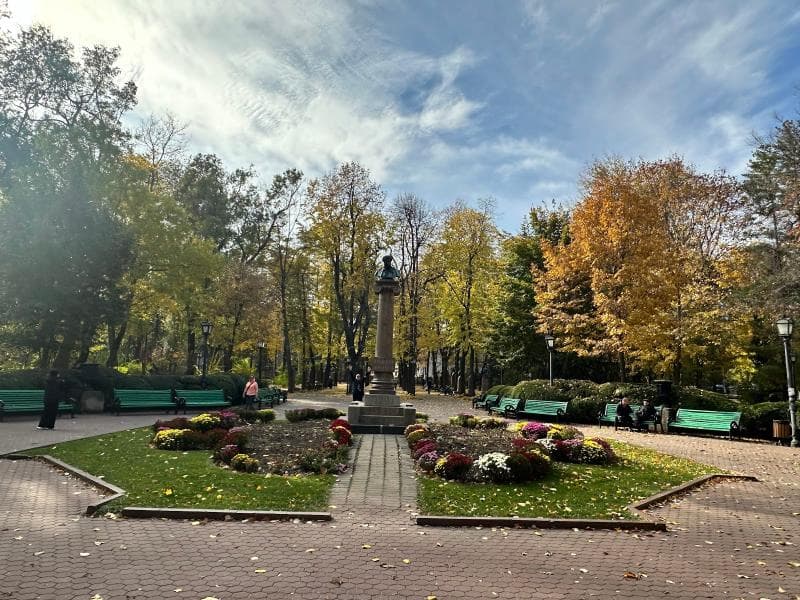
Discover the Stephen The Great Monument in Chisinau, Moldova. Explore its rich history, cultural significance, and the enduring legacy of Stephen the Great.
Overview
At the heart of Chisinau, Moldova's vibrant capital, stands the majestic Stephen the Great Monument, a profound tribute to one of the nation's most revered historical figures. Located prominently at the main entrance of Stephen the Great Central Park, this bronze statue serves as an enduring symbol of Moldovan identity and resilience. It commemorates Stephen III of Moldavia, affectionately known as Stephen the Great (Ștefan cel Mare), whose leadership profoundly shaped the region during the 15th century. The monument is not merely a static artwork; it is a dynamic focal point, a popular meeting place, and a site for significant national commemorations, drawing both curious travelers and proud locals alike.
History & Cultural Background
Stephen the Great ruled the Principality of Moldavia from 1457 to 1504, a period marked by intense geopolitical pressures. He is celebrated for his exceptional military prowess and strategic brilliance, successfully defending Moldavia against numerous formidable invaders, most notably the Ottoman Empire. His reign was characterized by 34 victories out of 36 battles, and beyond military triumphs, he was a prolific builder, commissioning 44 churches and monasteries, which contributed significantly to the country's cultural and spiritual development. Recognized for his deep faith and contributions, he was later canonized by the Romanian Orthodox Church.
The idea for the monument was conceived in 1923, and its creation was entrusted to the talented Moldovan sculptor Alexandru Plămădeală. Plămădeală undertook extensive research to accurately portray the legendary ruler, reportedly traveling widely to find historical portraits. The bronze statue itself was cast in Bucharest in 1927, utilizing metal from cannons captured from the Ottomans during the Romanian War of Independence (1877-1878), adding another layer of historical significance. The grand inauguration took place on April 29, 1928, coinciding with the tenth anniversary of Bessarabia's union with Romania. It symbolically replaced an earlier monument dedicated to Russian Emperor Alexander II, which had been demolished a decade prior.
What Makes It Special
The Stephen the Great Monument stands as an embodiment of national pride. Its design meticulously captures the essence of the revered ruler. The bronze figure of Stephen the Great is depicted in full regalia, wearing sovereign garments and a crown. In his left hand, he holds a Holy Cross, while his right hand often grasps a long sword. This iconic posture, with the cross held aloft, is often interpreted as symbolizing Stephen's devotion to faith and his commitment to defending his people and their spiritual heritage, suggesting that he prioritized faith over warfare.
The statue itself measures 5.20 meters in height and rests upon a 6-meter-tall stone pedestal. This pedestal, designed by the city architect Eugen Bernardazzi and engineer G.A. Levițchi, was crafted from durable stone sourced from the Cosăuți quarry. The monument's robust construction and thoughtful design reflect the lasting impact of Stephen the Great on Moldovan history. It's more than just a statue; it's a profound cultural artifact that encapsulates Moldova's enduring struggle for independence and its deep-rooted identity.
Stories, Fun Facts & Local Details
The Stephen the Great Monument is famously known as a 'monument-traveler' due to its tumultuous journey during periods of conflict and occupation. As Soviet forces advanced during World War II, the statue was relocated multiple times to safeguard it from destruction or desecration. In 1940, it was moved to Vaslui, Romania, and its original pedestal was unfortunately destroyed. It returned to Chisinau in 1942 but was again evacuated to Romania in 1944, this time to Craiova. The monument finally found its way back to Chisinau in 1945 and was ultimately restored to its original, prominent location in 1989. This incredible history of displacement and return mirrors the resilience of the Moldovan nation itself.
Adding a touch of local folklore, in 1989, the Moldavian poet Leonida Lari symbolically 'married' the Stephen the Great Monument. This act was a powerful political and cultural statement, reflecting nationalist sentiments during a period of significant change for Moldova.
Visitor Perspective
Visiting the Stephen the Great Monument offers a poignant insight into Moldova's rich history and cultural heritage. Situated at the entrance to Stephen the Great Central Park, the monument provides a grand welcome to one of Chisinau's most beloved green spaces. The park, which is the oldest in Moldova, covers approximately 7 hectares and is often called 'The Park of the Lovers' due to its popularity among couples. Strolling through the park's tree-lined avenues and flowerbeds, visitors can appreciate the serene setting surrounding the imposing statue. The monument is a favored spot for photographs and a common rendezvous point for locals, highlighting its central role in the city's daily life. Laying flowers at its base is a common gesture during national holidays and official visits, underscoring its continued significance as a symbol of national pride and a focal point for remembrance.
Coordinates: 28.8252, 47.0218
View on Google Maps💬 How Travelers Describe This Place
Based on community votes
Photogenic
950Beautiful
929Interesting
858Must See
730Unique
275
Traveler Stories
Discover memorable experiences shared by travelers who have visited this place.
No traveler stories yet.
Be the first traveler to share what made this place memorable.

Tour
By
Spot
Discover amazing places around the world. Your journey starts here.
Explore
© 2026 TourBySpot. All rights reserved.