Statue Of Louis XIV
Lyon, France
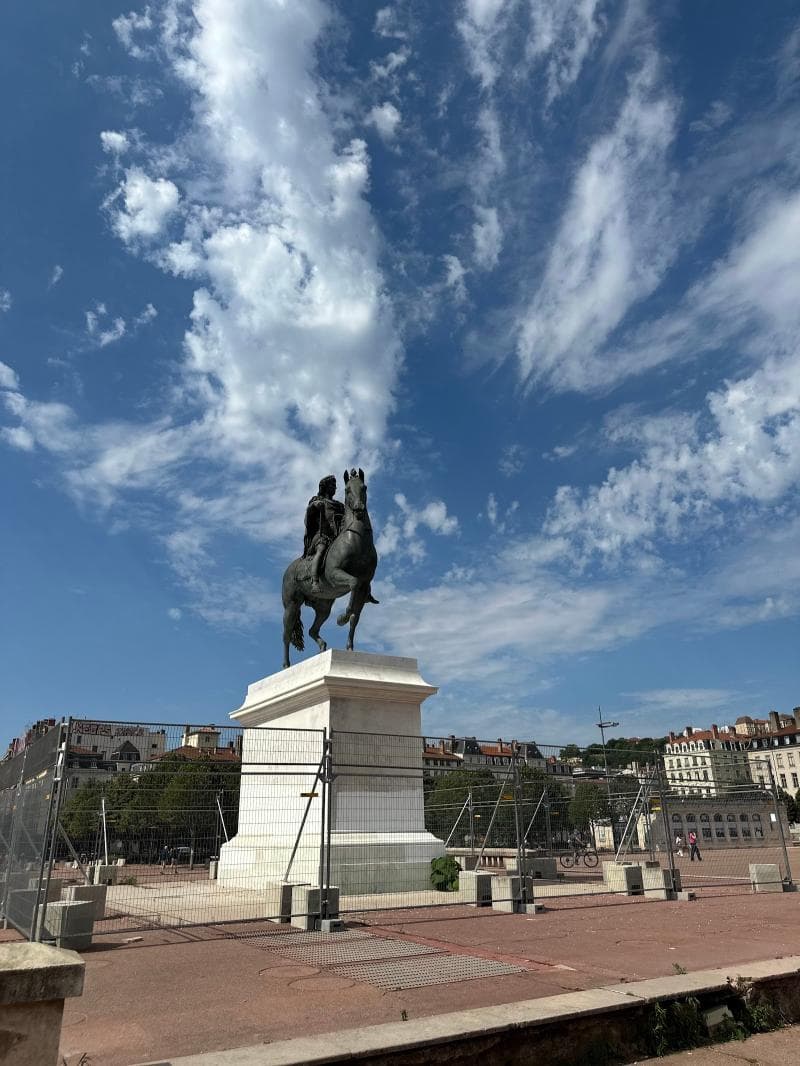
Discover the majestic equestrian Statue Of Louis XIV in Place Bellecour, Lyon, France – a historical landmark and cultural centerpiece.
Overview
In the heart of Lyon, France, within the expansive and iconic Place Bellecour, stands the majestic equestrian statue of Louis XIV. This prominent bronze monument depicts the 'Sun King' astride a powerful steed, serving as a central landmark in one of Europe's largest pedestrian squares. Crafted by the renowned sculptor François-Frédéric Lemot, the current statue was erected in 1825, replacing an earlier version destroyed during the French Revolution. Standing at 5.70 meters high and weighing 15 tonnes, it is affectionately known by locals as 'Le Cheval de Bronze' or 'The Bronze Horse'.
History & Cultural Background
The story of the Louis XIV statue in Place Bellecour is one of destruction and rebirth, deeply intertwined with French history. The square itself, once known as Place Royale and then Louis-le-Grand, was destined for a royal effigy from as early as 1658, when Louis XIV expressed a desire to have his statue placed there. The first equestrian statue, commissioned by the king and sculpted by Martin Desjardins, was completed in 1713. However, its journey to Lyon was fraught with challenges; after being created in Paris in 1694, its transport by river and sea was so complex that it capsized upon arrival in 1701, taking another twelve years to be installed on its pedestal. This initial monument, a symbol of royal power, met its end in 1793 during the fervor of the French Revolution, when a decree ordered the destruction of all royal representations. It was melted down, its bronze repurposed for cannons.
Decades later, during the Bourbon Restoration, the city of Lyon sought to reinstate this significant symbol. In 1825, François-Frédéric Lemot, a sculptor born in Lyon, was commissioned to create a new statue. The grand bronze casting took place in Paris and the colossal work was then transported to Lyon over twelve days, pulled by 24 horses, reaching its destination on October 29, 1825. The current statue is accompanied at its base by two allegorical figures representing the rivers Saône and Rhône, originally created by brothers Nicolas and Guillaume Coustou in 1720 for the first statue and reinstated in 1826 after being hidden during the Revolution.
What Makes It Special
What truly sets Lyon's Statue of Louis XIV apart is not just its impressive scale, but its unique artistic and historical details. Lemot's depiction of Louis XIV is in the Roman style, with the king riding bareback, without a saddle or stirrups, crowned with laurels like a Roman Caesar. This artistic choice contributes to a common misconception, which has even spawned an enduring local legend. Furthermore, its placement in Place Bellecour, one of Europe's largest open and pedestrian squares, allows for an uninterrupted appreciation of its grandeur. The statue also stands as a focal point within a UNESCO World Heritage site, underscoring its cultural importance.
Stories, Fun Facts & Local Details
The statue is rich in local lore and fascinating anecdotes. One of the most persistent urban legends claims that sculptor François-Frédéric Lemot committed suicide after realizing he had forgotten to include stirrups on the king's boots. However, this tale is entirely untrue. Lemot lived until 1827, two years after the statue's installation, and his decision to portray Louis XIV in the Roman style without stirrups was an artistic choice, not an oversight. Another charming detail is the statue's festive arrival in Lyon. Contemporary accounts describe a large, enthusiastic crowd greeting the statue with wild applause as it entered the city, turning its installation into a significant public event. For Lyonnais, the statue also holds a practical, humorous significance: it's a popular meeting spot, with the common local expression 'to meet under the horse's tail' (se retrouver sous la queue du cheval) serving as a casual way to arrange rendezvous.
Visitor Perspective
For any traveler to Lyon, the Statue of Louis XIV is more than just a historical monument; it's an experience. Standing at the very center of Place Bellecour, it serves as a natural compass for navigating the city's Presqu'île, the peninsula between the Rhône and Saône rivers. As you stand before this bronze colossus, you can feel the weight of history and the enduring legacy of a powerful monarch. It's a perfect spot for photography, offering sweeping views of the square and the surrounding architecture, with Fourvière hill often visible in the background. Whether you're a history enthusiast, an art lover, or simply a curious wanderer, observing the statue provides a moment of reflection on Lyon's past and its vibrant present. It’s a place where history feels alive, where grand narratives and local traditions converge, making it an essential stop on any Lyon itinerary.
Coordinates: 4.826, 45.7545
View on Google Maps💬 How Travelers Describe This Place
Based on community votes
Interesting
998Photogenic
481Beautiful
472Must See
399Unique
92
Traveler Stories
Discover memorable experiences shared by travelers who have visited this place.
No traveler stories yet.
Be the first traveler to share what made this place memorable.

Tour
By
Spot
Discover amazing places around the world. Your journey starts here.
Explore
© 2026 TourBySpot. All rights reserved.