Statue of Liberty Pedestal Museum
New York, United States
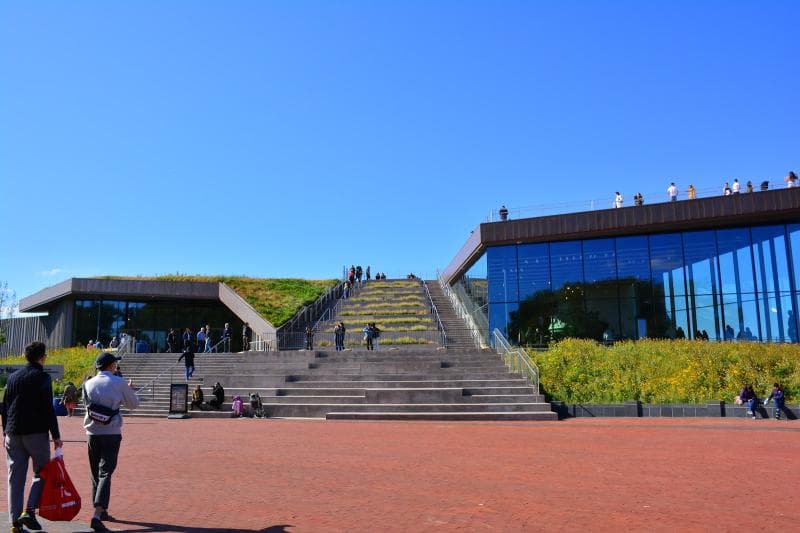

Explore the Statue of Liberty Pedestal Museum in New York, United States. Discover historical exhibits, engineering marvels, and panoramic views from Lady Liberty's foundation.
Overview
Perched majestically in New York Harbor, the Statue of Liberty is an enduring symbol of freedom and democracy. While many visitors marvel at Lady Liberty from afar, a unique experience awaits within her very foundation: the Statue of Liberty Pedestal Museum. Located inside the granite pedestal that elevates the colossal statue, this historical exhibit space offers an intimate journey into the monument's creation and significance. Access to the pedestal provides an opportunity to explore engaging displays that delve into the design, construction, and symbolism of both the Statue and its impressive base. It also grants visitors unparalleled views of the Statue's internal structure and the stunning New York skyline and harbor.
Unlike the newer, separate Statue of Liberty Museum located elsewhere on Liberty Island, the Pedestal Museum specifically focuses on the story housed within the Statue's foundation itself. Visitors enter through a dedicated security checkpoint, then proceed into the historic base, which includes the Fort Wood level. This experience allows for a profound connection to the landmark, offering perspectives rarely seen by those who only view the Statue from the ground. It is an essential stop for anyone seeking a deeper understanding of this iconic American treasure.
History & Cultural Background
The history of the Statue of Liberty's pedestal is deeply intertwined with the Statue's own journey from concept to icon. While France gifted the Statue itself to the United States, the American people were responsible for funding and constructing the pedestal. This monumental task began in the late 19th century, led by architect Richard Morris Hunt, who designed the granite pedestal to complement, rather than overshadow, Frédéric Auguste Bartholdi's Statue. Hunt's initial designs were grander, but budget constraints led to a more streamlined yet still imposing 89-foot structure, roughly half the height of the Statue itself.
Construction of the pedestal took place atop Fort Wood, an eleven-pointed, star-shaped military fort built between 1808 and 1811 to protect New York Harbor. The fort's robust foundation provided a ready-made base, ingeniously integrated into Hunt's design. Fundraising for the pedestal proved challenging in the United States, prompting influential figures like newspaper publisher Joseph Pulitzer to launch public campaigns, urging ordinary Americans to donate. These grassroots efforts ultimately succeeded, showcasing a collective national pride that brought the project to fruition. The cornerstone of the pedestal was ceremoniously laid on August 5, 1884, and the pedestal was completed by April 1886.
What Makes It Special
What truly distinguishes the Statue of Liberty Pedestal Museum is its unique vantage point and the tangible connection it offers to history. Stepping inside the pedestal allows visitors to literally stand within the monument, observing the intricate engineering that supports Lady Liberty. From the pedestal's interior, you can look up into the Statue's hollow copper shell and see parts of Gustave Eiffel's internal iron framework, a feat of 19th-century engineering that allows the copper skin to move independently.
The exhibits inside the pedestal offer detailed insights into the collaborative effort between France and the United States, chronicling the challenges and triumphs of the Statue's creation. You'll find interpretive displays and historical context regarding the gift, assembly, and dedication of the Statue. While the original torch now resides in the separate Statue of Liberty Museum on Liberty Island, the pedestal exhibits continue to highlight the evolution of this global symbol. The observation deck at the top of the pedestal, approximately 10 stories high, provides panoramic 360-degree views of New York Harbor, the Manhattan skyline, and Ellis Island, making it an essential part of the visit.
Stories, Fun Facts & Local Details
The pedestal is home to one of America's most poignant literary works: Emma Lazarus's sonnet, 'The New Colossus.' Written in 1883 to help raise funds for the pedestal's construction, the poem's famous lines, 'Give me your tired, your poor, / Your huddled masses yearning to breathe free,' are inscribed on a bronze plaque mounted inside the pedestal's lower level. This poem transformed the Statue's meaning, solidifying her role as a welcoming beacon for immigrants arriving in America.
Another fascinating detail is the pedestal's unique foundation. It was constructed within the walls of Fort Wood, an old star-shaped fort. The eleven-pointed star shape of the fort remains visible from above and is a distinctive feature of Liberty Island. The American fundraising campaign for the pedestal was an early example of 'crowdfunding,' with Joseph Pulitzer's newspaper, The New York World, publishing the names of every donor, regardless of the amount, to encourage contributions.
Visitor Perspective
Visiting the Statue of Liberty Pedestal Museum offers an enriching and memorable experience. Access to the pedestal is limited and requires advance reservations, which are highly recommended due to its popularity. While tickets for the general grounds of Liberty Island are usually available, securing a pedestal ticket ensures entry into this unique internal exhibition.
Once inside, visitors can choose to ascend the 215 steps to the top of the pedestal or utilize an elevator for a more accessible journey. The exploration can be self-guided, allowing you to absorb the historical information and enjoy the views at your own pace. From the observation deck, you're positioned perfectly to appreciate the sheer scale of Lady Liberty and the bustling harbor she overlooks. The experience provides a deep appreciation for the artistry, engineering, and the profound ideals that the Statue of Liberty and her pedestal represent for New York, the United States, and the world.
Coordinates: -74.0445, 40.6892
View on Google Maps💬 How Travelers Describe This Place
Based on community votes
Must See
958Unique
728Interesting
481Beautiful
382Photogenic
183
Traveler Stories
Discover memorable experiences shared by travelers who have visited this place.
No traveler stories yet.
Be the first traveler to share what made this place memorable.

Tour
By
Spot
Discover amazing places around the world. Your journey starts here.
Explore
© 2026 TourBySpot. All rights reserved.