Statue Collections
Skopje, North Macedonia
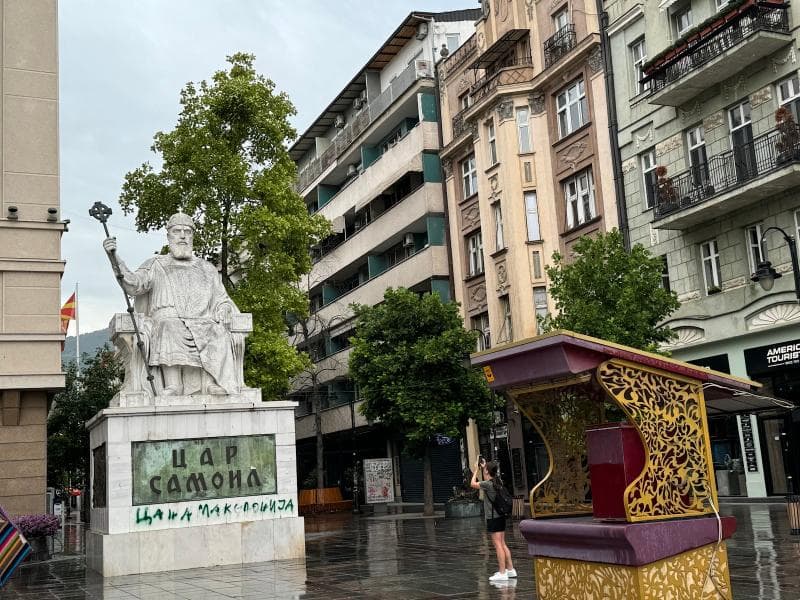
Explore the extensive statue collections in Macedonia Square, Skopje, North Macedonia, detailing their history, cultural significance, and unique stories.
Overview
Macedonia Square, nestled in the heart of Skopje, North Macedonia, serves as the vibrant nucleus of the city's public life. More than just a central plaza, it is a grand open-air gallery, home to an extensive and often debated collection of statues that collectively tell a complex narrative of national identity and historical ambition. The square itself is the largest in North Macedonia, spanning approximately 18,500 square meters, and acts as a focal point where the Vardar River and the historic Stone Bridge converge. Visitors will discover a cityscape dramatically reshaped by a monumental urban renewal project, giving rise to hundreds of sculptures that beckon curiosity and contemplation.
History & Cultural Background
The proliferation of statues in Macedonia Square is largely a result of the ambitious and controversial 'Skopje 2014' project. Initiated by the government in 2010, the project aimed to imbue the capital with a more classical aesthetic, enhance its visual appeal, and assert a distinct Macedonian identity with historical continuity from antiquity to modern times. This massive undertaking involved the construction of numerous new buildings, as well as the erection of around 130 statues, fountains, and bridges, transforming Skopje's city center between 2010 and 2018. The project was driven by a desire to redress what was perceived as the city's lack of historical monumentality following the devastating 1963 earthquake, which had leveled much of Skopje. However, it sparked considerable debate, with critics citing concerns over its immense cost, estimated to range from €80 million to over €500 million, and its perceived promotion of a nationalistic agenda through 'antiquization.' Despite the controversy, the project undoubtedly redefined Skopje's urban landscape, making its center visually distinctive.
What Makes It Special
The most striking element of Macedonia Square's statue collection is the colossal 'Warrior on a Horse' monument. Standing at an impressive 12 meters tall atop a 10-meter pedestal, this bronze equestrian statue dominates the square. Officially unveiled on September 8, 2011, commemorating two decades of Macedonian independence, the monument is widely understood to depict Alexander the Great, though it was deliberately given a generic name to navigate long-standing diplomatic disputes with Greece over the historical figure's heritage. The monument is a spectacle, featuring a fountain at its base surrounded by statues of ancient Macedonian foot soldiers and lions, symbols historically associated with Alexander. Each evening, the monument comes alive with a captivating water and light show synchronized to classical music. Directly across the Stone Bridge stands another significant monument, known as the 'Warrior Monument,' largely believed to represent Philip II of Macedon, Alexander the Great's father. Beyond these grand figures, the square and its immediate vicinity host numerous other statues, honoring historical figures such as the Macedonian revolutionaries Goce Delčev and Dame Gruev, the Byzantine Emperor Justinian I, and even Skopje-born humanitarian Mother Teresa.
Stories, Fun Facts & Local Details
The sheer density of statues in Skopje has given rise to local humor, with a common quip suggesting there might be more statues than residents in the city. This artistic deluge, largely concentrated in Macedonia Square, has created a unique, almost surreal ambiance. One interesting detail stemming from the naming dispute with Greece is the deliberate official ambiguity surrounding the 'Warrior on a Horse' and 'Warrior Monument.' While locals and guidebooks often refer to them as Alexander the Great and Philip II, the official government titles avoid direct attribution. This careful wording highlights the complex historical narratives woven into the city's modern identity. The Skopje 2014 project itself generated immense debate, with some viewing it as a source of national pride and others as a costly exercise in 'kitsch' or a distraction from pressing societal issues. Visitors might also notice the 'Bridge of Civilizations' adorned with its own collection of sculptures, further enhancing the city's open-air museum feel.
Visitor Perspective
For the curious traveler, visiting the Statue Collections in Macedonia Square is an immersive experience. Walking through the square, one is immediately surrounded by a multitude of bronze and marble figures, each inviting a moment of pause and reflection. The sheer scale of the 'Warrior on a Horse' is awe-inspiring, serving as an undeniable centerpiece that draws the eye. The constant flow of activity—from locals going about their day to tourists capturing photographs—adds to the vibrant atmosphere. Exploring the statues allows for a direct engagement with North Macedonia's determined efforts to define its national identity and celebrate its perceived historical lineage. Whether appreciating the artistry, pondering the historical context, or simply enjoying the lively public space, the statues offer a distinctive and memorable glimpse into the cultural heart of Skopje. The evening light shows around the main monument provide an extra layer of enchantment, transforming the square into a dynamic spectacle of light and sound.
Coordinates: 21.431698, 41.996123
View on Google Maps💬 How Travelers Describe This Place
Based on community votes
Unique
748Photogenic
304Must See
85Beautiful
73Interesting
35
Traveler Stories
Discover memorable experiences shared by travelers who have visited this place.
No traveler stories yet.
Be the first traveler to share what made this place memorable.

Tour
By
Spot
Discover amazing places around the world. Your journey starts here.
Explore
© 2026 TourBySpot. All rights reserved.