State Rooms
Innsbruck, Austria
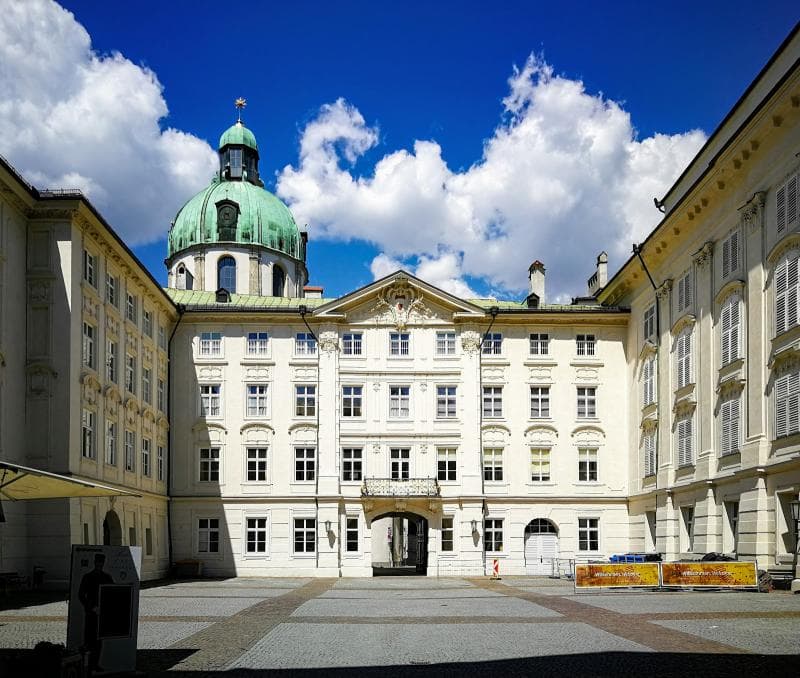
Explore the opulent State Rooms of Hofburg Innsbruck, Austria. Discover Habsburg imperial history, Maria Theresia's Baroque splendor, and Empress Sisi's apartments.
Overview
Nestled in the heart of Innsbruck, Austria, the Hofburg Innsbruck stands as a majestic testament to centuries of imperial history. It is renowned as one of Austria's three most significant cultural buildings, alongside the Hofburg Palace and Schönbrunn Palace in Vienna. A visit to the Hofburg is a journey through time, offering a unique glimpse into the opulent world of the Habsburg dynasty. The highlight for many curious travelers is exploring the magnificent State Rooms, also known as the Imperial Apartments. These lavish spaces reveal the architectural evolution of the palace and the personal stories of its famous residents, including Emperor Maximilian I, Empress Maria Theresia, and Empress Elisabeth, affectionately known as Sisi.
History & Cultural Background
The origins of the Hofburg Innsbruck trace back to the 15th century, evolving from medieval fortifications into a grand imperial residence. Construction began around 1460 under Archduke Sigismund, and by 1497, Emperor Maximilian I had significantly expanded the palace in the late Gothic style, elevating Innsbruck to a vital financial center and solidifying the Hofburg's reputation as 'the most beautiful building of the late Gothic period'. Archduke Ferdinand II further transformed the palace into a Renaissance castle in the 16th century, establishing Innsbruck as a hub for courtly culture north of the Alps.
However, the palace's current splendid Baroque and Rococo appearance is largely due to extensive renovations commissioned by Empress Maria Theresia between 1754 and 1776. A deeply personal tragedy influenced these changes: in 1765, during the wedding celebrations for her son Leopold II, her husband, Emperor Francis I, died suddenly within the palace. Heartbroken, Maria Theresia ordered the room of his death to be converted into a memorial chapel, transforming the Hofburg into a significant memorial site and a representative building in his honor. Subsequent redesigns in the 19th century included the creation of Empress Elisabeth's apartment, reflecting the evolving tastes of the imperial family.
What Makes It Special
The Hofburg Innsbruck is a captivating blend of architectural styles, primarily showcasing its Baroque and Rococo transformation under Maria Theresia, alongside earlier Gothic and Renaissance elements. Within the State Rooms, visitors encounter a series of individually designed spaces, each telling a part of the imperial story.
- The Giants' Hall (Riesensaal): This magnificent ballroom, one of Western Austria's most important festival halls, is adorned with breathtaking ceiling frescoes by Franz Anton Maulbertsch, depicting the union of the Habsburg and Lorraine dynasties. It served as a grand family gallery, featuring life-sized portraits of Maria Theresia's children and grandchildren.
- Maria Theresia's Rooms: These rooms showcase the elegant late Baroque style, complete with period furniture and exquisite artworks, providing insight into the Empress's refined taste.
- Empress Elisabeth's (Sisi's) Apartment: Designed in the 19th-century Rococo style, this apartment is faithfully preserved with its original furnishings, including luxurious silk tapestries and intricate decorations, offering a glimpse into the life of the enigmatic Empress.
- The Hofburg Chapel: This bright and cheerful Rococo chapel, built in the precise room where Emperor Francis I passed away, serves as a poignant memorial.
- The Guard Hall (Gardesaal): Adorned with large-format battle paintings, particularly from the Ottoman Wars, and family portraits, it served as a reception room leading to the Giants' Hall.
Stories, Fun Facts & Local Details
Beyond the grandeur, the Hofburg holds compelling stories. Empress Maria Theresia, despite only visiting Innsbruck twice in her lifetime, profoundly shaped the palace as a memorial to her beloved husband. The tragic circumstances of Emperor Francis I's death deeply impacted her, leading to the creation of the Hofburg Chapel. Another fascinating detail is that Empress Elisabeth, the famous 'Sisi', stayed overnight at the Hofburg only once, on October 14-15, 1871. Historically, the Hofburg wasn't always a peaceful imperial retreat; in 1809, during the Tyrolean uprising, rebel leader Andreas Hofer briefly used it as his headquarters. Today, the palace's historic spaces, such as the Giants' Hall and the spacious courtyard, continue to host significant cultural events, concerts, and festivities, blending past and present.
Visitor Perspective
Stepping into the State Rooms of the Hofburg Innsbruck allows visitors to truly immerse themselves in the lives of the imperial family. It offers a unique opportunity to walk through spaces once inhabited by emperors and empresses, experiencing the grandeur and intimacy of their daily lives. The meticulously restored rooms, from the sweeping Giants' Hall to the more personal apartments of Maria Theresia and Sisi, provide a tangible connection to Habsburg history. As a public museum, the Hofburg presents its rich heritage through various themed areas, including the Maria Theresia Rooms, Empress Elisabeth's Apartment, a Furniture Museum, an Ancestral Gallery, and a Painting Gallery, ensuring a comprehensive and enlightening visit for anyone curious about this imperial legacy.
Coordinates: 11.3948986, 47.2688635
View on Google Maps💬 How Travelers Describe This Place
Based on community votes
Beautiful
476Unique
465Interesting
276Must See
128Photogenic
126
Traveler Stories
Discover memorable experiences shared by travelers who have visited this place.
No traveler stories yet.
Be the first traveler to share what made this place memorable.

Tour
By
Spot
Discover amazing places around the world. Your journey starts here.
Explore
© 2026 TourBySpot. All rights reserved.