State Hall
Stockholm, Sweden
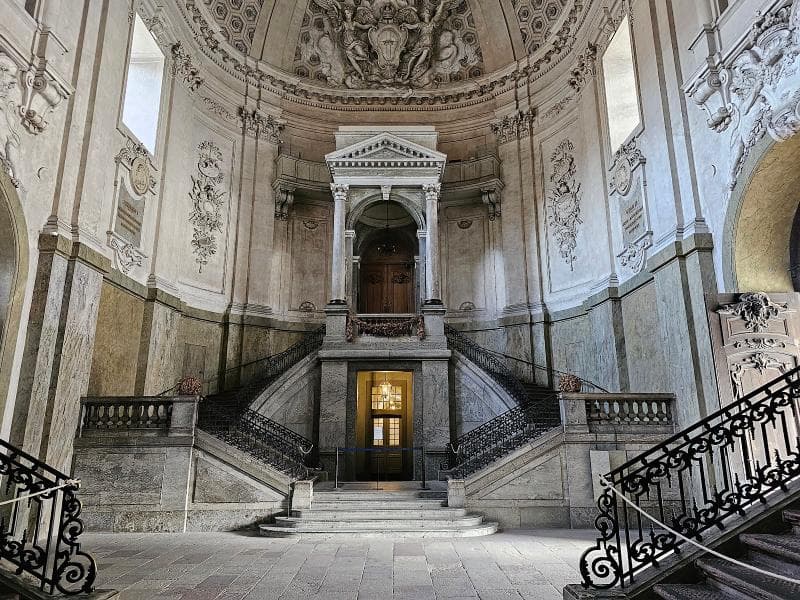
Explore the historic State Hall (Rikssalen) in Stockholm Palace, Stockholm, Sweden. Discover its Baroque splendor and Queen Kristina's silver throne.
Overview
Nestled within the grandeur of Stockholm Palace in Stockholm, Sweden, the State Hall, known in Swedish as Rikssalen, stands as a profound testament to the nation's royal heritage and political history. This magnificent chamber is not merely a room but a stage where significant moments in Swedish monarchy and parliamentary life have unfolded. As part of the Royal Apartments, the State Hall is a central feature for visitors exploring the palace, offering a glimpse into the formal life of the Swedish Crown.
The State Hall is renowned for its opulent Baroque design, reflecting the architectural ambition of the palace's construction after the devastating fire of 1697. It served as the primary venue for parliamentary sessions and royal ceremonies for centuries, embodying the convergence of religious and worldly power within the kingdom.
History & Cultural Background
The history of the State Hall is intricately linked with that of Stockholm Palace itself, which was rebuilt following the catastrophic fire of May 1697 that destroyed the medieval Tre Kronor Castle. The fire, ironically, started in the attic above the old Hall of State. The design for the new palace, including the State Hall, was spearheaded by Nicodemus Tessin the Younger, drawing inspiration from Roman Baroque architecture. However, due to the Great Northern War, construction was delayed, and the State Hall was finally ready for use by the parliament in 1755.
Throughout its existence, the State Hall has been the backdrop for numerous pivotal events. It was here that monarchs received homage and where the Swedish parliament historically convened. The room's strategic location, flanked by the Royal Chapel, symbolically underscores the close ties between church and state in historical Sweden.
What Makes It Special
The undeniable centerpiece of the State Hall is Queen Kristina's silver throne. Crafted for her coronation in 1650, this exquisite piece of furniture is a rare and striking example of silver artistry. Its presence immediately captivates visitors, offering a tangible link to a powerful queen from Sweden's past. The throne itself is a gift from Count Magnus Gabriel De la Gardie and features intricate forged and cast silver sections mounted on a wooden frame, adorned with allegorical figures of Justice and Truth.
Beyond the throne, the hall's decorative sculptures are a testament to 18th and 19th-century artistry, designed to pay homage to the Swedish nation. Notable works include large marble sculptures by Johan Niclas Byström from the 1840s, depicting King Karl XIV Johan and King Gustav II Adolf, flanking the throne. Sculptures on the cornice further enrich the space, personifying concepts like Peace, Strength, Religion, and Justice. These artistic details collectively transform the State Hall into a gallery of national pride and historical narrative.
Stories, Fun Facts & Local Details
Imagine the hushed anticipation in the State Hall as monarchs once ascended the dais to sit upon the silver throne, a symbol of their reign. Queen Kristina, despite her 'ill-fated reign,' left behind this stunning legacy, a piece of furniture so precious it's often considered the most impressive feature of the hall. The very room has witnessed the pomp and circumstance of coronations, the solemnity of parliamentary debates, and the majesty of royal receptions.
A less known fact is that the current palace was designed in the Baroque style by Nicodemus Tessin the Younger, who was a pupil of the renowned Italian artist Gian Lorenzo Bernini. This connection explains the Roman palace influence seen throughout Stockholm Palace, making it a unique architectural gem in Scandinavia. The sheer scale of the palace, with over 600 rooms, means that the State Hall is just one of many wonders, yet its historical significance and striking appearance make it stand out.
Visitor Perspective
Visiting the State Hall offers an immersive journey into Sweden's royal past. As you step into this grand chamber, you'll feel the weight of history and the echo of countless royal pronouncements. It's an integral part of the Royal Apartments tour, which showcases the lavish state rooms used for the King and Queen's receptions. Guided tours are highly recommended to truly bring the history of the hall to life, providing context to the collections and the historical figures who once graced this space.
It's important for visitors to note that the Royal Apartments, including the State Hall, are working parts of the current royal residence. This means they can be partially or completely closed on occasion due to official receptions or state events. Checking the official palace website for opening hours and any potential closures before your visit is always a good idea to ensure a seamless experience. Even so, experiencing the State Hall is an unforgettable encounter with the enduring legacy of Swedish royalty.
Coordinates: 18.07167, 59.32694
View on Google Maps💬 How Travelers Describe This Place
Based on community votes
Beautiful
921Interesting
831Unique
232Photogenic
211Must See
147
Traveler Stories
Discover memorable experiences shared by travelers who have visited this place.
No traveler stories yet.
Be the first traveler to share what made this place memorable.

Tour
By
Spot
Discover amazing places around the world. Your journey starts here.
Explore
© 2026 TourBySpot. All rights reserved.