Star Plaques
Los Angeles, United States
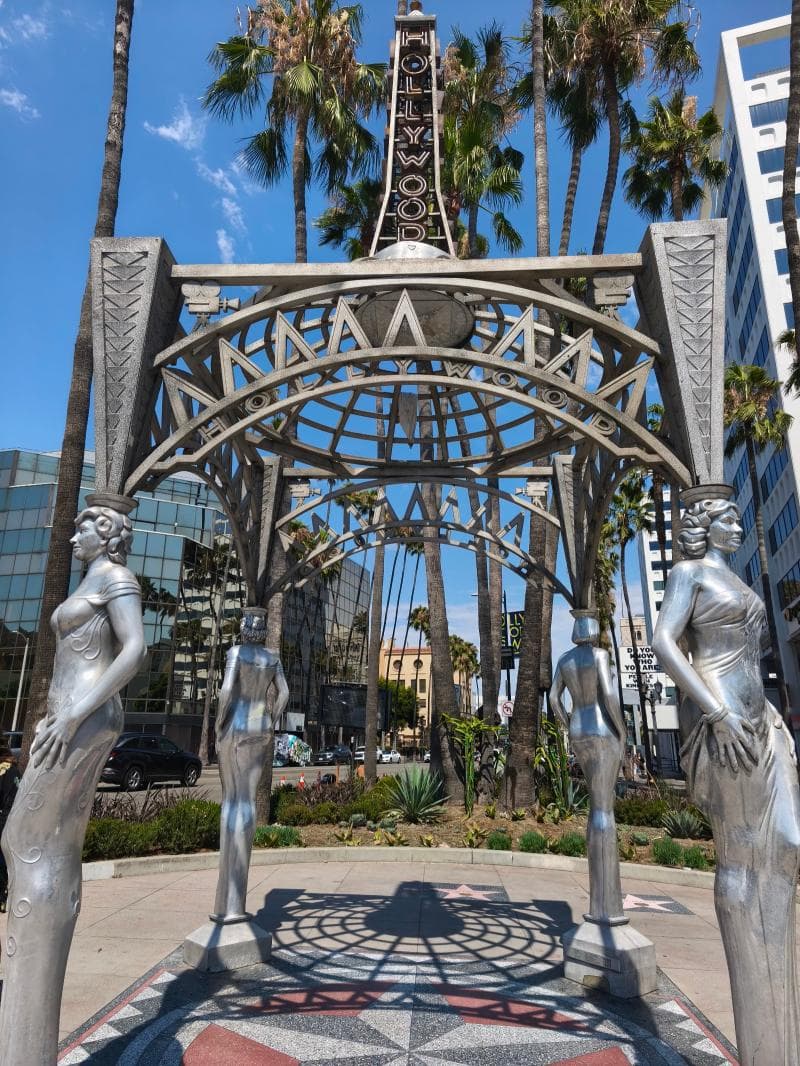
Explore the iconic Star Plaques of the Hollywood Walk of Fame in Los Angeles, United States, honoring entertainment legends. Discover its history, symbols, and unique stories.
Overview
The Star Plaques, more famously known collectively as the Hollywood Walk of Fame, are an iconic landmark nestled in the heart of Los Angeles, United States. This globally recognized attraction stretches along fifteen blocks of Hollywood Boulevard and three blocks of Vine Street, serving as a permanent tribute to luminaries in the entertainment industry. Each five-pointed, coral-pink terrazzo star, rimmed with brass and set into a charcoal-colored terrazzo background, bears the name of an honoree. Administered by the Hollywood Chamber of Commerce and maintained by the self-financing Hollywood Historic Trust, the Walk features over 2,850 stars as of mid-2026, drawing an estimated ten million visitors annually.
History & Cultural Background
The concept of the Hollywood Walk of Fame originated in 1953, proposed by E.M. Stuart, then the volunteer president of the Hollywood Chamber of Commerce. His vision was to 'maintain the glory of a community' and revitalize Hollywood's image during a period of urban decline. Early design ideas were quite different, at one point envisioning blue and brown sidewalks with caricatures of celebrities, but these were deemed impractical and costly. The final, now-iconic design of the coral-pink star with a brass rim was adopted, and eight experimental stars were unveiled on August 15, 1958, including one for Joanne Woodward. The official groundbreaking ceremony took place on February 8, 1960. The very first permanent star installed was for director Stanley Kramer on March 28, 1960, near Hollywood and Gower. By the spring of 1961, 1,558 stars had been installed, effectively completing the initial phase of the Walk. Its cultural significance was formally recognized in 1978 when it was designated a Los Angeles Historic-Cultural Monument.
What Makes It Special
What truly distinguishes these star plaques is their intricate symbolism, making each a miniature monument to a specific facet of entertainment. Each star features a brass emblem indicating the category of the honoree's contribution to the arts. These five unique symbols are: a classic film camera for Motion Pictures, a television set for Television, a phonograph record for Recording, a radio microphone for Radio, and a pair of theatrical masks, symbolizing both comedy and tragedy, for Live Performance/Theatre. This thoughtful design transforms a simple sidewalk into a narrative of Hollywood's rich history, allowing visitors to instantly identify the realm in which each star achieved their legendary status. The placement of these emblems into the ground creates a profound paradox: icons made permanent, yet intimately accessible to everyone passing by, laying immortality at the feet of millions.
Stories, Fun Facts & Local Details
The process of earning a star is a meticulous one, requiring nomination by a sponsor (often a studio or publicist) and approval by the Hollywood Chamber of Commerce. A significant sponsorship fee, currently $85,000 as of 2026, covers the creation, installation, and ongoing maintenance of each star, ensuring the tradition continues for future generations. Each year, approximately 25 to 30 new stars are added, continuing the growth of this living map of entertainment history. Among the thousands of stars, some boast particularly intriguing stories. For instance, the legendary boxer Muhammad Ali's star is uniquely mounted on a wall of the Dolby Theatre, rather than on the sidewalk, at his personal request, as he did not wish to have his name, shared with the Islamic prophet, walked upon. The Apollo 11 crew received a star featuring a unique moon emblem, recognizing their contribution to the most widely-watched television broadcast in history, instead of a standard TV set symbol. In some cases, the Walk tells a tale of similar names: two stars honor different individuals named Harrison Ford (a silent film actor and the modern-day actor), and two for Michael Jackson (the singer and a radio personality), sometimes leading to fan confusion and misplaced tributes. Gene Autry stands out as an individual with five stars, one in each of the original five categories, highlighting his versatile career.
Visitor Perspective
Visiting the Star Plaques of the Hollywood Walk of Fame offers a unique, free, and accessible experience for any traveler. The sidewalk is public and can be explored at any hour. While most days might not feature live celebrities, the presence of their names etched in stone allows for a powerful connection to cinematic and cultural history. Visitors often spend time searching for their favorite honorees, a task made easier by online search tools provided by the Hollywood Chamber of Commerce. Posing for photos with a favorite star is a popular pastime. For those hoping to witness a piece of history in the making, attending a star unveiling ceremony is a memorable event. These ceremonies are free and open to the public, though early arrival is recommended to secure a good viewing spot. The Walk of Fame is more than just a tourist attraction; it's a constantly evolving cultural shrine where fans leave flowers and tributes, transforming it into a living memorial and a testament to the enduring impact of entertainment legends.
Coordinates: -118.3267, 34.1016
View on Google Maps💬 How Travelers Describe This Place
Based on community votes
Unique
995Beautiful
964Photogenic
929Interesting
730Must See
482
Traveler Stories
Discover memorable experiences shared by travelers who have visited this place.
No traveler stories yet.
Be the first traveler to share what made this place memorable.

Tour
By
Spot
Discover amazing places around the world. Your journey starts here.
Explore
© 2026 TourBySpot. All rights reserved.