Staircases
Riga, Latvia
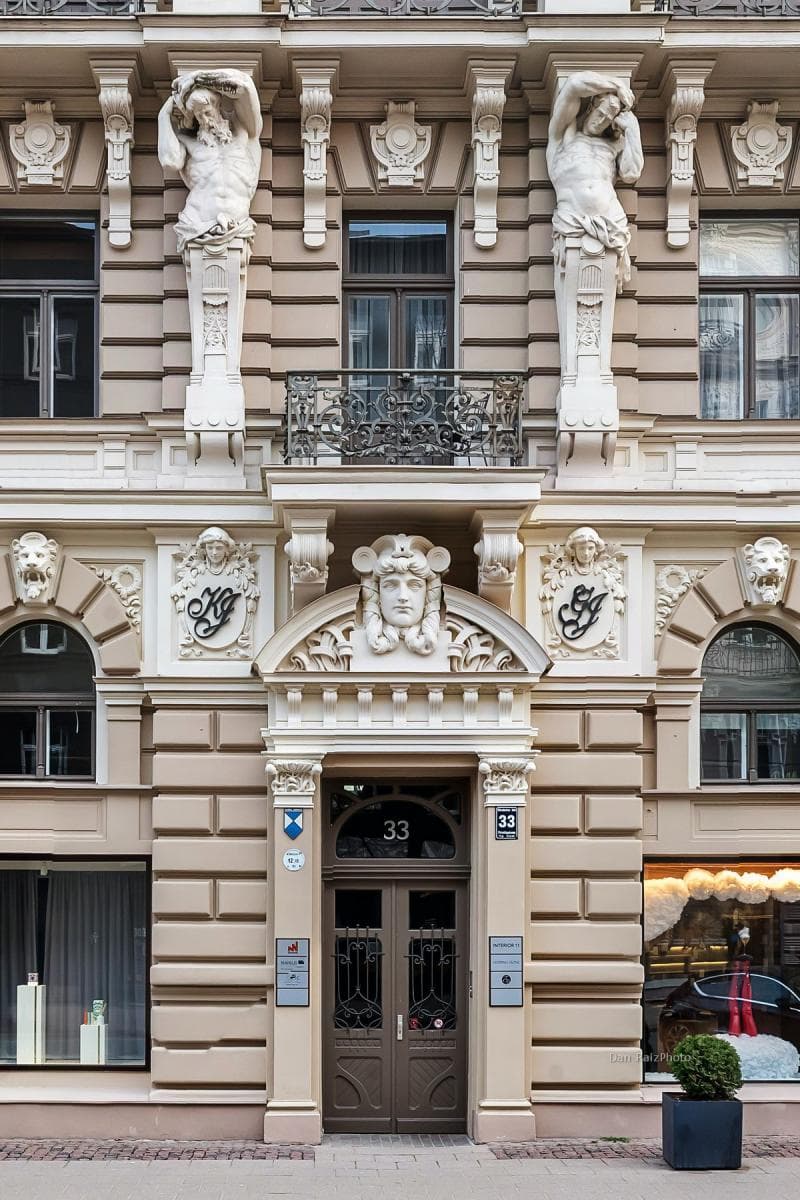
Discover the breathtaking Art Nouveau staircases of Riga, Latvia, with a focus on the iconic spiral masterpiece at the Riga Art Nouveau Centre.
Overview
The Art Nouveau District in Riga, Latvia, is a living museum of architectural innovation, renowned for its stunning facades and equally captivating interiors. While the elaborate exteriors often draw immediate attention, a true appreciation of Riga's Art Nouveau heritage requires stepping inside, where the ‘Staircases’ emerge as a distinct and mesmerizing sub-spot. These stairwells, particularly the grand spiral staircase within the Riga Art Nouveau Centre, are not merely functional elements but exquisite works of art, embodying the movement's core principles of organic forms, flowing lines, and intricate detail.
Riga boasts one of the highest concentrations of Art Nouveau buildings in the world, with around 800 structures showcasing this captivating style. Many of these buildings, especially the apartment blocks constructed during the city's economic boom, feature staircases designed to impress and delight. The most iconic among them, the magnificent spiral staircase at Alberta iela 12, serves as a prime example of the beauty and craftsmanship that defines the Art Nouveau era in the Latvian capital.
History & Cultural Background
Riga experienced an unprecedented period of rapid growth and prosperity between the late 19th and early 20th centuries, roughly from 1895 to 1914. This economic surge transformed the city, leading to a boom in construction, particularly multi-storey apartment blocks. Unlike earlier architectural styles that often separated facade from interior design, Art Nouveau embraced a holistic approach, ensuring that the artistic vision permeated every element of a building, from its exterior ornamentation to its innermost spaces.
During this era, architects like Konstantīns Pēkšēns and Eižens Laube played pivotal roles in shaping Riga's urban landscape. They designed buildings where entrance halls and staircases were considered paramount, often serving as the initial grand statement for residents and visitors alike. These spaces became canvases for artistic expression, reflecting the era's desire to break away from historical eclecticism and forge a new, modern aesthetic. The building at Alberta iela 12, now home to the Riga Art Nouveau Centre, was constructed in 1903 as Pēkšēns’s private residence, co-designed with Laube, and stands as a testament to this architectural philosophy, with its central staircase as a crowning achievement.
What Makes It Special
What sets the staircases of Riga's Art Nouveau District apart is their seamless blend of functionality with artistic grandeur. The central spiral staircase at the Riga Art Nouveau Centre is a masterpiece of design, characterized by its impressive swirling form, elaborate decorative metal railings, and intricate ceiling details. The use of light, often from a central fixture or through stained glass, further enhances the dramatic effect, guiding the eye upwards through a symphony of curves and lines.
These stairwells are prime examples of Art Nouveau's embrace of organic forms, moving away from rigid geometric patterns towards elements inspired by nature, such as stylized plants, flowers, and flowing tendrils. Beyond the Art Nouveau Centre, many other buildings throughout the district feature equally noteworthy stairwells, incorporating elements like stucco reliefs on ceilings, stained glass depictions of stylized flora, and unique door handles and edgings, demonstrating that every detail was carefully considered to create an immersive aesthetic experience.
Stories, Fun Facts & Local Details
The architects of Riga's Art Nouveau era understood the power of first impressions. They viewed the entrance hall and stairwell as the 'pride of the building,' a space where artistic opulence could truly flourish. The sheer scale and ambition of these designs are remarkable; apartment buildings often rose four to six storeys, necessitating grand staircases that were both practical for ascending multiple floors and breathtaking to behold.
A particularly fascinating detail regarding the Riga Art Nouveau Centre's staircase is the mention of intricate ceiling paintings, believed by some to have been sketched by the prominent Latvian artist Janis Rozentāls, adding another layer of cultural significance to this architectural gem. The fact that the building was architect Konstantīns Pēkšēns's own home underscores its importance; it was his personal statement of Art Nouveau excellence. It is widely noted that this particular staircase captures the attention of nearly all who visit, serving as a powerful introduction to the Art Nouveau style.
Visitor Perspective
For the curious traveler, exploring the staircases of Riga's Art Nouveau District is an immersive journey into a bygone era of elegance and artistic expression. A visit to the Riga Art Nouveau Centre at Alberta iela 12 is essential, as its central spiral staircase offers perhaps the most iconic example of this sub-spot. As you ascend, take your time to appreciate the craftsmanship: the delicate wrought iron, the sweeping curves, and the often elaborate ceiling details that unfold with each step. It is an experience that transforms a simple climb into an artistic revelation.
While the museum provides an unparalleled internal view, the spirit of Art Nouveau staircases extends throughout the district. Many residential buildings, though not always open to the public beyond their main foyers, offer glimpses of ornate entranceways and the lower sections of their stairwells, rich with decorative elements. Looking upwards through these architectural marvels allows visitors to connect with the artistic spirit that permeated every aspect of life in early 20th-century Riga, creating a profound and memorable impression.
Coordinates: 24.1163, 56.9634
View on Google Maps💬 How Travelers Describe This Place
Based on community votes
Must See
950Beautiful
287Photogenic
255Unique
231Interesting
86
Traveler Stories
Discover memorable experiences shared by travelers who have visited this place.
No traveler stories yet.
Be the first traveler to share what made this place memorable.

Tour
By
Spot
Discover amazing places around the world. Your journey starts here.
Explore
© 2026 TourBySpot. All rights reserved.