Staircase Plaza
Tbilisi, Georgia
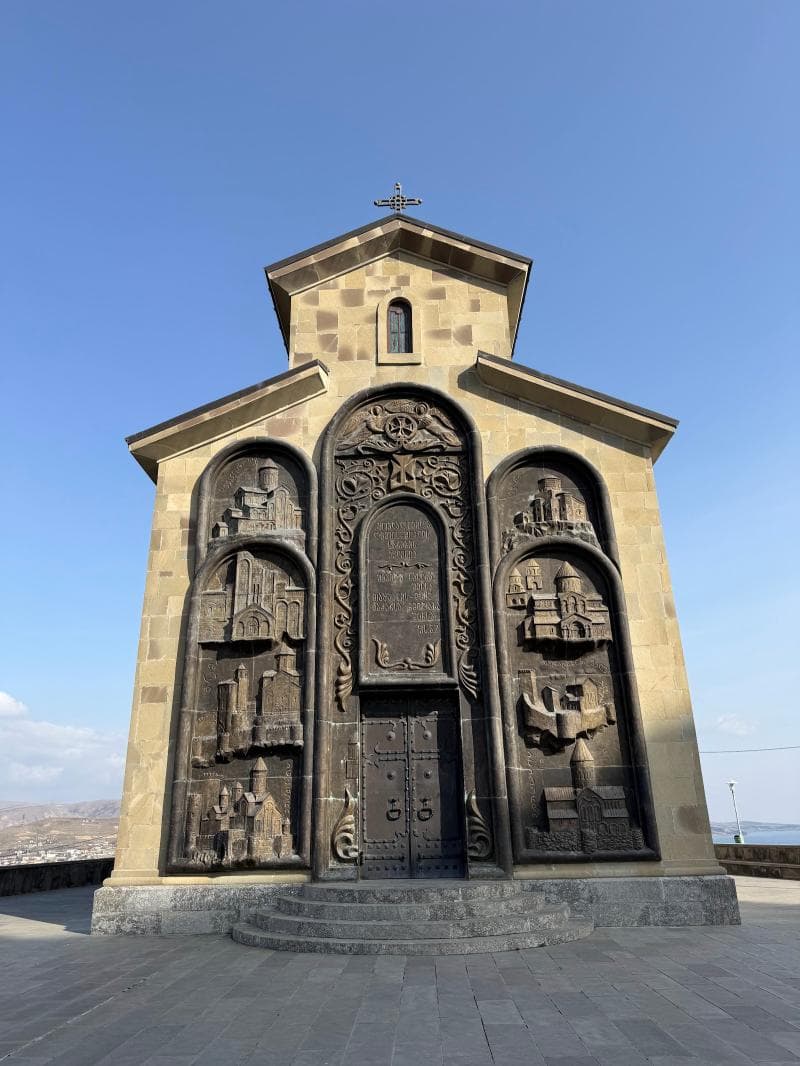
Explore the majestic Staircase Plaza leading to the Chronicle of Georgia in Tbilisi. Discover Georgia's rich history and faith etched in monumental reliefs.
Overview
Perched majestically on Keeni Hill, overlooking the sprawling Tbilisi Sea, lies the monumental complex known as the Chronicle of Georgia. While often referred to by its main structure, the impressive approach to this historical marvel features a grand 'Staircase Plaza', inviting visitors to ascend towards a profound narrative of Georgian identity and faith. This colossal monument, sometimes affectionately dubbed the 'Georgian Stonehenge', stands as a powerful, albeit unfinished, testament to the nation's rich past, crafted by the renowned sculptor Zurab Tsereteli. It serves not just as an artistic installation but as a panoramic viewpoint, offering breathtaking vistas of Tbilisi's northern districts and the vast reservoir.
History & Cultural Background
The Chronicle of Georgia, or History Memorial of Georgia, was conceived in 1985 by Zurab Tsereteli, a celebrated Georgian sculptor, painter, and architect. His vision was to create a monumental work that would encapsulate 3,000 years of Georgian statehood and 2,000 years of Christianity within the country. Construction commenced during the Soviet era, but the ambitious project was never fully completed, particularly after the dissolution of the Soviet Union. This unfinished state adds an unexpected layer of historical significance, symbolizing a moment of transition and an enduring national spirit. The monument's design integrates Georgia's imperial history, famous literary works, and the profound role of Christianity, which became the state religion in 337 AD.
What Makes It Special
What truly sets the Chronicle of Georgia apart is its immense scale and the intricate storytelling etched into its very fabric. The central feature comprises 16 towering pillars, each standing between 30 and 35 meters tall, meticulously adorned with bronze and stone bas-reliefs. These massive columns are arranged around a central space, forming an imposing and reflective environment. The upper sections of these pillars depict the revered kings, queens, and national heroes who shaped Georgia's destiny, illustrating the political and cultural tapestry of the nation. Below, the reliefs narrate pivotal stories from the life of Christ and significant moments in Georgian Christian history, firmly rooting the nation's narrative in its deep religious identity. Beyond its artistic merit, the monument's elevated position on Mount Keeni provides unparalleled panoramic views of the Tbilisi Sea and the surrounding landscapes, making it a compelling destination for both history enthusiasts and photographers alike.
Stories, Fun Facts & Local Details
The monumental complex isn't just a collection of impressive sculptures; it's a living history book carved in stone and metal. One captivating detail is the presence of a grapevine cross of Saint Nino, who is credited with bringing Christianity to Georgia. An accompanying chapel near the main monument further emphasizes the spiritual core of the site. Visitors often find the sheer size of the figures overwhelming, with some carved human forms reaching several meters in height. The dark surfaces of the pillars, combined with the narrow spaces between them, create a unique and often dramatic atmosphere, particularly during the golden hours of sunrise or sunset. The fact that the monument remains officially unfinished lends it a certain mystique, as if history is still being written, waiting for new chapters to be added to its grand narrative. Despite its growing popularity, it often remains a less crowded attraction compared to central Tbilisi sites, offering a more serene and contemplative experience.
Visitor Perspective
Approaching the Chronicle of Georgia via its 'Staircase Plaza' is an experience in itself, a gradual ascent that builds anticipation for the grandeur awaiting at the summit. The extensive flight of stairs from the lower entrance to the main monument area is flanked by decorative elements, setting the stage for the historical journey. Upon reaching the main plaza, visitors are free to wander amongst the colossal pillars, absorbing the detailed narratives and reflecting on Georgia's enduring heritage. While it's not possible to climb the pillars themselves, the elevated platform offers expansive views that stretch across the Tbilisi Sea and the city's northern reaches. This peaceful and thought-provoking site is open-air and generally accessible 24 hours a day, though a daytime visit is recommended to fully appreciate the intricate reliefs and ensure safety. A visit typically spans 45 to 90 minutes, providing ample time to explore, photograph, and simply take in the powerful atmosphere and scenic beauty.
Coordinates: 44.8104, 41.7705
View on Google Maps💬 How Travelers Describe This Place
Based on community votes
Must See
517Beautiful
422Unique
394Interesting
269Photogenic
145
Traveler Stories
Discover memorable experiences shared by travelers who have visited this place.
No traveler stories yet.
Be the first traveler to share what made this place memorable.

Tour
By
Spot
Discover amazing places around the world. Your journey starts here.
Explore
© 2026 TourBySpot. All rights reserved.