Stained Glass Windows
Pristina, Kosovo
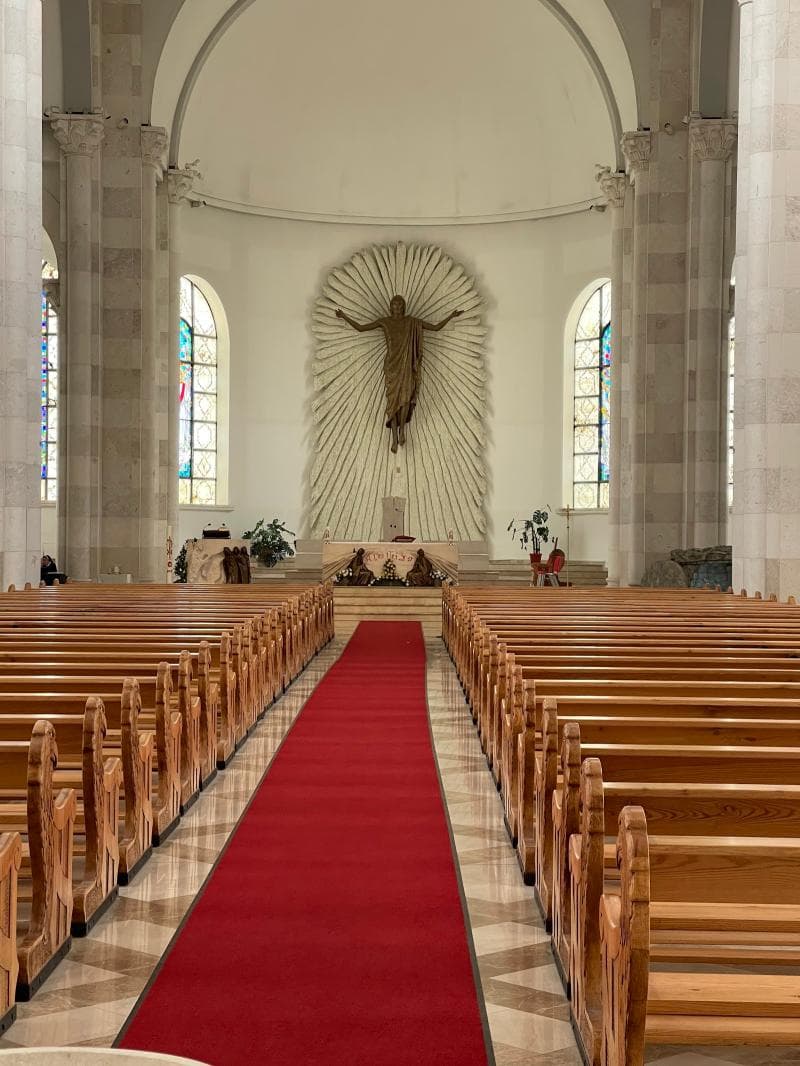
Explore the vibrant stained glass windows of the Cathedral of Saint Mother Teresa in Pristina, Kosovo, narrating stories of faith and heritage.
Overview
The Cathedral of Saint Mother Teresa in Pristina, Kosovo, stands as a prominent symbol of faith, national pride, and interfaith harmony in the heart of the city. Consecrated in 2017, this modern Roman Catholic cathedral is dedicated to the revered Albanian nun and Nobel Peace Prize laureate, Saint Teresa of Calcutta. Its striking Romanesque Revival architecture, characterized by robust brickwork and a towering bell tower, makes it an unmissable landmark in the Pristina skyline. While its overall grandeur is immediately apparent, it's the intricate beauty of its stained glass windows that truly captivates, offering visitors a serene and spiritually enriching experience. These vibrant artistic installations are not merely decorative; they narrate stories and imbue the vast interior with a sense of peace and contemplation, inviting all who enter to pause and reflect.
History & Cultural Background
The vision for the Cathedral of Saint Mother Teresa emerged in the early 2000s, reflecting a growing desire to honor Kosovo's Albanian Catholic heritage and the legacy of Mother Teresa, who is a significant figure of national pride despite being born in Skopje. The foundation stone was ceremonially laid in 2005 by the then-President of Kosovo, Ibrahim Rugova, a Muslim, signifying a powerful commitment to religious tolerance and unity in a predominantly Muslim country.
Construction officially commenced in 2007, culminating in its inauguration in an unfinished state on September 5, 2010, coinciding with the anniversary of Mother Teresa's passing and marking the centennial of her birth. The formal consecration took place seven years later, on September 5, 2017, exactly two decades after her death. The cathedral's architectural style blends Neo-Romanesque and Neo-Renaissance influences, creating a space designed for large congregations with its wide central nave and impressive structural elements. Upon its completion, the Roman Catholic Diocese of Prizren-Pristina relocated its seat to Pristina, establishing the cathedral as the primary Catholic worship site in the capital.
What Makes It Special
Beyond its architectural majesty, the Cathedral of Saint Mother Teresa holds a unique place in the Balkans as one of the largest Roman Catholic churches in the region. What truly sets it apart, however, are its exquisite stained glass windows. These artistic masterpieces transform the interior with a kaleidoscope of colors as natural light filters through, creating a tranquil and ethereal atmosphere.
The windows are not just visually stunning; they are carefully crafted narratives. Several panels thoughtfully depict significant moments and aspects of Mother Teresa's life, allowing visitors to connect with her profound message of service and compassion. Another notable window portrays Pope Clement XI, a historical figure of Albanian descent, further rooting the cathedral's spiritual and cultural identity within its heritage. The interplay of light and color through these windows provides a focal point for spiritual reflection, offering a quiet respite from the bustling city outside and enhancing the sense of peace within its sacred walls.
Stories, Fun Facts & Local Details
The cathedral's existence itself is a testament to Kosovo's spirit of coexistence. While the majority of Kosovo's population identifies as Muslim, the widespread support for the construction of a Catholic cathedral dedicated to Mother Teresa underscores a shared national identity and mutual respect among different faiths. This sentiment is often observed during major religious holidays, where local Muslims join their Catholic neighbors in solidarity to celebrate.
A fun fact for curious travelers is that the cathedral's construction helped facilitate the relocation of the Roman Catholic Diocese from Prizren to Pristina, solidifying Pristina's role as a significant religious center. The cathedral is also known for its bell tower, which offers panoramic views of Pristina, making it a popular spot for visitors to gain a unique perspective of the capital. Although often perceived as a modern structure, the depth of its storytelling through elements like the stained glass connects it deeply to a rich historical and cultural tapestry.
Visitor Perspective
Visiting the Stained Glass Windows within the Cathedral of Saint Mother Teresa is an experience designed for quiet contemplation and appreciation of artistry. To fully absorb the tranquil atmosphere and admire the intricate details of the windows, allocating about an hour for your visit is recommended. The cathedral is generally not overcrowded with tour groups, allowing for moments of solitude and unhurried observation.
Visitors are encouraged to dress modestly and maintain a quiet demeanor, respecting the fact that it is an active place of worship. The best times to witness the stained glass in its full glory are often during the late morning or early afternoon when the sun's rays are most direct, illuminating the colors and bringing the depictions to life. Admission to the cathedral is free, making this artistic and spiritual journey accessible to all. Photography is permitted, allowing you to capture the ethereal beauty of the light filtering through the windows as a lasting memory of your visit.
Coordinates: 21.15933, 42.65639
View on Google Maps💬 How Travelers Describe This Place
Based on community votes
Photogenic
826Unique
800Must See
589Interesting
387Beautiful
90
Traveler Stories
Discover memorable experiences shared by travelers who have visited this place.
No traveler stories yet.
Be the first traveler to share what made this place memorable.

Tour
By
Spot
Discover amazing places around the world. Your journey starts here.
Explore
© 2026 TourBySpot. All rights reserved.