St. George Monument
Tbilisi, Georgia
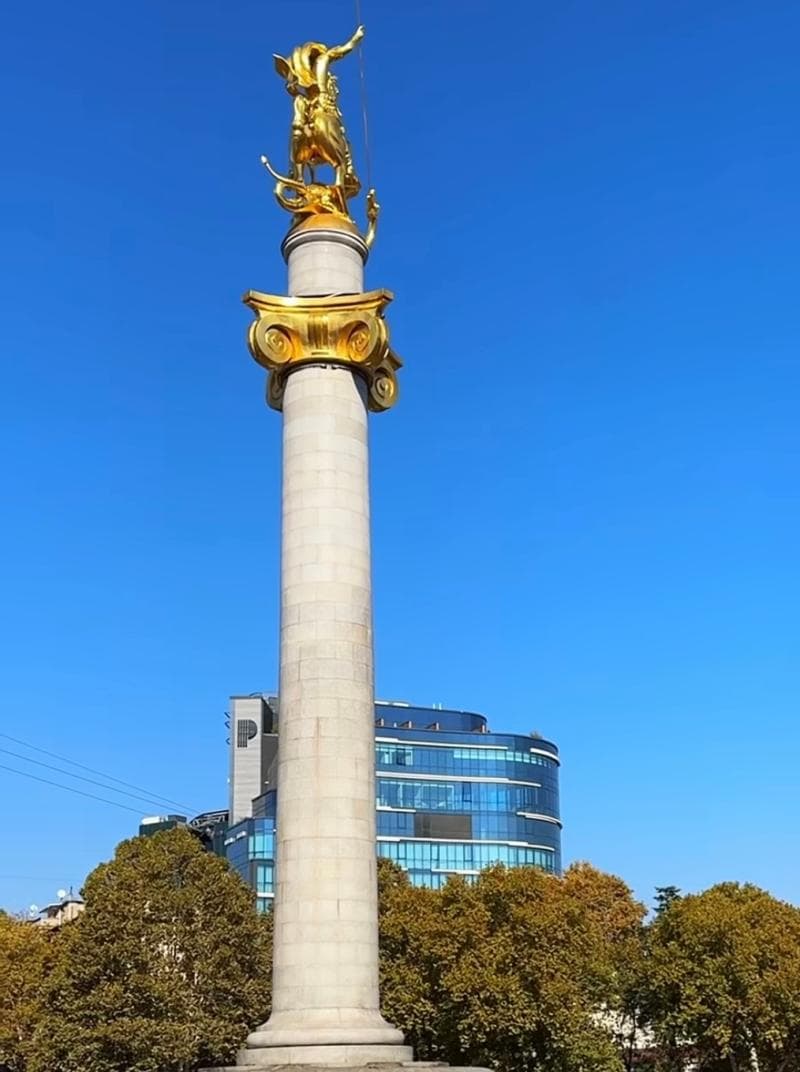
Discover the St. George Monument in Freedom Square, Tbilisi, Georgia. This golden statue symbolizes the nation's independence and rich history.
Overview
At the bustling heart of Tbilisi, Georgia, within the historic expanse of Freedom Square, stands the majestic St. George Monument. This iconic landmark, also known as the Freedom Monument, is a towering tribute to the nation's enduring spirit and its cherished independence. Unveiled in 2006, the monument commands attention with its golden figure of St. George atop a grand column, visible from various vantage points across the city.
The entire structure reaches an impressive height of 35 meters, with the statue of St. George himself measuring 5.6 meters. Crafted from bronze and meticulously coated with approximately two kilograms of gold, the monument gleams, especially under the Georgian sun or illuminated at night. It depicts St. George, Georgia's revered patron saint, in a timeless pose: triumphantly slaying a dragon, a powerful symbol of good overcoming evil.
History & Cultural Background
Freedom Square itself boasts a rich and complex history, having witnessed numerous transformations and name changes over two centuries. Originally known as Pashkevich-Erivanskaya Square in the 19th century, it was renamed Freedom Square in 1918. During the Soviet era, it bore names such as Beria Square and Lenin Square, the latter featuring a prominent statue of Vladimir Lenin. However, with Georgia's regained independence from the Soviet Union in 1991, the Lenin statue was removed, and the square rightfully reverted to its meaningful designation as Freedom Square.
The installation of the St. George Monument in 2006 marked a significant moment in modern Georgian history, solidifying the square's symbolic role as a center for national pride and sovereignty. The choice of St. George is deeply rooted in Georgian culture and faith; he is not only the country's patron saint but also a national hero whose legend dates back to the 10th-11th centuries.
What Makes It Special
Beyond its striking visual appeal, the St. George Monument stands out for its profound symbolism. It is a powerful representation of Georgia's historical struggles and its ultimate victory in achieving freedom and independence. The artist, renowned Georgian sculptor Zurab Tsereteli, conceptualized the piece as 'Good Defeats Evil', a universal message embodied in St. George's mythical conquest of the dragon.
Tsereteli, a native of Tbilisi, generously gifted this magnificent work to his hometown. Interestingly, other versions of his 'Good Defeats Evil' sculpture exist, including one at the United Nations headquarters in New York, highlighting the global resonance of the theme. The sheer scale of the monument, coupled with its brilliant golden finish, ensures it is not merely a statue but a beacon of national identity and resilience.
Stories, Fun Facts & Local Details
The legend of St. George slaying the dragon resonates deeply within Georgian folklore. One popular version tells of a city plagued by a dragon, which demanded daily sacrifices of sheep, and eventually, children chosen by lottery. When the king's own daughter was destined to be sacrificed, St. George intervened, slaying the beast and saving the princess. This narrative of divine intervention and heroic deliverance underpins the monument's message of hope and protection for the Georgian nation.
It's a curious detail that the current monument replaced a statue of Lenin, symbolizing a dramatic shift in political ideology and national identity. For visitors, the monument is more than just a historical artifact; it's a living part of the city's pulse. Freedom Square, with the monument at its center, serves as a focal point for major national celebrations, public gatherings, and even political events, reflecting its ongoing importance in Georgian civic life. During festive seasons, especially New Year, the monument has been known to be adorned, playfully transforming into a luminous Christmas tree, with St. George himself forming the crown.
Visitor Perspective
For any traveler to Tbilisi, the St. George Monument is an unmissable sight, whether admired from a distance or up close. Its central location in Freedom Square makes it easily accessible and often a natural starting point or a photographic highlight during explorations of the city. As you stand in its presence, one can truly appreciate the blend of ancient legend and modern national pride it encapsulates. It offers a moment for reflection on Georgia's tumultuous past and its vibrant present, embodying the resilience and hope of its people. The intricate details of St. George on horseback, poised in victory, provide a powerful visual narrative that transcends language, inviting every curious traveler to delve deeper into the rich tapestry of Georgian history and culture.
Coordinates: 44.8009, 41.6894
View on Google Maps💬 How Travelers Describe This Place
Based on community votes
Photogenic
722Interesting
698Must See
465Beautiful
276Unique
126
Traveler Stories
Discover memorable experiences shared by travelers who have visited this place.
No traveler stories yet.
Be the first traveler to share what made this place memorable.

Tour
By
Spot
Discover amazing places around the world. Your journey starts here.
Explore
© 2026 TourBySpot. All rights reserved.