St. Catherine’s Passage
Tallinn, Estonia
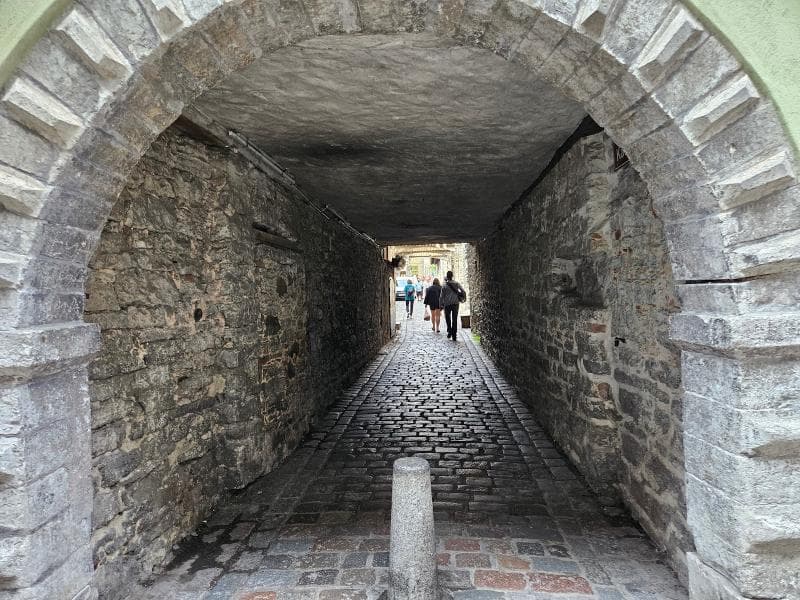
Explore St. Catherine’s Passage in Tallinn Old Town, Estonia, a charming medieval alleyway known for its artisan workshops, ancient tombstones, and rich history.
Overview
St. Catherine’s Passage, known locally as Katariina käik, is a truly enchanting medieval lane nestled within the heart of Tallinn Old Town, Estonia. This narrow, cobblestone alleyway offers a captivating journey back in time, connecting Vene Street with Müürivahe Street. It is celebrated for its remarkably preserved medieval architecture, ancient stonework, and a collection of artisan workshops that keep age-old craft traditions alive. Walking through this atmospheric passage feels like stepping into a living museum, where history whispers from every stone and archway, inviting visitors to linger and explore its unique charm.
History & Cultural Background
The history of St. Catherine’s Passage is deeply intertwined with that of the Dominican Monastery and the adjacent St. Catherine’s Church, from which the passage derives its name. The church itself dates back over 700 years, and the Dominican Monastery was founded in the 13th century, specifically around 1246, making it one of the most significant religious institutions in medieval Tallinn. During its prime, the monastery was a hub of activity, housing a school, a scriptorium, and even one of the city's few public libraries. The passage itself developed alongside this monastic complex, preserving sections of its original stonework.
However, the passage faced significant changes with the Reformation reaching Tallinn in 1524, leading to the expulsion of the Dominicans and the repurposing of the monastery buildings. A devastating fire in 1531 further accelerated the destruction, leaving only parts of the church's outer wall and fragments of the cloister. The passage, which once served as Monk's Alley, gradually fell into disrepair over centuries. It wasn't until the 1990s, after Estonia regained its independence, that a dedicated restoration effort, completed in 1995, brought St. Catherine's Passage back to its former glory. This meticulous restoration was part of a broader initiative to preserve Tallinn's medieval heritage, ensuring its place as a cherished part of Tallinn Old Town, a UNESCO World Heritage site.
What Makes It Special
What truly sets St. Catherine’s Passage apart are its distinctive features that vividly recall a bygone era. Overhead arches, added later to reinforce the medieval buildings, are a defining characteristic, creating a tunnel-like effect that enhances its historical atmosphere. Perhaps the most poignant elements are the medieval tombstones embedded directly into its walls. These stones, dating from the 14th to 16th centuries, were originally from the monastery church's cemetery and were moved here for preservation. They feature intricate carvings, including coats of arms, religious imagery, and symbols of medieval guilds, offering a rare glimpse into medieval funerary art outside a museum setting.
Adding to its unique character are the artisan workshops of the St. Catherine's Guild, located in 15th- to 17th-century buildings along the southern side of the lane. Here, skilled craftspeople continue traditional practices, creating and selling items such as glassware, ceramics, leatherwork, and textiles. Visitors can often observe artisans at work, a living testament to Tallinn's rich Hanseatic cultural heritage and centuries-old craft traditions.
Stories, Fun Facts & Local Details
St. Catherine's Passage is not just a historical site; it's a place brimming with stories and intriguing details. Before its current name, it was known as Monk's Alley, reflecting its close ties to the Dominican friars. During the Soviet era, as recently as 1974, parts of the passage were in disrepair, with the former friary even being used as a car repair workshop – a stark contrast to its present picturesque state. Its rebirth since then is a remarkable testament to preservation efforts.
Legends also intertwine with the passage's stones. One popular tale speaks of a monk from the Dominican monastery who, forbidden to marry by his vows, met his beloved secretly within the passage's secluded confines. Today, the passage's picturesque beauty and historical ambiance make it a favorite spot for photographers and artists. It becomes particularly magical during the holiday season when adorned with twinkling lights and festive decorations. The visible Gothic arch openings of the 14th-century Dominican Monastery ruins along the northern section further enhance its unique sense of place.
Visitor Perspective
For any curious traveler, St. Catherine’s Passage offers a truly immersive medieval experience. It is freely accessible and open year-round, inviting visitors to wander at their leisure. While it can be explored in as little as 10 minutes, allowing 20 to 30 minutes provides ample time to browse the unique workshops and truly absorb the atmosphere. Many recommend visiting before 9:30 AM for a quieter experience and optimal light for photography.
As you stroll, take time to appreciate the ancient stone walls, the beautifully preserved arches, and especially the medieval tombstones, each with its own story etched in stone. Unlike bustling main streets, the passage retains a secluded, 'hidden treat' feel, making its discovery all the more rewarding. It's a place that takes only minutes to walk through but promises to stay in your memory long after.
Coordinates: 24.747507, 59.437813
View on Google Maps💬 How Travelers Describe This Place
Based on community votes
Must See
673Photogenic
336Interesting
219Unique
186Beautiful
80
Traveler Stories
Discover memorable experiences shared by travelers who have visited this place.
No traveler stories yet.
Be the first traveler to share what made this place memorable.

Tour
By
Spot
Discover amazing places around the world. Your journey starts here.
Explore
© 2026 TourBySpot. All rights reserved.