Spiral Staircase
Lausanne, Switzerland
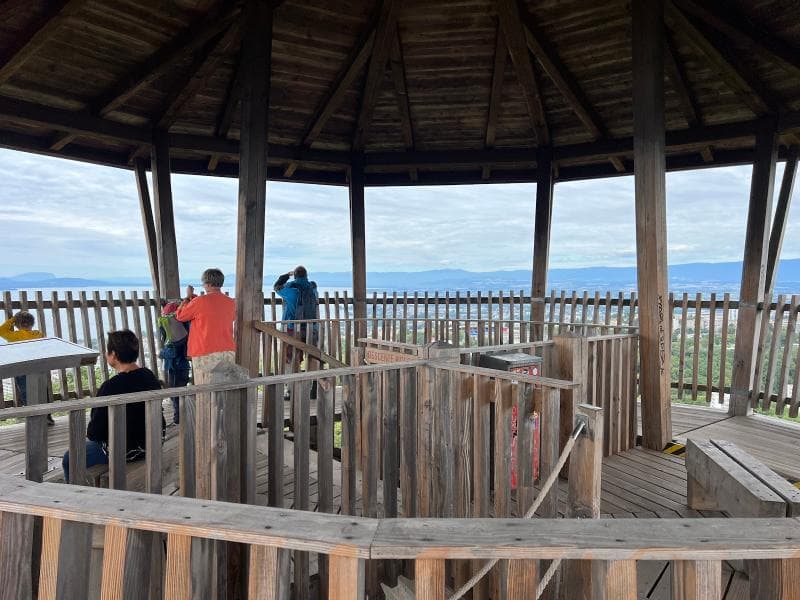
Climb the unique wooden spiral staircase of Sauvabelin Tower in Lausanne, Switzerland, for breathtaking 360-degree panoramic views of Lake Geneva and the Alps.
Overview
Nestled within the verdant Sauvabelin Forest, just a short journey from Lausanne's vibrant city center in Switzerland, stands the remarkable Sauvabelin Tower. This distinctive wooden observation tower is an architectural marvel, captivating visitors with its innovative design and the promise of unparalleled views. At 35 meters (approximately 115 feet) tall, it gracefully rises above the treetops, offering a unique perspective of the surrounding landscape. Its most compelling feature, and the heart of the visitor experience, is its intricate spiral staircase, which invites a contemplative ascent towards the expansive panorama awaiting at its summit.
Completed in 2003, the Sauvabelin Tower is more than just a viewpoint; it is a testament to sustainable architecture and local craftsmanship. Built almost entirely from timber sourced directly from Lausanne's municipal forests, it harmonizes effortlessly with its natural surroundings. The climb, though encompassing hundreds of steps, is part of the charm, unfolding the tower's structural beauty and the evolving vistas with every turn.
History & Cultural Background
The story of the Sauvabelin Tower began in the 1980s, when Julius Natterer, a professor specializing in timber engineering at EPFL (Swiss Federal Institute of Technology in Lausanne), challenged his students to design a modern wooden tower. His vision was to demonstrate the potential of wood as a serious contemporary construction material, moving beyond its traditional ornamental use.
The concept gained traction, and after several years of planning and approvals, construction commenced. The tower was inaugurated in December 2003, becoming an immediate landmark. A significant aspect of its construction was its funding model: a community effort where individuals and companies could sponsor one of the staircase's steps for a fee. This ingenious approach not only raised the necessary funds but also embedded a sense of collective ownership within the structure. The wood used—primarily Douglas fir, spruce, pine, and larch—was harvested sustainably from local forests, reflecting a deep commitment to environmental stewardship and local heritage.
What Makes It Special
The true essence of the Sauvabelin Tower, beyond its impressive height and panoramic reward, lies within its extraordinary spiral staircase. This isn't just any staircase; it's a double helix design, an ingenious solution that allows visitors to ascend and descend simultaneously without ever crossing paths. This thoughtful engineering ensures a smooth and continuous flow for all who traverse its 302 wooden steps.
The tower's design features vertical wooden slats instead of solid walls, creating an airy, almost translucent structure. This plays with light and shadow, casting captivating patterns on the interior as you climb. The raw, untreated coniferous wood not only highlights the material's beauty and durability but also underscores the tower's eco-conscious philosophy. It stands as a powerful demonstration of how robust, functional, and aesthetically pleasing structures can be crafted from renewable, local resources.
Stories, Fun Facts & Local Details
One of the most charming anecdotes associated with the Sauvabelin Tower involves its unique funding campaign. During its construction, patrons had the opportunity to literally ‘buy a step' for the spiral staircase. In return for their contribution, plaques bearing the names of private individuals and sponsoring companies were inscribed and placed along the steps and railings. This means that as you ascend, you can read the names of those who helped bring this community project to life, making the climb a journey through local history and communal spirit.
The tower is more than an isolated attraction; it is an integral part of the larger Sauvabelin site. Just a few minutes' walk away lies Lac de Sauvabelin, a picturesque artificial lake, popular for leisurely strolls and picnics. The adjacent Sauvabelin Animal Park, free to enter, hosts a variety of local wildlife, including red deer, wild boar, goats, and peacocks, adding another layer of charm to a visit. The tower’s location on a hill also means it appears even taller than its 35 meters, further enhancing its majestic presence within the forest.
Visitor Perspective
Embarking on the ascent of the Sauvabelin Tower's spiral staircase is an experience in itself. Each of the 302 steps offers a gradual, unhurried climb, encouraging you to pause and appreciate the unique internal geometry of the wooden structure. The open design allows fresh forest air to circulate, making the journey feel invigorating rather than arduous. Sturdy handrails provide reassurance as you wind your way upwards, surrounded by the warm hues of the timber.
Upon reaching the observation platform, the reward is immediate and breathtaking: an unobstructed 360-degree panoramic view. From this vantage point, Lausanne's rooftops spread out beneath you, the vast, shimmering expanse of Lake Geneva (Lac Léman) stretches towards the horizon, and the rolling Jura Mountains frame one side, while the majestic, snow-capped peaks of the Alps, including Mont Blanc on a clear day, dominate the other. It is a moment of serene contemplation, offering a profound sense of place and connection to the diverse landscapes of Switzerland. The tower is open daily, free of charge, though weather conditions can occasionally affect access. Visitors are encouraged to wear comfortable shoes and ideally choose a clear day to fully appreciate the stunning vistas.
Coordinates: 6.6385, 46.5353
View on Google Maps💬 How Travelers Describe This Place
Based on community votes
Interesting
726Photogenic
720Beautiful
597Must See
300Unique
300
Traveler Stories
Discover memorable experiences shared by travelers who have visited this place.
No traveler stories yet.
Be the first traveler to share what made this place memorable.

Tour
By
Spot
Discover amazing places around the world. Your journey starts here.
Explore
© 2026 TourBySpot. All rights reserved.