Soviet Memorial Murals
Ulaanbaatar, Mongolia
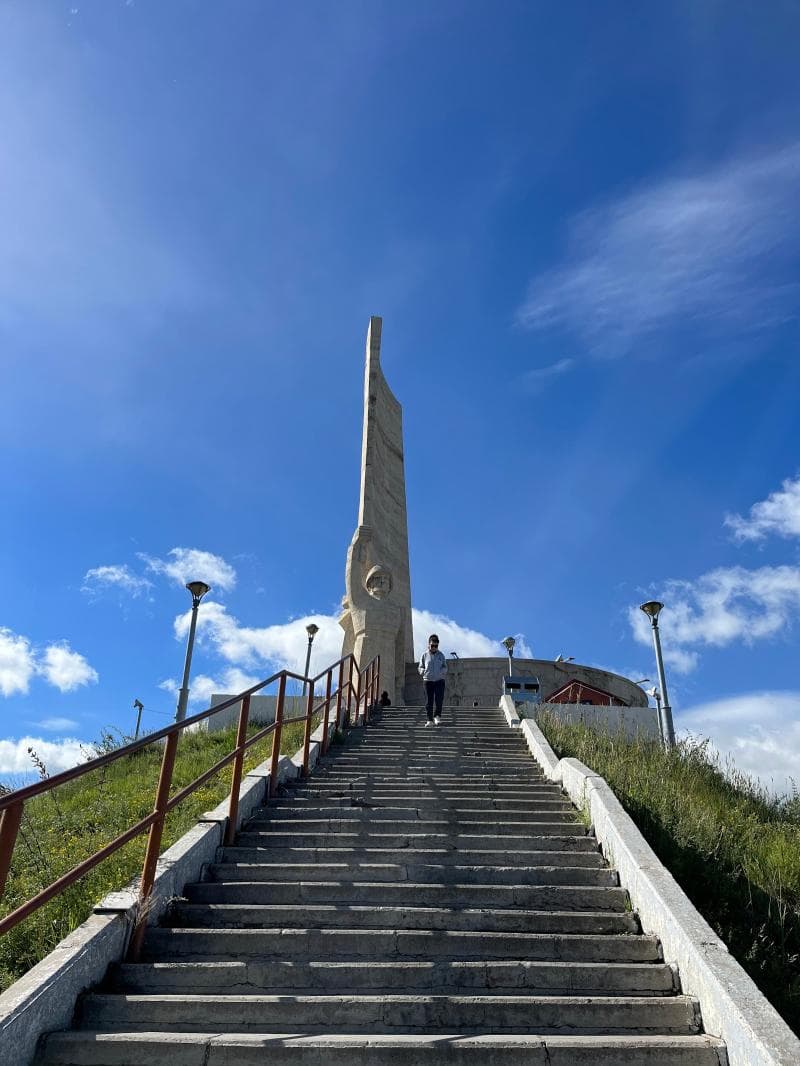
Explore the Soviet Memorial Murals at Zaisan Memorial in Ulaanbaatar, Mongolia. Discover historical ties, vibrant art, and panoramic city views.
Overview
Perched majestically on a hill overlooking Ulaanbaatar, Mongolia's capital, the Zaisan Memorial stands as a profound testament to historical camaraderie and sacrifice. Within its circular structure lies the impactful Soviet Memorial Murals, a vibrant and detailed artistic narrative that draws visitors into a shared past. More than just a monument, this site offers a contemplative journey through significant events in Mongolian and Soviet history, culminating in breathtaking panoramic views of the sprawling city below, the winding Tuul River, and the surrounding majestic mountains. It's a place where history intertwines with stunning natural beauty, inviting travelers to reflect and admire.
History & Cultural Background
The Zaisan Memorial, with its striking Soviet Memorial Murals, was constructed between 1969 and 1971, marking the 50th anniversary of Mongolia's People's Revolution. It was largely a Soviet initiative, designed by architect A. Khisegt, to honor allied Mongolian and Soviet soldiers who bravely fought and fell during World War II. However, its historical roots run deeper, commemorating key moments of Soviet support for Mongolia, particularly the crucial Battle of Khalkhin Gol in 1939. This battle saw Soviet and Mongolian forces decisively defeat the Japanese Kwantung Army, a victory that significantly shaped Mongolia's alignment within the Soviet sphere of influence. The monument itself is rich in symbolism; its exterior wall is thoughtfully modeled after a traditional Mongolian fireplace, known as a 'Tulga', which is a powerful representation of life and continuity in Mongolian culture.
What Makes It Special
The core of the Zaisan Memorial's allure lies in its magnificent circular Soviet Memorial Murals. Executed in the distinctive 'Socialist realism' style, these vibrant tiled mosaics encircle the inner ring of the monument, standing approximately five meters above the ground. The murals are a chronological depiction of the enduring friendship and shared struggles between the Mongolian and Soviet peoples. Key scenes include:
- Soviet support for Mongolia's declaration of independence in 1921.
- The decisive defeat of the Japanese Kwantung Army at Khalkhin Gol in 1939.
- The joint victory over Nazi Germany in 1945, highlighting Mongolian troops' participation in the Red Army.
- Peacetime achievements, notably the historic Soyuz 39 space flight which carried Jugderdemidiin Gurragchaa, the first Mongolian cosmonaut, into space.
Stories, Fun Facts & Local Details
The murals tell fascinating stories, not just of grand historical events, but also of individual achievements and solidarity. The inclusion of Jugderdemidiin Gurragchaa, Mongolia's first cosmonaut, is a particularly uplifting detail, representing shared scientific and exploratory ambitions. The depiction of Khorloogiin Choibalsan, a pivotal figure in Mongolian history, alongside Soviet forces, underscores the deep political and military ties between the two nations during that era. While the Zaisan Memorial primarily honors Soviet soldiers, its narrative also acknowledges Mongolian contributions and the 'friendship' between the two states. At the foot of the hill, visitors will find a dedicated Tank Memorial featuring a Soviet T-34 tank, a symbol of the Mongolian People's Tank Brigade which journeyed from Moscow to Berlin during WWII. This tank was paid for by the Mongolian people and relocated to the site in 2003. Locals often visit Zaisan for school outings, graduation photos, and even wedding celebrations, reflecting its integration into contemporary Mongolian life. The site recently underwent a significant six-month renovation, completed in January 2025, ensuring its preservation for future generations.
Visitor Perspective
Visiting the Soviet Memorial Murals at Zaisan Memorial is an experience that combines physical exertion with profound historical and scenic rewards. The journey begins with a climb of either 612 steps from the base or 300 steps from the upper parking area, a manageable ascent that builds anticipation. Upon reaching the circular platform, visitors are immediately struck by the intricate detail and powerful imagery of the murals. Taking time to walk around and observe each panel offers a deep dive into the historical narrative. However, it's the unparalleled 360-degree views that often leave the most lasting impression. From this vantage point, Ulaanbaatar unfolds beneath you, showcasing its urban sprawl, the meandering Tuul River, and the protective embrace of the surrounding mountains. It's an ideal spot for photography, especially during sunrise or sunset, when the city lights begin to twinkle or the golden hour casts a magical glow over the landscape. The Zaisan Memorial truly offers a unique blend of historical education and breathtaking natural beauty, making it an essential stop for any traveler to Ulaanbaatar.
Coordinates: 106.91551, 47.88399
View on Google Maps💬 How Travelers Describe This Place
Based on community votes
Must See
996Beautiful
726Unique
717Interesting
335Photogenic
22
Traveler Stories
Discover memorable experiences shared by travelers who have visited this place.
No traveler stories yet.
Be the first traveler to share what made this place memorable.

Tour
By
Spot
Discover amazing places around the world. Your journey starts here.
Explore
© 2026 TourBySpot. All rights reserved.