Soviet-era Exhibits
Chisinau, Moldova
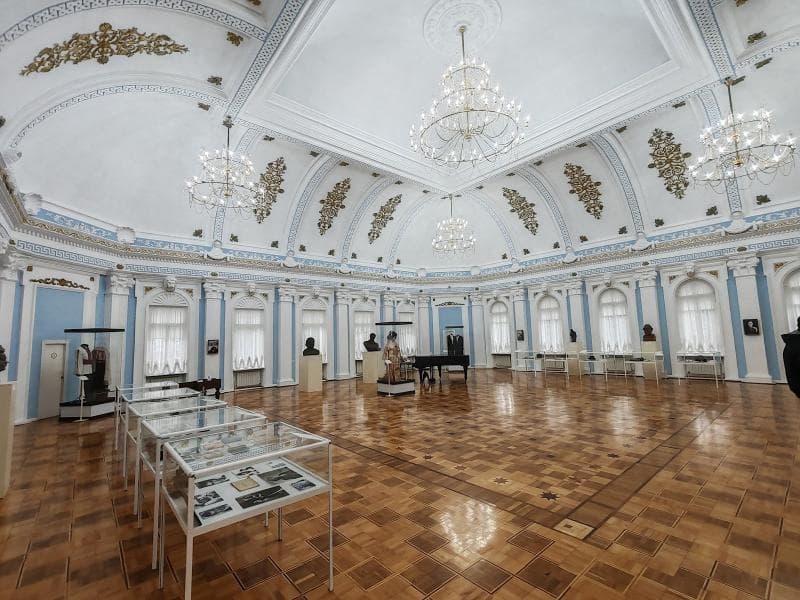
Explore the impactful Soviet-era Exhibits at the National Museum of History of Moldova in Chisinau, Moldova. Discover a poignant journey through a defining historical period.
Overview
Nestled within the National Museum of History of Moldova in Chisinau, the 'Soviet-era Exhibits' offer a poignant journey through a complex and often challenging period of the nation's past. This dedicated section serves as a stark, yet essential, reminder of Moldova's time under Soviet rule, inviting visitors to grapple with the historical realities that profoundly shaped modern Moldovan society. It's more than just a display of artifacts; it is a narrative woven from resilience, struggle, and the enduring spirit of a people.
The museum itself is a cornerstone of cultural understanding in Moldova's capital, housing an extensive collection that spans millennia, from ancient civilizations to the contemporary era. Among its thematic exhibitions, the Soviet-era section stands out for its direct engagement with the experiences of a generation. Here, you'll encounter a meticulously curated collection designed to shed light on life behind the Iron Curtain, exploring both the imposed ideology and the human stories beneath it.
History & Cultural Background
Moldova's entanglement with the Soviet Union began decisively in 1940 with the Soviet Ultimatum, leading to the occupation of Bessarabia and its integration into the Soviet structure. This marked the beginning of rapid and profound changes, including the nationalization of property, restructuring of society, and the onset of political repression that would leave an indelible mark on the region.
The exhibits illuminate this tumultuous period, particularly focusing on the years between 1940 and 1950, a decade of immense historical drama. They chronicle the implementation of Soviet policies, the collectivization of agriculture, and the widespread suppression of dissent. One particularly harrowing aspect detailed is the man-made famine of 1946-1947, which devastated southern Moldova, leading to the tragic loss of nearly half the population in some Gagauz villages.
Furthermore, the museum addresses the waves of mass deportations, notably in June 1941, July 1949, and April 1951, which saw tens of thousands of Moldovans forcibly removed from their homes and sent to Siberia and other remote parts of the Soviet Union. These events were not mere historical footnotes; they were traumatic experiences that fragmented families and reshaped the demographic and social fabric of the nation for decades.
What Makes It Special
What truly sets the Soviet-era Exhibits apart is the profound and unflinching portrayal of totalitarianism through individual experiences. A key part of this is the exhibition 'Soviet Moldova: Between Myths and the Gulag,' which originates from the Museum of the Victims of Deportations and Political Repressions – a branch of the main museum.
This exhibition masterfully contrasts two stark realities: the 'illusory world of the adherents of the Soviet Dream,' those who believed in the promises of freedom and a 'bright future' propagated by Soviet ideology, and the grim reality of those who endured the 'hell of communist camps and prisons.' It brings together approximately 700 museum pieces, including photographs, official documents, letters smuggled from Siberia, propaganda posters, and crucially, personal belongings of former deportees and political prisoners.
Moreover, the display includes materials and documents from former KGB archives, presented for the first time, offering chilling insights into the mechanisms of repression against individuals based on their political and religious beliefs. This dual perspective provides a comprehensive, albeit sobering, understanding of life under Soviet rule, revealing both the pervasive state control and the incredible human cost.
Stories, Fun Facts & Local Details
While 'fun facts' might not be the most appropriate descriptor for this somber yet vital historical period, the exhibits are rich with compelling human stories and poignant details. Visitors are confronted with the tangible remnants of lives uprooted and futures derailed. Imagine holding a letter, fragile with age, written by a deportee from Siberia, or seeing the confiscated personal items of someone labeled an 'enemy of the people.' These objects transcend their material form to become powerful testaments to resilience and suffering.
The exhibition serves as a small memorial to the pain and humiliation inflicted upon victims of the 'Great Terror,' making the history palpable. It reminds contemporary visitors that totalitarian communist past must be understood, acknowledged, and never repeated. The inclusion of personal accounts and formerly secret KGB documents provides a rare and intimate glimpse into the pervasive nature of surveillance and control, but also into the quiet acts of resistance and perseverance that defined many Moldovans' lives.
Visitor Perspective
Visiting the Soviet-era Exhibits is a deeply affecting experience. It is an opportunity for reflection and a potent lesson in the consequences of unchecked power. Travelers leave with a much deeper appreciation for Moldova's journey to independence and the values of freedom and human dignity. The Blue Hall, where much of the Soviet era and the struggle for independence is explored, effectively conveys the cultural and political history through thoughtfully arranged displays.
As you move through the rooms, you are not just observing history; you are connecting with it on a profoundly human level. The exhibits foster empathy for those who lived through these challenging times and provide crucial context for understanding contemporary Moldovan identity and its unique geopolitical position. It is an educational experience that goes beyond textbooks, offering a vivid, often heartbreaking, narrative of a nation's struggle, its resilience, and its ongoing commitment to remembering its past to forge a stronger future.
Coordinates: 28.828, 47.0225
View on Google Maps💬 How Travelers Describe This Place
Based on community votes
Unique
998Must See
817Beautiful
711Interesting
641Photogenic
196
Traveler Stories
Discover memorable experiences shared by travelers who have visited this place.
No traveler stories yet.
Be the first traveler to share what made this place memorable.

Tour
By
Spot
Discover amazing places around the world. Your journey starts here.
Explore
© 2026 TourBySpot. All rights reserved.