Soviet Architecture Views
Bishkek, Kyrgyzstan
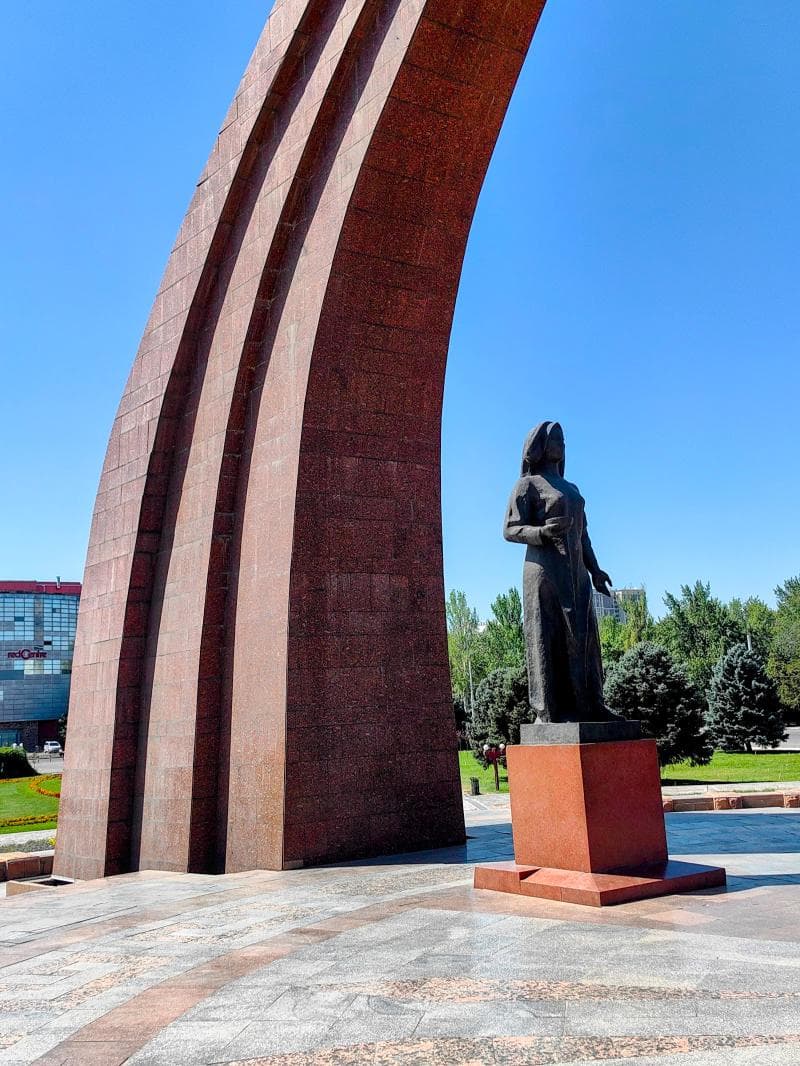
Explore Soviet Architecture Views on Erkindik Boulevard in Bishkek, Kyrgyzstan. Discover monumental buildings and historical context.
Overview
Nestled in the heart of Bishkek, Kyrgyzstan, Erkindik Boulevard serves as a verdant artery, offering a unique journey through the city's Soviet architectural heritage. While the boulevard itself is a lush, tree-lined promenade designed for leisurely strolls, it acts as a central spine connecting visitors to a remarkable collection of structures that narrate the story of Bishkek's past as a Soviet city. This sub-spot, aptly named 'Soviet Architecture Views', invites curious travelers to witness the enduring legacy of a bygone era, where monumental buildings and distinctive urban planning reflect socialist ideals and artistic expressions. The boulevard stretches for several kilometers, providing a picturesque backdrop against which to observe the architectural evolution of the Kyrgyz capital.
History & Cultural Background
Bishkek, unlike many ancient Silk Road cities, was largely built from the ground up during the Soviet period. This deliberate urban development meant that Soviet architectural principles, emphasizing grand scale and ideological symbolism, were integral to the city's design from its inception. Erkindik Boulevard itself has witnessed several transformations, mirroring the nation's political shifts. Originally known as 'Boulevard Street' before the 1917 October Revolution, it was later renamed Komsomolskaya Street and, by 1927, bore the name Dzerzhinsky Boulevard, in honor of the prominent Soviet statesman Felix Dzerzhinsky. This name endured until Kyrgyzstan gained independence in 1991, when it was rechristened 'Erkindik Boulevard', meaning 'freedom' in Kyrgyz. Yet, to this day, many locals affectionately refer to it by its Soviet-era moniker, 'Dzerzhinka', a charming testament to the deep-seated historical layers of the city.
What Makes It Special
The allure of 'Soviet Architecture Views' along Erkindik Boulevard lies in the diverse array of styles, from stately classicism to stark brutalism and functional modernism, that stand as silent witnesses to Soviet ambition. One prominent example is the building housing the Constitutional Court, located at Erkindik Avenue, 39. Constructed in 1941, its architecture embraces classical elements, featuring a symmetrical facade and an impressive portico. Its most striking feature is the large sculptural bas-relief, 'Labor Kyrgyzstan', created between 1940 and 1942 by Olga Manuylova, depicting workers, peasants, soldiers, and children in a progressive movement – a powerful artistic synthesis reflecting the era's ideals. This building was an early instance of external bas-relief use in Kyrgyz architecture. As visitors traverse the boulevard, they are drawn towards the iconic Ala-Too Square, a central hub of Soviet heritage. Adjacent to the boulevard and within easy reach, this square is flanked by significant Soviet-era structures such as the State History Museum, a prime example of neo-brutalist architecture, and the Ala-Too Cinema, showcasing modernist and brutalist influences. These buildings, with their imposing forms and often stark materials, provide a tangible connection to the architectural philosophies that shaped much of the 20th century in this region.
Stories, Fun Facts & Local Details
Beyond the grand facades, Erkindik Boulevard holds numerous anecdotal charms. The persistent local use of 'Dzerzhinka' for the boulevard highlights how deeply these historical names are etched into the urban consciousness, even decades after official renaming. As you wander, you'll encounter various monuments that dot the boulevard, including the monument to Mikhail Frunze, a Red Army commander after whom Bishkek was once named, marking the boulevard's southern end near the railway station. More recently, the boulevard also hosts the impressive Manas monument, erected in 2011, celebrating Kyrgyzstan's legendary epic hero and embodying the nation's post-independence identity. Though not directly on Erkindik, the renowned Bishkek Circus, a short distance away, captivates with its 'flying saucer' design, an iconic piece of Soviet modernist architecture from 1976 that speaks to the period's playful yet ambitious structural experimentation.
Visitor Perspective
A journey along Erkindik Boulevard offers a contemplative encounter with history. It's a place where the shaded pathways and green spaces provide a tranquil setting for observing the architectural grandeur that defines Bishkek's urban core. The juxtaposition of the serene park-like environment with the formidable Soviet structures creates a unique atmosphere, inviting visitors to reflect on the past while experiencing the vibrant present of the city. As you explore, you'll gain a deeper appreciation for how architecture can reflect political ideologies, cultural narratives, and historical shifts. It's an experience that blends the visual impact of monumental design with the quiet beauty of a cherished public space, making 'Soviet Architecture Views' on Erkindik Boulevard an essential stop for anyone seeking to understand Bishkek's unique identity.
Coordinates: 74.6070033, 42.8814186
View on Google Maps💬 How Travelers Describe This Place
Based on community votes
Photogenic
685Interesting
446Beautiful
152Unique
33Must See
16
Traveler Stories
Discover memorable experiences shared by travelers who have visited this place.
No traveler stories yet.
Be the first traveler to share what made this place memorable.

Tour
By
Spot
Discover amazing places around the world. Your journey starts here.
Explore
© 2026 TourBySpot. All rights reserved.