Slovenian Philharmonic
Ljubljana, Slovenia
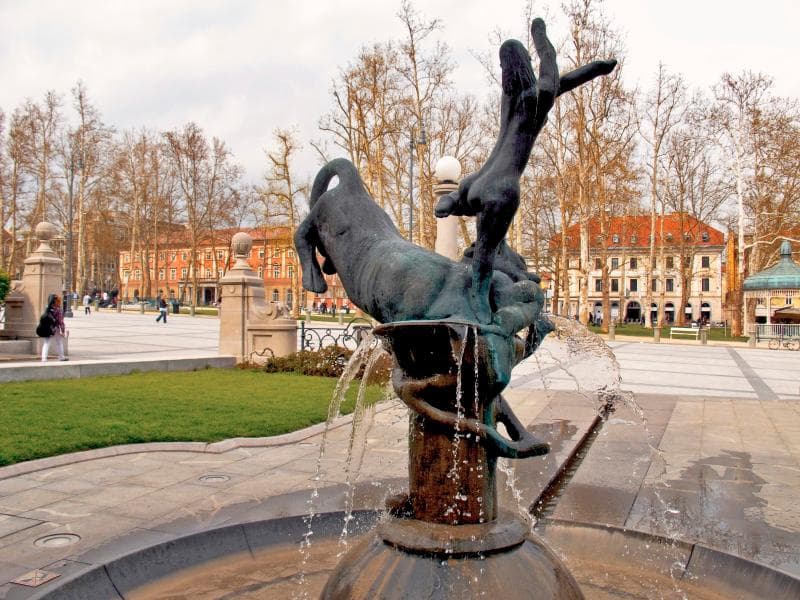
Discover the Slovenian Philharmonic in Ljubljana, Slovenia, one of the world's oldest musical institutions, nestled in Congress Square.
Overview
Nestled elegantly within Ljubljana's historic Congress Square, the Slovenian Philharmonic stands as a profound testament to centuries of musical heritage. As one of the world's oldest musical institutions, its very facade, emblazoned with the year '1701', hints at a rich and continuous tradition that has shaped Slovenia's cultural landscape. More than just a concert venue, it is a living monument where the echoes of classical masters blend with the vibrant pulse of contemporary performances, offering a captivating journey through music and history in the heart of Ljubljana, Slovenia.
History & Cultural Background
The story of the Slovenian Philharmonic begins in 1701 with the establishment of the Academia Philharmonicorum, a pioneering musical association dedicated to promoting Baroque music in the region. This esteemed body was succeeded in 1794 by the Philharmonic Society, which rapidly gained renown, attracting honorary members of extraordinary caliber. Luminaries such as Joseph Haydn, Ludwig van Beethoven, Niccolò Paganini, and Johannes Brahms all graced its membership rolls, underscoring its significant standing in European classical music circles.
The current Neo-Renaissance building, designed by Austrian architect Adolf Wagner, was erected in 1891. It stands on the foundations of the former Estate Theatre, which tragically burned down in 1887. This site holds further historical weight, as it was here, in 1789, that the first theatrical production in the Slovenian language, 'Županova Micka', was staged, marking a pivotal moment in the development of national culture.
A significant architectural contribution came in 1937 when Slovenia's renowned architect, Jože Plečnik, added an annexe and redesigned the rear facade, incorporating a distinctive curved colonnade facing the Ljubljanica river. Following World War II, the orchestra was formally re-established in 1947, building upon this venerable tradition and solidifying its role as a leading cultural institution.
What Makes It Special
The Slovenian Philharmonic is distinguished by its harmonious blend of architectural styles. Adolf Wagner's 19th-century Neo-Renaissance design, characterized by rounded corners, provides a classical grandeur, while Plečnik's later additions introduce a layer of elegant modernism. This architectural fusion creates a visually compelling landmark within Congress Square.
Its prime location is another key aspect, offering picturesque views overlooking the expansive Congress Square on one side and the tranquil Ljubljanica riverbanks on the other. This setting places it at the very heart of Ljubljana's urban and cultural life.
Beyond its physical attributes, the Philharmonic is celebrated for its enduring artistic excellence. The Slovenian Philharmonic Orchestra maintains a proud tradition as the country's foremost symphony orchestra, consistently garnering wide acclaim through numerous international guest appearances and collaborations with world-renowned conductors and soloists. Its Marjan Kozina Hall is also noted for its excellent acoustics, providing an immersive experience for concert-goers.
Stories, Fun Facts & Local Details
The Slovenian Philharmonic's history is peppered with fascinating anecdotes. One celebrated story recounts Ludwig van Beethoven, an honorary member, sending a handwritten copy of his Sixth Symphony, the 'Pastoral', to the Philharmonic Society in 1819, a gesture that profoundly illustrates the institution's esteemed reputation across Europe.
The esteemed composer and conductor Gustav Mahler also spent formative years here, serving as a theatre conductor between 1881 and 1882 at the Provincial Theatre, which stood on the very spot where the Philharmonic building now resides. A nearby monument commemorates his connection to this significant musical hub.
The prominent inscription '1701' on the building's facade serves as a constant reminder of the Academia Philharmonicorum's founding, connecting the modern institution directly to its centuries-old roots. It's said that if the walls could speak, they would recount an incredible memory, filled with countless concerts, elegant evenings, and the vibrant stories of all who have passed through its doors.
Visitor Perspective
For the curious traveler, the Slovenian Philharmonic offers more than just concert attendance. Guided tours are available, providing a unique opportunity to delve into the building's rich history, architectural nuances, and enviable musical tradition. These tours allow visitors to experience the cultural monument of music, art, and architecture firsthand, learning about its evolution and significance.
The venue is committed to accessibility, offering facilities for individuals with reduced mobility. When attending a performance, visitors are encouraged to check the concert schedule in advance and arrive early to soak in the atmosphere of Congress Square. While inside, guests are kindly reminded that recording and photography are generally prohibited during concerts to ensure an uninterrupted and respectful experience for all.
Coordinates: 14.5047196, 46.0495016
View on Google Maps💬 How Travelers Describe This Place
Based on community votes
Beautiful
771Unique
767Interesting
516Must See
181Photogenic
82
Traveler Stories
Discover memorable experiences shared by travelers who have visited this place.
No traveler stories yet.
Be the first traveler to share what made this place memorable.

Tour
By
Spot
Discover amazing places around the world. Your journey starts here.
Explore
© 2026 TourBySpot. All rights reserved.