Ski Jump Tower
Oslo, Norway
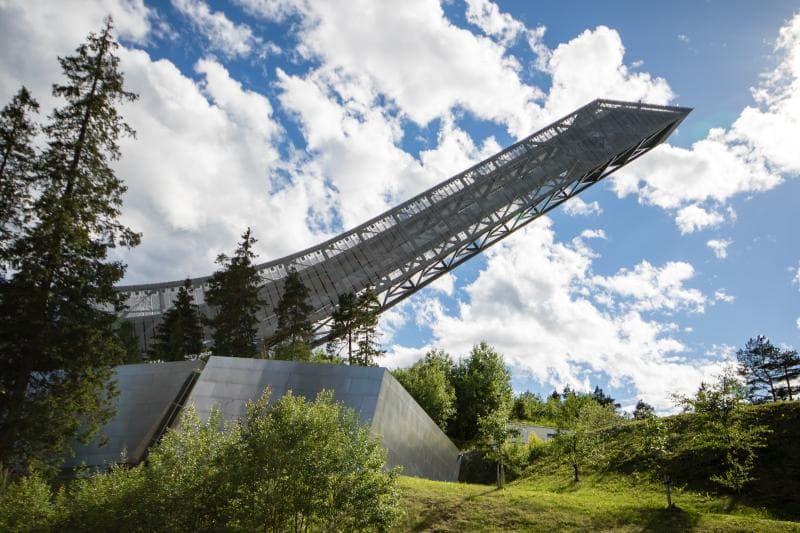
Explore the iconic Holmenkollen Ski Jump Tower in Oslo, Norway. Discover its rich history, panoramic views, and the world's oldest Ski Museum.
Overview
Perched high above Oslo, the Holmenkollen Ski Jump Tower, an iconic part of the Holmenkollen Ski Museum & Tower complex, stands as a striking symbol of Norway's profound connection to winter sports and its rich skiing heritage. This impressive architectural marvel, officially known as Holmenkollbakken, is far more than just a sports venue; it's a national landmark offering breathtaking panoramic views of Oslo, the glittering Oslofjord, and the lush, sprawling forests of Marka. Attracting approximately one million visitors annually, it proudly holds its place as one of Norway's most visited tourist destinations. The modern structure, rebuilt between 2008 and 2010 in anticipation of the 2011 FIS Nordic World Ski Championships, showcases innovative design and engineering. Integrated within this facility is the world's oldest specialized ski museum, established in 1923, which invites visitors to explore 4,000 to 5,000 years of skiing history.
History & Cultural Background
The history of ski jumping at Holmenkollen dates back to January 31, 1892, when the first competition was held, drawing an astonishing crowd of 12,000 to 20,000 spectators. Since then, the jump has been a constant site of evolution, undergoing significant rebuilding or upgrading 19 times to adapt to the sport's advancements and meet international competition standards. A particularly notable milestone was its role as the venue for the 1952 Winter Olympics, an event that saw a record attendance of 120,000 spectators for the ski jumping competition. Holmenkollen has also proudly hosted the FIS Nordic World Ski Championships on four occasions: in 1930, 1966, 1982, and 2011, solidifying its status as a world-class winter sports arena.
The current iteration of the Ski Jump Tower, a testament to contemporary architecture, was designed by the Danish firm JDS Architects. It is an impressive 58-meter tall steel structure featuring a 69-meter cantilever, recognized as the longest of its kind globally. Uniquely, it stands as the world's only all-steel ski jump and the only one equipped with a permanent wind screen. This fusion of form and function integrates not only the jump itself but also judges' booths, VIP areas, a skier lounge, a souvenir shop, and the Ski Museum, all unified within a single, holistic design.
What Makes It Special
The Holmenkollen Ski Jump Tower is a singular destination for many reasons. Its striking, cantilevered design makes it an architectural marvel, often likened to a 'new Holmenkollen lighthouse.' The innovative use of steel and the incorporation of a permanent wind screen highlight its advanced engineering. Visitors can ascend to the panoramic viewing platform, which sits 64 meters above the ground and 427 meters above sea level, offering unparalleled 360-degree vistas across Oslo, the fjord, and the surrounding wilderness. It's a place where you can quite literally stand where Olympic champions have stood.
Beyond the jump, the Holmenkollen Ski Museum, located at its base, is a treasure trove of skiing history. It is recognized as the world's oldest specialized ski museum and houses an extensive collection spanning 4,000 to 5,000 years, including ancient skis, equipment from polar expeditions by figures like Fridtjof Nansen and Roald Amundsen, and interactive exhibits detailing Norway's rich skiing heritage. The entire complex is a vibrant hub that continues to host annual World Cup events and the renowned Holmenkollen Ski Festival, keeping Norway's winter sports tradition alive and thriving.
Stories, Fun Facts & Local Details
Imagine the spectacle of the very first competition in 1892, with thousands gathered to witness skiers launching themselves from a modest structure of twigs and snow. The longest jump then was a mere 21.5 meters. Fast forward to today, and looking down from the modern tower provides a visceral understanding of the immense courage required by ski jumpers, who accelerate to speeds of up to 90 km/h and can fly over 130 meters through the air.
The Holmenkollen's journey has not been without its dramatic moments; an earlier wooden tower famously collapsed the day after a competition in 1927. However, each rebuild has brought greater innovation, with the current design breaking the previous Holmenkollen jump record on its very first testing day. For those who dream of soaring but prefer to stay grounded, a popular ski simulator allows visitors to experience the thrill of a jump. The area around Holmenkollen also invites exploration, with numerous opportunities for cross-country skiing on groomed trails and tobogganing during winter months, making it a year-round destination for outdoor enthusiasts.
Visitor Perspective
Visiting the Holmenkollen Ski Museum & Tower is a journey easily undertaken. From central Oslo, simply take Metro Line 1 (the Frognerseter Line) towards Frognerseteren and alight at the Holmenkollen station. The scenic 25-minute metro ride itself offers lovely views as you ascend into the forested hills, followed by a well-signposted, approximately 10-minute uphill walk to the complex. Your ticket grants you access to both the Ski Museum and the iconic Ski Jump Tower.
Once inside, an elevator will take you most of the way up the tower, followed by a final climb of 114 steps to reach the very top viewing platform. From this vantage point, you'll be rewarded with one of Oslo's most spectacular views. The facility is thoughtfully designed to be wheelchair accessible. Allow a comfortable 2 to 3 hours to thoroughly explore both the museum's fascinating exhibits and to soak in the incredible vistas from the tower. For added convenience, the Oslo Pass offers free admission, making it a compelling option for those planning to visit multiple attractions in the city.
Coordinates: 10.66884, 59.963657
View on Google Maps💬 How Travelers Describe This Place
Based on community votes
Interesting
826Beautiful
800Unique
387Photogenic
242Must See
90
Traveler Stories
Discover memorable experiences shared by travelers who have visited this place.
No traveler stories yet.
Be the first traveler to share what made this place memorable.

Tour
By
Spot
Discover amazing places around the world. Your journey starts here.
Explore
© 2026 TourBySpot. All rights reserved.