Shibuya Crossing
Tokyo, Japan
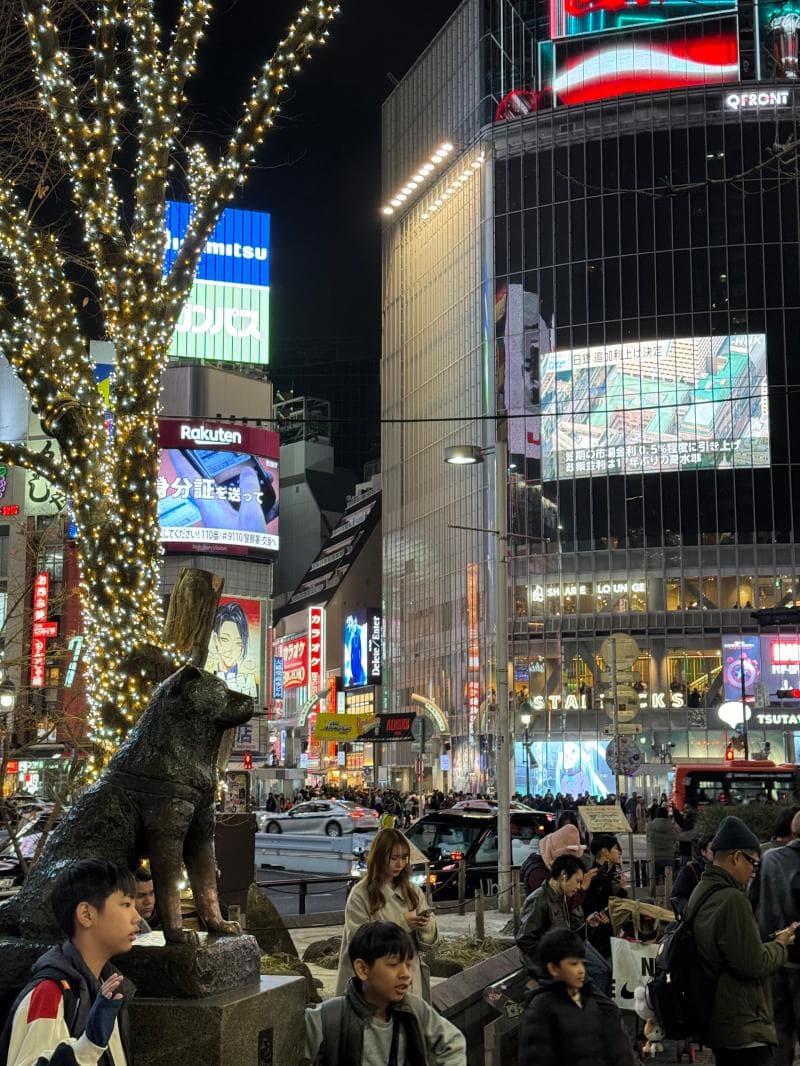
Experience the Shibuya Crossing in Tokyo, Japan – the world's busiest pedestrian intersection. Discover its history, vibrant culture, and unique scramble.
Overview
The Shibuya Crossing, often called the Shibuya Scramble Crossing, stands as an unmistakable symbol of modern Tokyo's dynamic energy and urban spectacle. Located directly outside Shibuya Station in Tokyo, Japan, this iconic intersection is renowned as one of the world's busiest pedestrian crossings. When the traffic lights simultaneously halt all vehicular movement, a surge of people, sometimes numbering in the thousands, pours into the intersection from every direction, creating a mesmerizing ballet of synchronized motion. This phenomenon, where pedestrians cross diagonally and from all corners, is precisely what gives it the 'scramble' moniker. It embodies both manic chaos and perfect synchronization, offering a unique glimpse into the organized flow of daily life in a bustling metropolis.
Surrounded by towering buildings adorned with vibrant neon lights and giant digital billboards, the Shibuya Crossing pulsates with an electrifying atmosphere. It serves as a central hub for youth culture, fashion, dining, and entertainment, drawing millions of locals and visitors alike. To truly grasp its scale and rhythm, one must experience both the thrill of walking through the crowd and observing its intricate dance from a vantage point above.
History & Cultural Background
The story of Shibuya Crossing is intrinsically linked to the growth of Shibuya Station. The station first opened its doors in 1885, laying the groundwork for the area's future as a major transport hub. The crossing, in its modern form, began to take shape around 1932 with the opening of the Tokyu Toyoko Line, which positioned Shibuya as a crucial link between Yokohama and Tokyo's central business districts. This expansion continued as more railway lines were added, driving rapid development and population influx into the area.
The current 'scramble' system, allowing pedestrians to cross in all directions at once, was inaugurated in 1973 and became fully iconic in the 1980s. Since the 1960s, the district around the crossing has evolved into a vibrant center for youth culture and fashion, attracting trendsetters and shaping Tokyo's urban lifestyle. Over the decades, Shibuya Crossing has not only witnessed significant events, including celebrations and cultural phenomena, but has also become a globally recognized symbol of Tokyo through its frequent appearances in popular media.
What Makes It Special
The unparalleled spectacle of the Shibuya Crossing lies in its 'scramble' system. When the pedestrian lights turn green, all vehicle traffic ceases, allowing hundreds, even thousands, of people to cross the intersection simultaneously, moving in multiple directions. This fluid, almost choreographed movement, despite the immense numbers, is often described as 'organized chaos,' where people navigate the throng with remarkable efficiency, rarely colliding.
Beyond the sheer volume of pedestrians, the crossing's allure is amplified by its dramatic setting. The surrounding buildings are plastered with colossal advertising screens and dazzling neon lights, particularly captivating after dark. This vibrant, futuristic landscape has often led to comparisons with global landmarks like New York's Times Square or London's Piccadilly Circus, solidifying its status as a nexus of pop culture and urban spectacle. It represents the fast-paced, interconnected, and innovative spirit of modern Tokyo, making it an essential experience for anyone seeking to understand the city's pulse.
Stories, Fun Facts & Local Details
One of the most heartwarming stories associated with Shibuya Station, right by the crossing, is that of Hachiko, the loyal Akita dog. Hachiko famously waited for his owner, Professor Ueno, at the station every day for nearly a decade after the professor's unexpected death. Today, a bronze statue of Hachiko stands proudly outside the station's Hachiko Exit, serving as a beloved meeting point and a poignant symbol of loyalty and perseverance.
In terms of sheer numbers, the Shibuya Crossing is astounding. During peak hours, an estimated 1,000 to 2,500 people cross every two minutes, with some estimates reaching up to 3,000 during a single green light cycle. On busy days, the crossing can see as many as 500,000 to over 2 million pedestrians. Its cinematic appeal has led to its feature in numerous films and television shows, including 'Lost in Translation,' 'The Fast and the Furious: Tokyo Drift,' and 'Resident Evil,' further cementing its global recognition.
The area immediately around the crossing is a bustling commercial and entertainment district. Visitors can explore iconic shopping destinations like Shibuya 109 and Center Gai, known for setting fashion trends. There are also countless restaurants, bars, and nightclubs, especially in areas like Dogenzaka, contributing to Shibuya's vibrant nightlife.
Visitor Perspective
For a curious traveler, stepping into the Shibuya Crossing is an exhilarating experience. Being immersed in the flowing 'human river' is often described as feeling like you've walked onto a movie set. While it can be crowded and noisy, especially during rush hours (typically 5 PM to 7 PM), the flow is surprisingly organized, and pedestrians move with a collective rhythm.
To fully appreciate the crossing, observing it from an elevated viewpoint is highly recommended. Popular spots include the second floor of the Starbucks in the QFRONT building, the observation deck at Shibuya Scramble Square (Shibuya Sky), or the 8th-floor rooftop of the Magnet shopping mall. These vantage points offer breathtaking panoramic views of the entire spectacle, allowing you to witness the fascinating dance below.
Most first-time visitors spend between 30 minutes to an hour experiencing the crossing, which includes crossing it a few times and taking photos. A more classic visit might extend to two to three hours, incorporating a viewpoint and exploring the surrounding shops. Accessing the Shibuya Crossing is straightforward; simply head to Shibuya Station and exit via the Hachiko Exit. The crossing is free to experience, and navigating the area is generally safe, though it is wise to be mindful of your belongings in crowded areas.
Coordinates: 139.70056, 35.6595
View on Google Maps💬 How Travelers Describe This Place
Based on community votes
Beautiful
896Interesting
550Must See
95Photogenic
56Unique
28
Traveler Stories
Discover memorable experiences shared by travelers who have visited this place.
No traveler stories yet.
Be the first traveler to share what made this place memorable.

Tour
By
Spot
Discover amazing places around the world. Your journey starts here.
Explore
© 2026 TourBySpot. All rights reserved.