Sforza Castle access
Milan, Italy
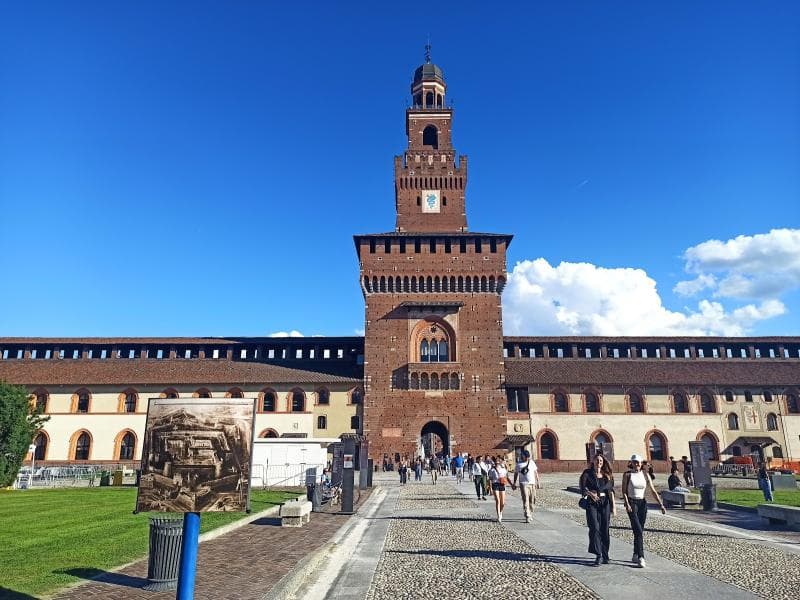
Explore Sforza Castle in Milan, Italy, a historic fortress transformed into a museum complex, nestled beside Parco Sempione.
Overview
Sforza Castle, known locally as Castello Sforzesco, stands as a formidable and captivating landmark in the heart of Milan, Italy. Situated at the very edge of the expansive Parco Sempione, this medieval fortification has transformed over centuries from a powerful defensive citadel and ducal residence into one of the city's most significant cultural institutions. Its imposing red-brick walls and towers welcome visitors to a complex rich in history, art, and architectural grandeur. Today, it houses an impressive array of civic museums, making it a must-visit destination for anyone seeking to understand Milan's storied past and artistic heritage. The castle grounds themselves are freely accessible, offering a glimpse into its majestic courtyards and ramparts before delving into the diverse collections within its walls.
As you approach, the castle's sheer scale is immediately apparent, serving as a powerful gateway between the bustling city and the tranquil green expanse of Parco Sempione. This strategic location highlights its historical importance, not just as a defensive structure but also as a symbol of Milan's enduring power and cultural evolution.
History & Cultural Background
The origins of Sforza Castle trace back to the mid-14th century when Galeazzo II Visconti, a Milanese nobleman, ordered the construction of a fortress named Castello di Porta Giova in 1358. This initial fortification served as a Visconti residence and military complex. However, after the fall of the Visconti family and the rise of the Golden Ambrosian Republic in 1447, the original castle was largely destroyed.
A new chapter began in 1450 when Francesco Sforza, a renowned condottiero who became the Duke of Milan, initiated the castle's reconstruction and transformation. His vision was to create not only a formidable defense but also a magnificent ducal residence. Under his patronage, and later that of his son Ludovico Sforza, the castle was adorned by some of the greatest artists of the Renaissance, including Leonardo da Vinci and Bramante. Leonardo notably worked on frescoes, such as those in the Sala delle Asse, and even contributed to the castle's defenses.
Throughout the 16th and 17th centuries, the Sforza Castle evolved into one of Europe's largest citadels, serving as a military stronghold under Spanish and Austrian rule. Its fortunes shifted dramatically when Napoleon ordered the demolition of parts of the castle in the early 19th century. However, following Italy's unification, a significant restoration project led by architect Luca Beltrami between 1891 and 1905 transformed the castle into a cultural hub, restoring much of its Renaissance splendor and paving the way for its current role as a museum complex. Parco Sempione itself was established on the castle's former parade grounds during this period.
What Makes It Special
What truly sets Sforza Castle apart is its remarkable blend of military might and artistic sophistication. It stands as a testament to Milan's powerful past, embodying centuries of political intrigue, architectural innovation, and artistic patronage. As one of Europe's largest citadels, its imposing structure commands attention, yet within its walls lies a treasure trove of cultural riches.
The castle houses an extensive complex of civic museums, making it a cultural epicenter. Visitors can explore the Museum of Ancient Art, the Pinacoteca (art gallery) with over 1,500 works, the Museum of Musical Instruments, and the Applied Arts Collection. A highlight for many is the Rondanini Pietà Museum, which showcases Michelangelo's poignant and unfinished final sculpture. Leonardo da Vinci's legacy is also deeply ingrained within the castle, particularly in the Sala delle Asse, where his intricate botanical frescoes captivate onlookers. These diverse collections offer an unparalleled journey through Italian art, history, and craftsmanship, from prehistoric artifacts to Renaissance masterpieces.
Stories, Fun Facts & Local Details
Beyond its historical timeline, Sforza Castle holds many fascinating details that bring its past to life. One prominent symbol you'll encounter is the 'biscione,' the mythical serpent devouring a human, which is the heraldic emblem of the Visconti family, the castle's original builders. This iconic motif is visible on the magnificent Torre del Filarete, the central clock tower that serves as the main entrance to the castle, faithfully rebuilt in the early 20th century after its destruction in the 16th century.
The vast Piazza Castello, situated in front of the castle, features a large fountain often playfully referred to by locals as the 'Torta degli Sposi' or 'wedding cake' due due to its shape. This area is a popular meeting point and offers a grand perspective of the castle's facade. Interestingly, the castle's impressive scale and architectural style have often drawn comparisons to the Moscow Kremlin, highlighting a shared Italian influence in its design. The fact that the castle, despite multiple periods of destruction and calls for its complete demolition, has always risen again, symbolizes Milan's resilience and enduring spirit.
Visitor Perspective
Approaching Sforza Castle is an experience in itself. From the city side, you're greeted by the monumental Torre del Filarete and the bustling Piazza Castello. Many visitors choose to arrive via the Cairoli–Castello metro stop, placing them directly in front of this iconic entrance. The castle courtyards are freely accessible, inviting exploration of the expansive grounds, walls, and defensive moats without a ticket. This allows for a casual stroll, absorbing the historical atmosphere and enjoying the architectural details before deciding to delve deeper into the museums.
For those wishing to explore the rich collections within, a single ticket grants access to all the civic museums housed inside the castle. A typical visit to the museum complex can take anywhere from two to three hours, depending on your pace and areas of interest. The seamless connection to Parco Sempione at the castle's rear provides a perfect continuation to your day, allowing you to transition from centuries of history to a relaxing green space. Whether you're a history buff, art enthusiast, or simply a curious traveler, Sforza Castle offers a captivating journey through Milan's vibrant heritage.
Coordinates: 9.179332498082596, 45.470652990065
View on Google Maps💬 How Travelers Describe This Place
Based on community votes
Beautiful
683Unique
642Photogenic
597Interesting
300Must See
88
Traveler Stories
Discover memorable experiences shared by travelers who have visited this place.
No traveler stories yet.
Be the first traveler to share what made this place memorable.

Tour
By
Spot
Discover amazing places around the world. Your journey starts here.
Explore
© 2026 TourBySpot. All rights reserved.