Senate Building Area
Tashkent, Uzbekistan
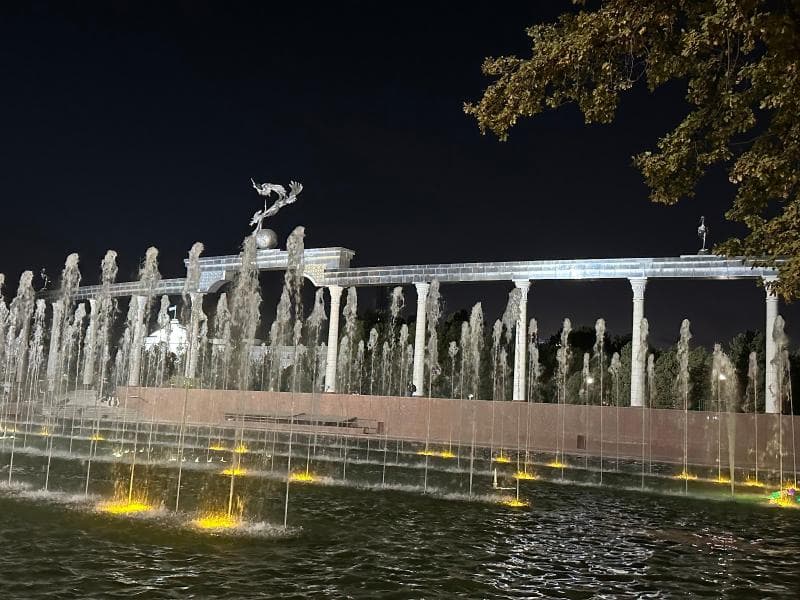
Explore the Senate Building Area within Tashkent's Independence Square, a key site of Uzbek governance, history, and national pride.
Overview
The Senate Building Area, nestled within the expansive Independence Square (Mustaqillik Maydoni) in Tashkent, Uzbekistan, represents a vital artery of the nation's governance and a focal point of its modern identity. Independence Square itself is more akin to a grand park, stretching across approximately 12 hectares, adorned with verdant spaces, numerous fountains, and significant monuments. To the south of the central Independence Monument, the Senate Building stands as a prominent feature, housing the upper chamber of Uzbekistan's Oliy Majlis, its national Parliament. This area is not merely a government precinct; it is a cherished public space where official state celebrations converge with the daily lives of Tashkent residents, offering a serene escape amidst the bustling city.
History & Cultural Background
The land on which Independence Square now lies has a rich and transformative history, mirroring Uzbekistan's own journey through empires and independence. Before 1865, the area was situated near the palace of a Kokand khan. Following the Russian conquest of Tashkent in 1865, it became part of the administrative heart of the new Turkestan Governorate-General, housing the governor's residence, famously known as the 'White House.' This period saw it called Cathedral Square, after the Orthodox cathedral that once stood there. With the advent of Soviet rule, the square underwent a significant metamorphosis, first being renamed Red Square in the 1930s, then Lenin Square, becoming a prominent site for Soviet state functions and featuring a large statue of Vladimir Lenin.
A pivotal moment arrived with Uzbekistan's declaration of independence in 1991. The square was swiftly renamed Mustaqillik Maydoni, or Independence Square, in 1992, signaling a new era of national sovereignty. The Lenin monument was removed, replaced by the striking Independence Monument, a large globe depicting the contours of Uzbekistan, symbolizing the nation's emergence onto the global stage. Later, a statue of a mother holding a child was added, embodying the Mother-Motherland. The Senate Building itself is a relatively recent addition, completed in 2003 on the site where the Alisher Navoi Library once stood, marking the establishment of a modern legislative body for the newly independent republic.
What Makes It Special
The Senate Building Area's special character stems from its blend of administrative gravitas and symbolic artistry. The Senate Building, designed in a classical architectural style with a grand portico and columns, visually conveys the strength and potential of the Uzbek state. Adjacent to it, the Independence Monument, a towering obelisk topped with a golden globe featuring Uzbekistan's map, is a powerful declaration of nationhood. Below it rests a poignant statue of a woman embracing a child, representing the Mother-Motherland and the bright future of the young state.
Another iconic feature is the Ezgulik Arch, or 'Arch of Good and Noble Aspirations,' a magnificent structure of sixteen marble columns often adorned with sculptures of storks. These storks are deeply symbolic in Uzbek culture, representing peace and tranquility. The square also encompasses the solemn Alley of Glory and Memory, dedicated to Uzbek soldiers who perished in World War II. This memorial features galleries with intricately carved wooden pillars housing 'Memory Books' inscribed with names, culminating in the Mourner Mother Monument and an Eternal Flame. The area's meticulously maintained green zones and an array of beautiful fountains, including the unique white 'Ok Yul' (Good Path) fountain, contribute to its grandeur and allure.
Stories, Fun Facts & Local Details
Beyond its official functions, the Senate Building Area, and Independence Square as a whole, are woven into the fabric of local life. The storks atop the Ezgulik Arch are more than mere decorations; they embody an ancient Eastern symbol of gratitude and peace. Locals even share a charming superstition that making a sincere wish beneath the arch allows the storks to carry it heavenward. It's a common and heartwarming tradition for newlyweds in Tashkent to visit Independence Square on their wedding day, adding a touch of personal celebration to this national landmark.
Historically, the square tripled in size after a significant reconstruction following the devastating 1966 Tashkent earthquake, showcasing the city's resilience and determination to rebuild. The Senate of Uzbekistan, the 'Senat,' is composed of 100 members, with 84 indirectly elected by regional councils and 16 appointed directly by the President, reflecting a unique blend of democratic process and presidential authority in its governmental structure. The building itself, with its columns and domes, is often seen as a representation of national art and traditions, promoting a special atmosphere of well-being and clean air in the city center.
Visitor Perspective
For visitors, the Senate Building Area offers a profound insight into Uzbekistan's contemporary identity and historical resilience. It's an ideal place for leisurely strolls, allowing travelers to absorb the monumental architecture and the serene beauty of the surrounding parkland and fountains. Observing the intricate carvings, the symbolic monuments, and the tranquil green spaces provides a meaningful understanding of the nation's journey to independence and its aspirations. While the Senate Building is an active government facility, and certain restrictions may be in place, especially regarding proximity or photography, its exterior grandeur and historical context are freely appreciable. The area truly comes alive during national holidays like Independence Day and New Year, when it becomes the vibrant stage for festivities and a gathering point for thousands.
Coordinates: 69.2797, 41.3113
View on Google Maps💬 How Travelers Describe This Place
Based on community votes
Must See
826Photogenic
494Beautiful
242Interesting
125Unique
82
Traveler Stories
Discover memorable experiences shared by travelers who have visited this place.
No traveler stories yet.
Be the first traveler to share what made this place memorable.

Tour
By
Spot
Discover amazing places around the world. Your journey starts here.
Explore
© 2026 TourBySpot. All rights reserved.