Sebilj Fountain
Sarajevo, Bosnia and Herzegovina
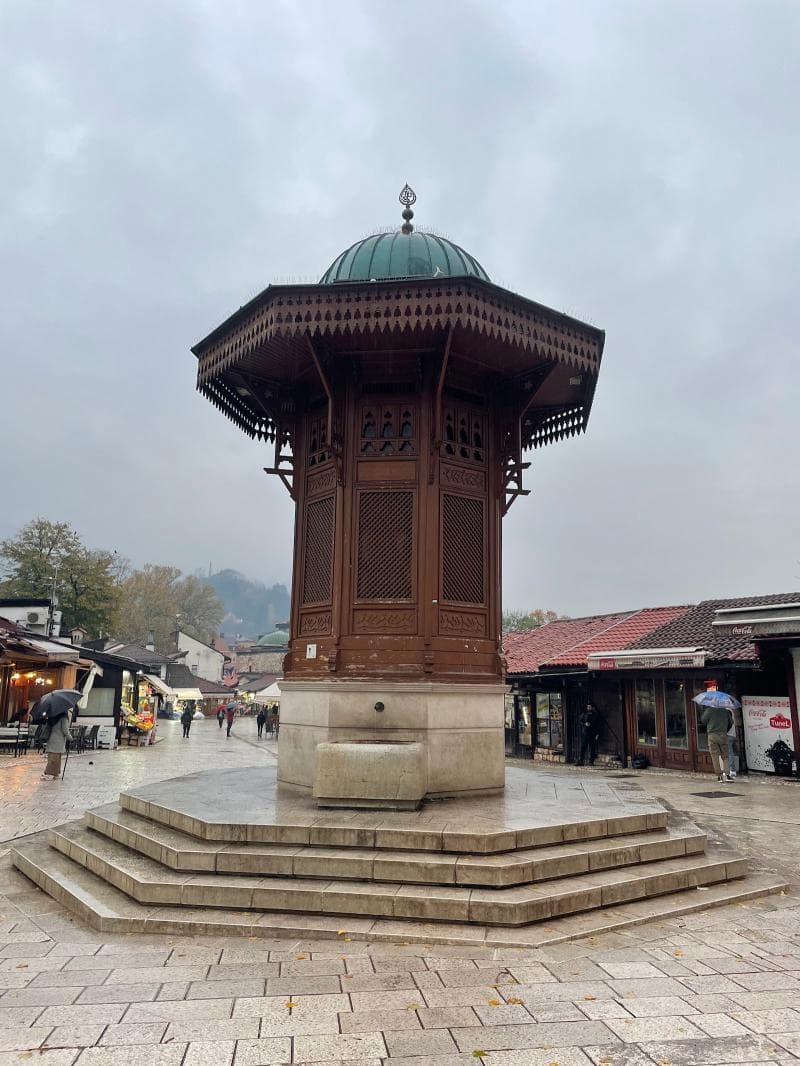
Explore the historic Sebilj Fountain in Sarajevo, Bosnia and Herzegovina. Discover its Ottoman origins, Austro-Hungarian reconstruction, and the legend that promises your return to this enchanting city.
Overview
The Sebilj Fountain, nestled in the heart of Baščaršija Square in Sarajevo, Bosnia and Herzegovina, stands as an enduring symbol of the city's rich past and vibrant present. This iconic Ottoman-style wooden public drinking fountain is more than just a historical landmark; it serves as a bustling social hub, drawing both locals and travelers to its charming embrace. Often referred to affectionately as 'Pigeon Square,' the area around the Sebilj is famous for the flocks of pigeons that gather, creating a lively and picturesque scene.
Functioning to this day, the Sebilj provides fresh, cool, and potable water, sourced from the springs of Mount Trebević through a 16th-century aqueduct system. Its distinctive octagonal shape, crafted from wood, stone, and copper, with a dome-covered roof, makes it an architectural focal point in the historic bazaar.
History & Cultural Background
The term 'Sebilj' itself carries significant cultural weight, originating from an Arabic word that can mean 'way,' 'a building where travelers find water,' or 'water provided charitably.' This reflects its traditional purpose as a 'vakıf' or charitable endowment, offering free water to the public. The tradition of constructing such public fountains was introduced to Bosnia and Herzegovina during the Ottoman era, originating from the Arabian Peninsula.
The original Sebilj was commissioned in 1753 by Mehmed-paša Kukavica, the Ottoman governor of Bosnia. This initial structure, however, was sadly destroyed in a fire in 1852. The current, beloved Sebilj was reconstructed in 1891 during the Austro-Hungarian administration. Designed by the Austrian architect Alexander Wittek in a Pseudo-Moorish style, it seamlessly blends Orientalist motifs with European historicism, reflecting Sarajevo's layered cultural influences. The fountain was later moved to its present central location in the square in 1913. While Sarajevo once boasted hundreds of sebilj fountains during the Ottoman period, most were lost in a devastating fire in 1697, making the Baščaršija Sebilj the solitary survivor and a national landmark.
What Makes It Special
The Sebilj Fountain is a profound testament to Sarajevo's intricate history, where Ottoman and Austro-Hungarian legacies converge beautifully. Its architecture, an octagonal kiosk made of wood, stone, and copper, topped with a striking dome, stands out as a unique and protected structure. It is not merely a static monument; its two functional horizontal spouts continuously dispense drinkable water, maintaining its original charitable purpose.
Beyond its physical form, the Sebilj embodies the spirit of Sarajevo. It is universally recognized as a symbol of the city, representing its resilience and enduring cultural identity. The blend of historical origins and its modern-day functionality makes it a living piece of heritage, connecting past generations with the present.
Stories, Fun Facts & Local Details
Perhaps the most enchanting aspect of the Sebilj Fountain is the legend that surrounds its waters. A popular local saying promises that 'Whoever drinks water from Baščaršija once constantly returns to Sarajevo.' Another version states, 'Whoever drinks water from the Sebilj will one day return to the city.' This charming belief encourages countless visitors to take a sip, hoping to be drawn back to this captivating city.
The area immediately surrounding the fountain is affectionately known as 'Pigeon Square' because of the multitude of pigeons that congregate there. Both locals and tourists delight in feeding these birds, adding a unique, dynamic element to the square's atmosphere. The global appreciation for the Sebilj is evident in the replicas that exist in various cities worldwide, including Belgrade, St. Louis (donated by the Bosnian community in 2013), and Novi Pazar, extending Sarajevo's charm across continents.
Visitor Perspective
The Sebilj Fountain is undeniably the central meeting point in Baščaršija for visitors and residents alike. Its prime location makes it an ideal starting point for exploring the winding streets of the Old Town, with its numerous cafes, souvenir shops, and street performers creating a vibrant, bustling environment.
While the square can get crowded, especially during peak hours, this only adds to its lively ambiance. Many visitors find it a perfect spot to pause, take photographs, and simply soak in the unique blend of Ottoman and Austro-Hungarian influences that define Sarajevo's cultural landscape. The fresh, cold water is a welcome refreshment, regardless of whether one believes the legend of return.
Coordinates: 18.43122, 43.85972
View on Google Maps💬 How Travelers Describe This Place
Based on community votes
Unique
539Photogenic
517Must See
424Interesting
251Beautiful
234
Traveler Stories
Discover memorable experiences shared by travelers who have visited this place.
No traveler stories yet.
Be the first traveler to share what made this place memorable.

Tour
By
Spot
Discover amazing places around the world. Your journey starts here.
Explore
© 2026 TourBySpot. All rights reserved.