Sea Viewpoints
Tbilisi, Georgia
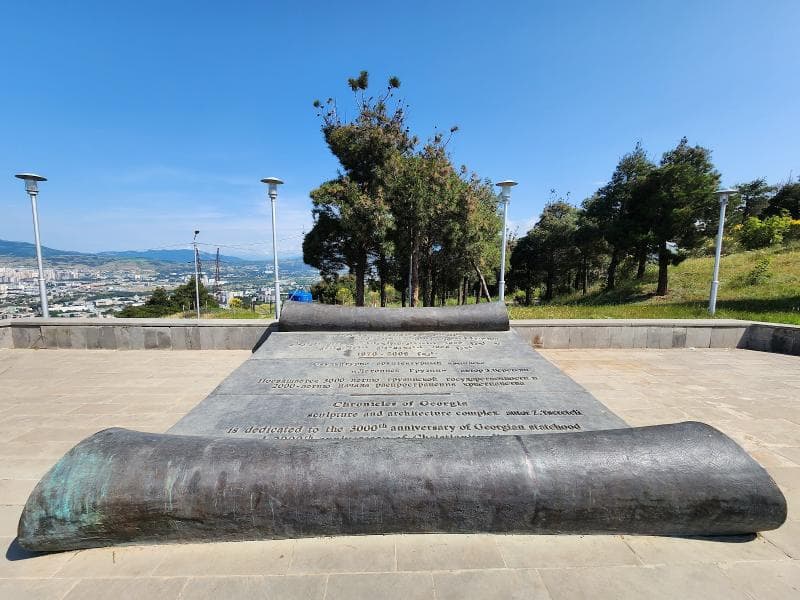
Explore the majestic Chronicle of Georgia in Tbilisi, an unfinished monument offering panoramic views of the Tbilisi Sea and recounting 3000 years of history.
Overview
Perched majestically atop Keeni Hill in Tbilisi, Georgia, the Chronicle of Georgia monument, often referred to as the 'Georgian Stonehenge,' is a breathtaking testament to the nation's rich history and enduring faith. This colossal structure, also known as the History Memorial of Georgia, comprises sixteen towering pillars, each standing between 30 and 35 meters high. Conceived by the renowned Georgian sculptor Zurab Tsereteli, the monument was begun in 1985 but remains an evolving work, never fully completed. It serves as a monumental chronicle, visually narrating 3,000 years of Georgian statehood and 2,000 years of Christianity in the country. From its elevated position, it offers expansive, panoramic views that sweep across the Tbilisi Sea—a large, man-made reservoir—and the sprawling modern districts of the city.
History & Cultural Background
The vision for the Chronicle of Georgia began in 1981, with construction commencing in 1985, during the twilight years of the Soviet era. Artist Zurab Tsereteli embarked on this ambitious project to create a grand narrative in stone and bronze, celebrating the foundational pillars of Georgian identity. The monument was explicitly designed to commemorate two pivotal anniversaries: three millennia of Georgian statehood and two millennia of Christianity, a faith deeply intertwined with the nation's history. The sixteen imposing columns are adorned with intricate bas-reliefs, each telling a distinct part of Georgia's story. The lower sections of the pillars are dedicated to scenes from the life of Jesus Christ, emphasizing the country's early adoption of Christianity. Moving upwards, the reliefs depict a pantheon of Georgian royalty, national heroes, and significant historical figures, alongside illustrations from ancient Georgian literary works like 'The Martyrdom of the Holy Queen Shushanik'. This monumental work was not merely an artistic endeavor but also a profound cultural statement during a period when national identity within the Soviet framework was being re-examined. Adjacent to the main memorial stands a small Georgian Orthodox church, further cementing the site's spiritual significance.
What Makes It Special
The Chronicle of Georgia stands out for its sheer scale and intricate artistry, making it one of Tbilisi's most distinctive landmarks. Its massive pillars, crafted from bronze, copper, and stone, present a dramatic visual experience that dwarfs visitors and inspires awe. The detailed reliefs offer a profound journey through Georgia's past, transforming historical events and religious narratives into a tangible, artistic spectacle. What makes this monument truly special is its dual role: it is both a historical archive carved in stone and a commanding viewpoint over the contemporary city. The interplay between the ancient narratives etched into the pillars and the expansive modern panorama below creates a unique sense of continuity and perspective. Unlike some of the city's more central attractions, the Chronicle of Georgia often provides a more tranquil and uncrowded experience, allowing for quiet contemplation and appreciation of its grandeur.
Stories, Fun Facts & Local Details
Among locals and travelers alike, the Chronicle of Georgia has earned the evocative nickname 'Georgian Stonehenge' due to its arrangement of large, imposing columns, though its origins are far more recent than its ancient British counterpart. Interestingly, the monument's current form was not the initial plan for Keeni Hill; some sources suggest an earlier proposal for a 100-meter-tall statue of Joseph Stalin was ultimately scrapped in favor of Tsereteli's historical narrative. Despite its impressive scope, the monument remains technically unfinished, with work intermittently continuing over the decades since its inception. While there is limited English signage on site, which adds a layer of mystery to the detailed depictions for many international visitors, the sheer artistic and historical weight of the structure transcends language barriers. The 'Tbilisi Sea' that the monument overlooks is not a true sea but a vast man-made reservoir created in 1953, serving as a popular spot for recreation and a vital water source for the city. Visitors should also be prepared for potentially windy conditions at the top of the hill, especially during evenings.
Visitor Perspective
A visit to the Chronicle of Georgia offers a truly immersive experience for the curious traveler. While the monument itself is a marvel of artistic and historical storytelling, the viewpoints provide an unparalleled visual reward. From here, visitors can soak in breathtaking panoramic views of the Tbilisi Sea shimmering in the distance and the vast, often Brutalist, Soviet-era architecture of the surrounding suburbs. It's a different perspective than the picturesque Old City, offering a glimpse into another facet of Tbilisi's urban landscape. The site is freely accessible and open 24 hours a day, allowing for visits at any time, though sunset is particularly recommended for dramatic lighting and stunning photographic opportunities. Typically, visitors spend about 1 to 1.5 hours exploring the monument and its surroundings. Getting there is straightforward: a taxi or ride-sharing service from central Tbilisi takes about 20-30 minutes, or you can opt for public transport by taking the Metro to Ghrmaghele station and then bus 360. Be prepared for a walk and some stairs to reach the monument itself, but the journey to this powerful and often peaceful site is undoubtedly worthwhile.
Coordinates: 44.8103981, 41.7706658
View on Google Maps💬 How Travelers Describe This Place
Based on community votes
Unique
539Photogenic
517Must See
424Interesting
251Beautiful
234
Traveler Stories
Discover memorable experiences shared by travelers who have visited this place.
No traveler stories yet.
Be the first traveler to share what made this place memorable.

Tour
By
Spot
Discover amazing places around the world. Your journey starts here.
Explore
© 2026 TourBySpot. All rights reserved.