Sea Lion Colony
San Francisco, United States
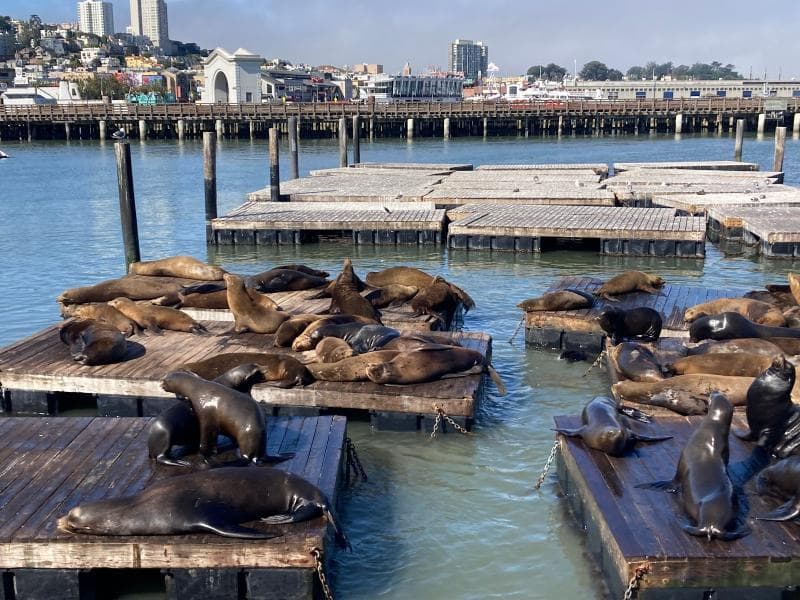
Discover San Francisco's Sea Lion Colony at Pier 39, Fisherman's Wharf. Learn its history, fun facts, and best visiting times in the USA.
Overview
San Francisco's Fisherman's Wharf, a vibrant waterfront district, holds a unique natural spectacle: the Sea Lion Colony at Pier 39. Here, on the floating wooden docks of K-Dock, visitors are greeted by a boisterous assembly of California sea lions. These 'sea-lebrities' have made this bustling urban locale their home, providing an unparalleled opportunity to observe marine wildlife up close. They spend their days basking in the sun, playfully jostling for space, and filling the air with their distinctive barks, creating an unforgettable sensory experience for travelers from around the globe.
Predominantly California sea lions, these intelligent and social pinnipeds offer a captivating display of natural behavior against the backdrop of one of the city's most iconic areas. Their presence has transformed a section of Pier 39 into a living classroom and a must-see attraction, enchanting visitors with their comical antics and surprising resilience.
History & Cultural Background
The story of the Pier 39 sea lions is as intriguing as their playful personalities. Their arrival in significant numbers was a curious consequence of the 1989 Loma Prieta earthquake. While the seismic event brought devastation to the region, it also opened the door for these marine mammals to discover a new sanctuary. In December 1989, a solitary male California sea lion was first observed at Pier 39's marina. Soon after, dozens joined him, and by early 1990, hundreds of sea lions had claimed the empty boat docks of K-Dock as their own.
Initially, this sudden influx caused some consternation among marina tenants. However, after consulting with experts from The Marine Mammal Center, it was decided that the sea lions should be allowed to stay. This decision marked a turning point, transforming a natural phenomenon into a beloved cultural fixture. Several factors contributed to their decision to remain: the abundant supply of herring in the bay provided ample food, the sheltered marina offered a protected environment, and crucially, the relative absence of natural predators like white sharks and orcas within the bay made K-Dock a safe haven. The availability of newly vacant docks after the earthquake provided ideal 'haul-out' spots – places for them to rest out of the water. Their unexpected adoption of Pier 39 quickly became an international story, symbolizing a resilient bright spot in the aftermath of the earthquake.
What Makes It Special
The Sea Lion Colony at Pier 39 stands out as a unique convergence of urban life and wild nature. What makes it particularly special is the sheer accessibility and proximity with which visitors can observe these magnificent creatures in their natural, albeit adapted, habitat. The K-Dock's floating wooden platforms are specifically set aside for the sea lions, offering them a dynamic surface that moves with the tide, ensuring a consistently comfortable place for them to rest and sunbathe.
The population of sea lions at Pier 39 fluctuates throughout the year, adding another layer of intrigue to each visit. While some sea lions remain year-round, their numbers can swell dramatically during certain seasons, particularly in the winter months, when the colony can count over a thousand individuals. Record numbers, sometimes exceeding 2,000, have been observed, creating a dense, vocal, and lively spectacle. This seasonal ebb and flow, driven by migration patterns and food availability, means that no two visits are exactly alike. The ongoing presence of educational initiatives, such as the Sea Lion Center operated by Aquarium of the Bay, further enriches the experience, providing insights into sea lion behavior, biology, and conservation efforts.
Stories, Fun Facts & Local Details
The California sea lions of Pier 39 are known for their captivating blend of intelligence, playfulness, and boisterous barks. These vocal pinnipeds are easily distinguished from seals by their external ear flaps and their ability to 'walk' on land using their strong front and rear flippers. Adult males, often larger and more dominant, can weigh up to 850 pounds and measure 7 feet in length, developing a distinctive crest on their heads as they mature. Females are smaller, typically reaching about 220 pounds and 6 feet.
With a lifespan of 20 to 25 years in the wild, these opportunistic feeders demonstrate remarkable adaptability. While many migrate south to the Channel Islands for breeding during the summer, a consistent group chooses to stay at Pier 39, much to the delight of tourists. Their remarkable swimming speed, up to 25 miles per hour, showcases their aquatic prowess. The city of San Francisco has embraced these honorary residents so much that Mayor London Breed even declared January 16th as the official 'Sea Lion Day,' celebrating their enduring presence and charm. At the Sea Lion Center, visitors can explore interactive exhibits, view educational videos, and even compare their size to a full-sized sea lion skeleton, deepening their connection to these fascinating creatures. For those unable to visit in person, a live webcam offers a glimpse into their daily routines.
Visitor Perspective
Experiencing the Sea Lion Colony is a highlight for many visiting San Francisco. The best vantage point is K-Dock, located on the western side of Pier 39, which offers unobstructed views of the sea lions as they rest and interact. Often, their distinctive barking can be heard long before they come into sight, building anticipation.
For the most engaging experience, consider visiting during the morning hours, roughly between 9 a.m. and 11 a.m., or in the late afternoon from 3 p.m. to 5 p.m. During these times, the sea lions tend to be more active and playful, and the lighting is ideal for photography. While winter generally sees the largest congregations, a smaller, resident population ensures that there are almost always some sea lions to observe, regardless of the season. It is crucial to remember that despite their charming appearance, these are wild animals. Visitors are encouraged to maintain a safe distance and should never attempt to feed, pet, or harass the sea lions, as such actions are not only unsafe but also illegal.
Coordinates: -122.4104, 37.81
View on Google Maps💬 How Travelers Describe This Place
Based on community votes
Interesting
791Photogenic
514Unique
457Beautiful
252Must See
19
Traveler Stories
Discover memorable experiences shared by travelers who have visited this place.
No traveler stories yet.
Be the first traveler to share what made this place memorable.

Tour
By
Spot
Discover amazing places around the world. Your journey starts here.
Explore
© 2026 TourBySpot. All rights reserved.