Scott Monument Access
Edinburgh, United Kingdom
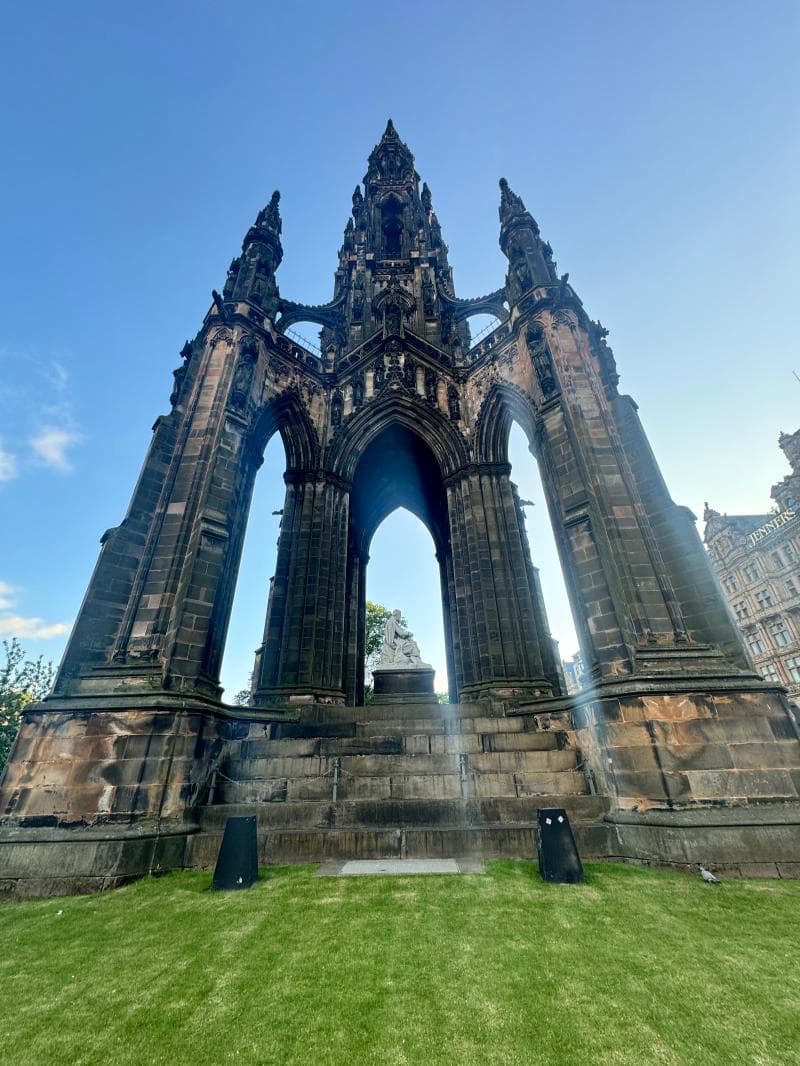
Explore the majestic Scott Monument in Princes Street Gardens, Edinburgh, United Kingdom. Discover its Gothic architecture, history, and panoramic city views.
Overview
Nestled within the verdant expanse of Princes Street Gardens in the heart of Edinburgh, United Kingdom, stands the majestic Scott Monument. This towering Victorian Gothic spire is a profound tribute to Sir Walter Scott, one of Scotland's most celebrated literary figures. Visible from many points across the city, it serves as a prominent landmark and a testament to the enduring legacy of a writer whose stories captivated the world. At over 61 meters (200 feet) high, it holds the distinction of being the second-largest monument dedicated to a writer globally, surpassed only by the José Martí monument in Havana.
Its intricate design beckons curious travelers to explore its depths and ascend its winding stairs, promising not just a journey through stone and artistry, but also an unparalleled perspective of Edinburgh's historic landscape. The monument's dark, weathered stone, once light in color, tells a story of the city's past and adds to its dramatic presence against the Scottish sky.
History & Cultural Background
The story of the Scott Monument begins in the wake of Sir Walter Scott's death in 1832, when a widespread desire emerged to honor the literary giant. A public competition was launched to design a fitting memorial. The winning entry came from George Meikle Kemp, a self-taught architect and joiner who, fearing his lack of formal qualifications, initially submitted his design under the pseudonym 'John Morvo', referencing a medieval architect of Melrose Abbey. Kemp's Gothic vision resonated deeply, leading to his selection in 1838.
Construction commenced on August 15, 1840, the anniversary of Scott's birthday, and the monument was inaugurated in 1846. Sadly, Kemp tragically drowned in the Union Canal in 1844, never seeing his masterpiece completed. The monument's design, deeply influenced by Scott's own affinity for Gothic architecture, features a central statue of Sir Walter Scott carved from white Carrara marble by Sir John Steell. Scott is depicted seated with a quill pen and his beloved deerhound, Maida, by his side. This impressive structure was funded entirely by public donations, reflecting the immense admiration the Scottish people held for Scott.
What Makes It Special
Beyond its impressive height, what truly sets the Scott Monument apart is its extraordinary Gothic Revival architecture and rich symbolic detailing. The monument's five-tiered spire is adorned with 68 intricate statues, not including Scott himself and Maida, that depict characters from Scott's beloved novels and other prominent figures from Scottish history and literature. These figures bring Scott's imaginative world to life, allowing visitors to glimpse the narratives that shaped a nation's identity.
The monument's imposing presence also serves a practical purpose, dominating the eastern section of Princes Street Gardens and acting as a visual link between Edinburgh's historic Old Town and its Georgian New Town. Its location is also significant, standing near Edinburgh Waverley Railway Station, which itself is named after Scott's famous 'Waverley' novels. The monument is a cultural touchstone, celebrating both a literary giant and the enduring power of storytelling.
Stories, Fun Facts & Local Details
Locals affectionately refer to the Scott Monument as the 'Gothic rocket' due to its soaring, spire-like form. A fascinating detail lies in its distinctive dark coloration. While built from Binny sandstone, which was originally light in hue, the monument has been stained black over the centuries by the soot and pollution from Edinburgh's industrial past. This unintentional transformation adds a unique, atmospheric quality to its appearance.
The tale of George Meikle Kemp's anonymous design submission, a carpenter challenging established architects, adds a romantic, underdog narrative to its creation. His inspiration for the design, particularly the intricate detailing, is believed to have come from the ancient Melrose Abbey, which he had extensively studied and drawn. Inside the monument, on the first level, a museum room features beautiful stained-glass windows depicting Saints Andrew and Giles, alongside the coats of arms for Edinburgh and Scotland.
Visitor Perspective
Accessing the Scott Monument offers a truly immersive experience for the adventurous traveler. Visitors can climb a total of 287 steps through a series of narrow, spiral staircases to reach its four viewing platforms. This ascent, though physically demanding, is incredibly rewarding, unfolding panoramic views of Edinburgh Castle, the Royal Mile, Arthur's Seat, and the bustling city below. Each level provides a fresh perspective, making the climb a journey of discovery.
The initial level houses a small museum dedicated to Sir Walter Scott's life and work, along with details about the monument's construction. Here, visitors can learn about the author's impact and the architectural marvel they are exploring. It's advisable to hold onto personal belongings tightly, especially on windier days, as the upper platforms can be quite exposed. The experience offers a unique blend of historical immersion and breathtaking scenery, connecting visitors intimately with Edinburgh's rich literary and architectural heritage.
Coordinates: -3.19526, 55.95236
View on Google Maps💬 How Travelers Describe This Place
Based on community votes
Interesting
853Must See
667Unique
190Photogenic
93Beautiful
32
Traveler Stories
Discover memorable experiences shared by travelers who have visited this place.
No traveler stories yet.
Be the first traveler to share what made this place memorable.

Tour
By
Spot
Discover amazing places around the world. Your journey starts here.
Explore
© 2026 TourBySpot. All rights reserved.