Savoy Terrace
Budapest, Hungary
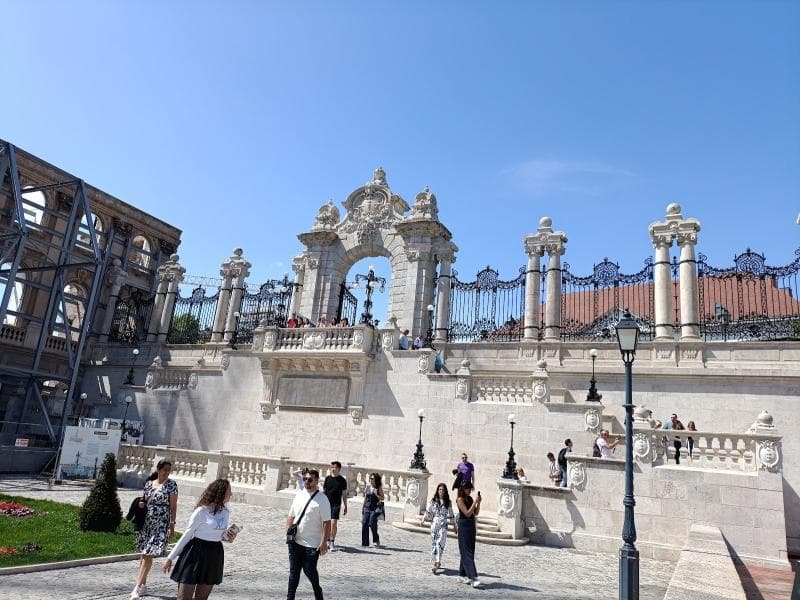
Discover the Savoy Terrace in Buda Castle, Budapest, Hungary. Enjoy breathtaking panoramic views of the Danube, Chain Bridge, and Parliament from this historic spot.
Overview
The Savoy Terrace, nestled within the magnificent Buda Castle in Budapest, Hungary, offers visitors a captivating blend of historical grandeur and unparalleled panoramic vistas. Located on the eastern side of the Royal Palace, directly in front of the Hungarian National Gallery, this expansive terrace is a key highlight of the UNESCO World Heritage site. It serves as a natural balcony, providing breathtaking, unobstructed views across the Danube River to the Pest side of the city, including iconic landmarks such as the Chain Bridge, the majestic Hungarian Parliament Building, and the elegant dome of St. Stephen's Basilica.
More than just a viewpoint, the Savoy Terrace is a public space that invites quiet contemplation and serves as a bustling hub. It is easily accessible and forms an integral part of the visitor experience within the historic Buda Castle complex, which itself stands proudly atop Castle Hill.
History & Cultural Background
The Savoy Terrace is an important component of the architectural evolution of the Royal Palace within Buda Castle. The palace complex has a rich and often turbulent history, dating back to the 13th century, undergoing numerous destructions, reconstructions, and architectural transformations throughout the centuries. The terrace itself is a feature of the Baroque and Neo-Renaissance extensions that shaped the palace into much of what we see today.
Culturally, the terrace is deeply significant, largely due to the prominent equestrian statue of Prince Eugene of Savoy that stands here. This monument, erected in 1900, commemorates the military leader's pivotal role in expelling the Ottoman Empire from Hungary in the late 17th century, symbolizing Hungarian resilience and national pride. The presence of this statue cements the terrace's historical narrative within the broader context of Hungarian history.
What Makes It Special
What truly sets the Savoy Terrace apart is its extraordinary panoramic perspective. While other viewpoints exist in the Buda Castle District, the Savoy Terrace provides a less crowded and wonderfully expansive outlook, making it a favorite among those seeking postcard-perfect photographs and moments of serene appreciation. From here, the Danube weaves gracefully through the city, flanked by the architectural marvels of Budapest.
Beyond its scenic beauty, the terrace is also known for its versatility as a cultural and social space. It frequently hosts a variety of events, from elegant weddings to festive gatherings, and has even been transformed into a synthetic ice rink during winter months, adding a modern twist to its ancient surroundings.
Stories, Fun Facts & Local Details
The equestrian statue of Prince Eugene of Savoy is not just a landmark; it's a storytelling piece. Local lore often connects visitors to the heroic tales of his campaigns, allowing them to feel a tangible link to Hungary's past.
A fun fact for visitors is that the Savoy Terrace has sometimes served as a temporary workshop. For instance, the iconic Turul statue of Buda Castle, a mythical bird symbolizing Hungarians, was temporarily restored on the Savoy Terrace, showcasing its practical use beyond tourism and events. The terrace also often acts as a popular meeting point for guided tours of the Buda Castle complex, demonstrating its central role in the visitor experience.
Visitor Perspective
For the curious traveler, the Savoy Terrace offers an accessible and enriching experience. It is part of the Buda Castle grounds, which are open to the public daily without any admission fee, allowing everyone to wander freely and soak in the atmosphere. The area around the terrace is well-maintained and provides ample space to stroll, find a quiet bench, or simply stand in awe of the vista. It is an ideal spot to begin an exploration of Buda Castle, providing an immediate sense of its scale and significance while also serving as an excellent orientation point to the city below. Many visitors find it to be a perfect spot for capturing memorable photographs of Budapest's spectacular skyline.
Coordinates: 19.039722, 47.495556
View on Google Maps💬 How Travelers Describe This Place
Based on community votes
Beautiful
545Must See
343Interesting
211Photogenic
74Unique
20
Traveler Stories
Discover memorable experiences shared by travelers who have visited this place.
No traveler stories yet.
Be the first traveler to share what made this place memorable.

Tour
By
Spot
Discover amazing places around the world. Your journey starts here.
Explore
© 2026 TourBySpot. All rights reserved.