Santa Monica Pier
Los Angeles, United States
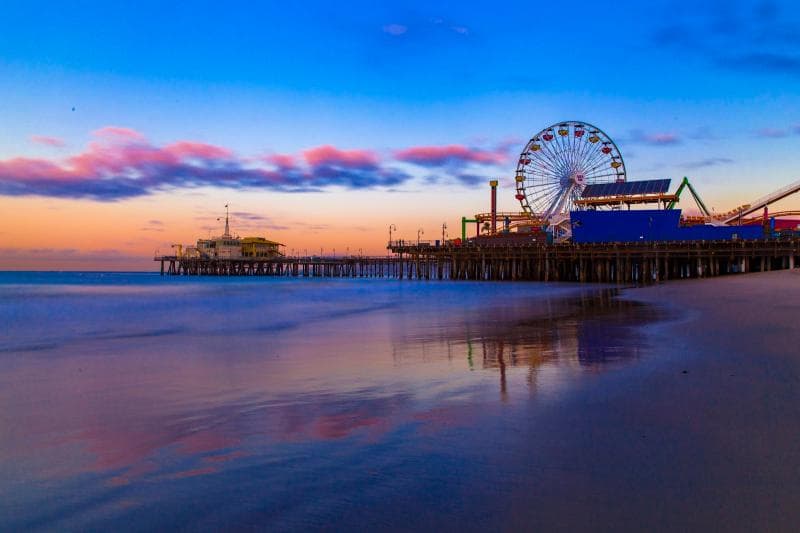
Discover the iconic Santa Monica Pier in Los Angeles, United States. Explore its history, Pacific Park rides, carousel, dining, and scenic ocean views.
Overview
The Santa Monica Pier, a celebrated landmark in Los Angeles, United States, extends majestically into the Pacific Ocean at the foot of Colorado Avenue. This iconic destination serves as a vibrant hub of activity, offering a delightful blend of amusement, dining, shopping, and scenic beauty. It's a place where the golden California coastline meets the timeless charm of a classic seaside attraction, drawing millions of visitors each year to experience its unique atmosphere and breathtaking ocean vistas.
As one of the most photographed locations in the world, the pier is easily recognizable by its famous Ferris wheel and offers endless opportunities for exploration and relaxation. Whether you seek thrilling rides, fresh seafood, or simply a tranquil stroll with the ocean breeze, the Santa Monica Pier provides a memorable escape.
History & Cultural Background
The Santa Monica Pier's history is a fascinating tale of evolution, beginning over a century ago. What stands today as a single, bustling destination actually originated from two distinct piers. The longer, northern section, known as the Municipal Pier, was constructed in 1909. Its initial purpose was quite utilitarian: to carry a sewage pipeline further out into the bay, preventing pollution closer to shore. However, its potential as a recreational spot for walking and fishing was quickly realized by the public.
A few years later, in 1916, amusement entrepreneur Charles I.D. Looff, famous for building Coney Island's first carousel, developed the adjacent 'Pleasure Pier' to the south. This addition transformed the area into a lively entertainment complex, complete with thrill rides and a grand carousel. The most enduring structure from Looff's vision is the Looff Hippodrome, which opened in 1916 and is now recognized as a National Historic Landmark. The Hippodrome houses a magnificent carousel, originally built by the Philadelphia Toboggan Company in 1922 and brought to the pier in 1947, featuring 44 hand-carved wooden animals.
Throughout its history, the pier has faced and overcome significant challenges. In the 1970s, plans to demolish the aging structure for a man-made island development sparked a passionate 'Save the Pier' grassroots movement, ultimately preserving this beloved landmark. Further testing its resilience, severe winter storms in 1983 caused extensive damage, but dedicated restoration efforts brought the pier back to its glory.
Adding to its cultural significance, the Santa Monica Pier officially marks the western terminus of the legendary Route 66, 'America's Mother Road,' connecting the heartland of the United States to the vast Pacific.
What Makes It Special
The Santa Monica Pier distinguishes itself through a captivating blend of historic charm and modern attractions. At its heart lies Pacific Park, the West Coast's only amusement park located directly on a pier. This park is home to the world's only solar-powered Ferris wheel, the Pacific Wheel, which offers unparalleled panoramic views of the coastline, city, and ocean. Another highlight is the West Coaster, a roller coaster that towers 55 feet above the Pacific.
Beyond the excitement of Pacific Park, the pier maintains its historical appeal. Fishing remains a popular pastime, with many visitors casting lines from the pier's west end, an activity for which no license is typically required from the pier itself. The Santa Monica Pier Aquarium, operated by Heal the Bay, provides an educational glimpse into local marine life directly beneath the pier, offering an intimate connection to the ocean it spans.
The pier is also a dynamic cultural venue, frequently hosting live musical performances, events, and a diverse array of street entertainers who add to its lively, festive atmosphere.
Stories, Fun Facts & Local Details
- Two Piers in One: The present-day Santa Monica Pier is actually a combination of two originally separate structures—the Municipal Pier (1909) and Looff's Pleasure Pier (1916)—which were later joined.
- Unexpected Origins: The initial purpose of the 1909 Municipal Pier was to transport a sewage pipeline far enough into the ocean to prevent nearshore pollution.
- Carousel's Craftsmanship: The historic carousel within the Looff Hippodrome features 44 exquisitely hand-carved and hand-painted wooden animals, each a testament to classic artistry.
- Hollywood History: The iconic Looff Hippodrome and its carousel gained cinematic fame as a filming location for the 1973 Academy Award-winning movie 'The Sting.'
- A Symbol of Resilience: The pier's very existence is a triumph of community effort, having been saved from demolition in the 1970s by dedicated local activists.
Visitor Perspective
Visiting the Santa Monica Pier is an immersive experience designed for all ages. The pier and its surrounding attractions are generally open daily, though specific operating hours for individual shops, restaurants, and Pacific Park rides can vary seasonally. It is always advisable to check the latest schedules for amusements like the carousel, which has specific operating times.
You can easily spend hours exploring the diverse offerings, from indulging in carnival games and enjoying street performances to browsing unique vendor carts for souvenirs. Dining options range from casual snacks to full-service restaurants, many offering fresh seafood with ocean views.
While parking is available in nearby lots, visitors are encouraged to use public transportation, such as the Metro E Line, or rideshare services to ease congestion. The Santa Monica Pier Shop and Visitor Center, located within the historic Merry-Go-Round building, provides helpful information, maps, and local tips from knowledgeable staff, ensuring a smooth and enjoyable visit. Accessible parking, elevators, and ramps are also available to accommodate all guests.
Coordinates: -118.4968, 34.0103
View on Google Maps💬 How Travelers Describe This Place
Based on community votes
Beautiful
981Unique
617Interesting
357Photogenic
147Must See
28
Traveler Stories
Discover memorable experiences shared by travelers who have visited this place.
No traveler stories yet.
Be the first traveler to share what made this place memorable.
Things to see at Santa Monica Pier



Tour
By
Spot
Discover amazing places around the world. Your journey starts here.
Explore
© 2026 TourBySpot. All rights reserved.