Rutschebanen Wooden Coaster
Copenhagen, Denmark
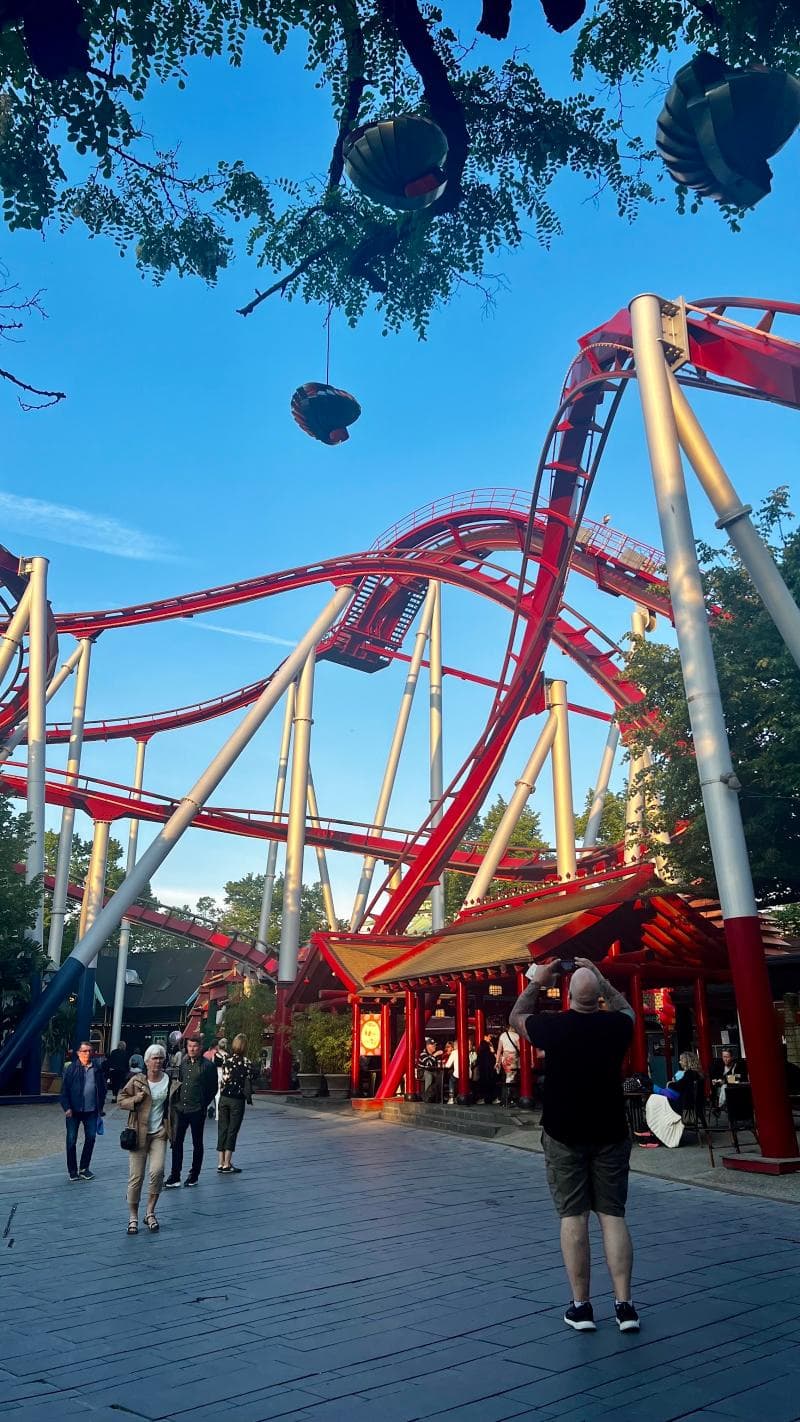
Experience Rutschebanen, the historic wooden coaster in Tivoli Gardens, Copenhagen, Denmark. Europe's oldest, featuring a unique onboard brakeman.
Overview
Nestled within the enchanting Tivoli Gardens in Copenhagen, Denmark, Rutschebanen, often referred to as 'The Mountain Coaster' or 'The Slide', stands as a living testament to amusement park history. This iconic wooden roller coaster, whose name simply means 'roller coaster' in Danish, opened its tracks to eager visitors in 1914. It holds the distinguished title of being the oldest operating roller coaster in Europe and ranks among the top three oldest worldwide. More than just a ride, Rutschebanen offers a unique blend of historical charm and gentle thrills, meandering through intricately designed artificial mountain landscapes. Its enduring appeal lies not only in its age but also in a unique operational feature: an onboard brakeman who manually controls the train's speed, offering a truly distinctive and personalized ride experience.
History & Cultural Background
The story of Rutschebanen is deeply intertwined with the rich heritage of Tivoli Gardens itself, which first opened its gates in 1843 as the world's second-oldest operating amusement park, inspiring even Walt Disney in his creation of Disneyland. Rutschebanen was conceived and built by the pioneering L.A. Thompson Scenic Railway Company, under the supervision of Valdemar Lebech, continuing the legacy of LaMarcus Adna Thompson, often credited with inventing the modern roller coaster.
Its journey through time has been anything but smooth. Originally featuring impressive artificial mountain peaks, these were controversially removed in 1924 by Copenhagen officials who deemed them 'frivolous' for a city setting. However, in a delightful nod to its original design, these peaks were triumphantly restored in 2014 for the coaster's centenary, recapturing its initial grandeur. Perhaps the most dramatic chapter in Rutschebanen's history unfolded during World War II. In June 1944, sections of the beloved coaster were bombed by Nazi saboteurs (or Danish Nazi collaborators) as part of an effort to demoralize Danish citizens during the occupation. Yet, demonstrating incredible resilience, the park's officials worked tirelessly, and Rutschebanen was renovated and back in operation just 25 days later, a symbol of unwavering spirit.
What Makes It Special
Rutschebanen is celebrated for several distinguishing characteristics that set it apart in the world of roller coasters. Foremost among these is its status as one of the few remaining side-friction wooden coasters globally that still operates with an onboard brakeman. This dedicated individual rides within the train, using a lever to manually adjust its speed, ensuring a ride that is both thrilling and carefully controlled, a tradition that has delighted generations.
The coaster's track winds gracefully through an elaborate, handcrafted artificial mountain landscape, providing a scenic journey rather than just a series of drops and turns. This immersive theming contributes significantly to its charm and timeless appeal. Its historical significance has also been formally recognized; Rutschebanen has been designated an ACE (American Coaster Enthusiasts) Coaster Classic and an ACE Roller Coaster Landmark, underscoring its pivotal role in roller coaster history and its enduring operational heritage. It's a testament to engineering longevity and meticulous maintenance that this wooden marvel continues to captivate visitors over a century after its inauguration.
Stories, Fun Facts & Local Details
Beyond its impressive age and unique operational style, Rutschebanen is steeped in captivating stories and local anecdotes. One charming tale revolves around the coaster's mountain peaks. When they were initially removed in 1924, it was due to a rather conservative civic sentiment in Copenhagen, which reportedly found the 'fun' mountains too trivial. Their return in 2014 symbolized a city re-embracing its playful side and celebrating Tivoli's integral role in its identity.
The extraordinary wartime resilience of Rutschebanen provides another compelling narrative. During the 1944 bombing, when electricity supply was often disrupted, Tivoli reportedly installed a hand crank at the top of the lift hill and hired strong men to manually pull the coaster cars up the incline. Passengers would disembark, walk up the hill, and then re-board for the downhill journey, showcasing an incredible determination to keep spirits high even in challenging times. For many Danes, Rutschebanen holds a special nostalgic significance, as it has created cherished family memories spanning multiple generations. It embodies a sense of continuity and tradition, making it more than just an amusement ride but a cultural landmark.
Visitor Perspective
For the curious traveler, a ride on Rutschebanen offers a step back in time and a truly distinct experience. Visitors often describe it as 'fun but not too scary,' perfect for those seeking a classic coaster feel without extreme inversions or dizzying speeds. The characteristic 'rattling of a wood coaster' combined with quick dips and rises contributes to its nostalgic charm.
Many are surprised by the unexpected thrill it delivers, with some even reporting moments of 'stand up air time' on the drops and noticeable lateral forces on the turns, making it more exciting than its vintage might suggest. The presence of the brakeman, a feature rarely seen today, adds an intriguing layer to the ride, connecting passengers directly to its historical operation. Despite its age, guests consistently note the ride's excellent maintenance and smooth operation, ensuring a comfortable and memorable journey through Tivoli's whimsical landscape. It is truly a ride that appeals across all ages, inviting everyone to share in a piece of Danish history and joy.
Coordinates: 12.56833, 55.67361
View on Google Maps💬 How Travelers Describe This Place
Based on community votes
Must See
981Photogenic
921Beautiful
617Unique
357Interesting
147
Traveler Stories
Discover memorable experiences shared by travelers who have visited this place.
No traveler stories yet.
Be the first traveler to share what made this place memorable.

Tour
By
Spot
Discover amazing places around the world. Your journey starts here.
Explore
© 2026 TourBySpot. All rights reserved.