Rustaveli Avenue Access
Tbilisi, Georgia
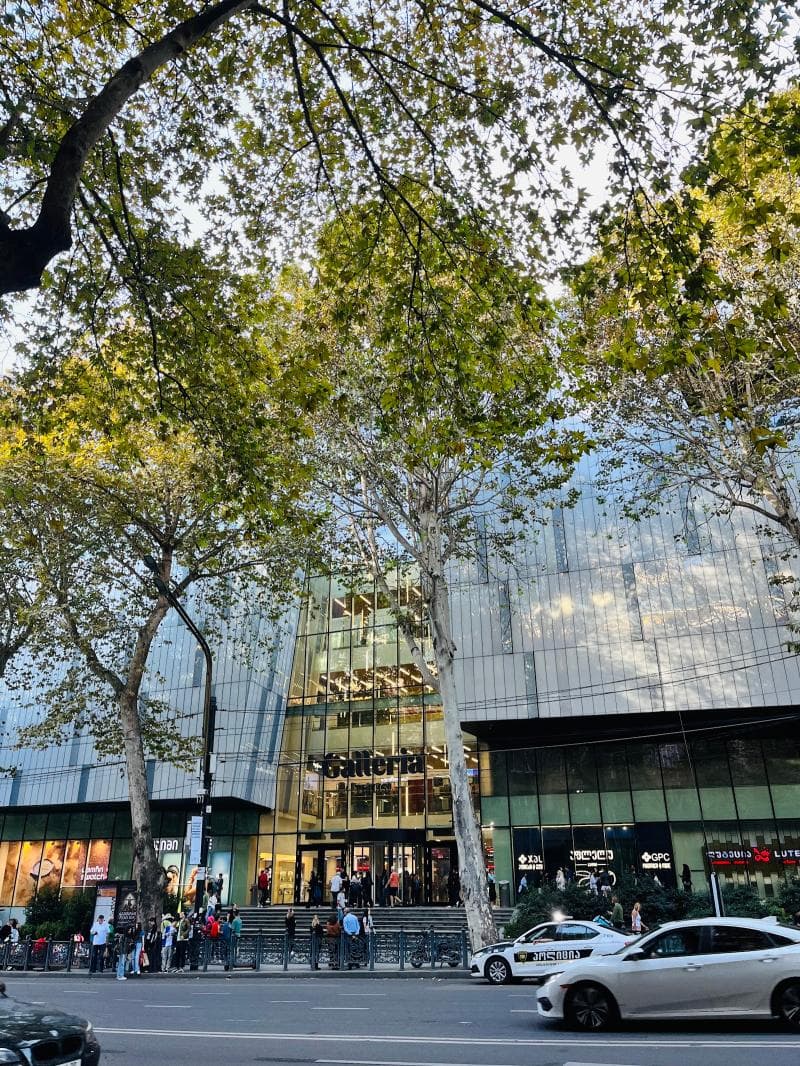
Explore Rustaveli Avenue Access from Freedom Square in Tbilisi, Georgia. Discover its rich history, cultural landmarks, and vibrant atmosphere at the city's heart.
Overview
At the eastern terminus of Tbilisi's sprawling Freedom Square, one finds the symbolic gateway to Rustaveli Avenue. This particular access point isn't merely a geographical marker; it's the very nerve center where Tbilisi's monumental history and pulsating contemporary life converge. From this vibrant starting point, Rustaveli Avenue stretches for approximately 1.5 kilometers, serving as the capital's foremost thoroughfare and its undeniable cultural, political, and social epicenter. Named in honor of the revered medieval Georgian poet, Shota Rustaveli, this grand boulevard offers a captivating journey through the city's narrative, balancing its profound historical gravitas with a dynamic modern energy. It's often described as the city's pulse, connecting the old soul of Tbilisi with its aspirations for the future.
The access from Freedom Square places visitors directly amidst iconic landmarks and sets the stage for exploring a tree-lined expanse bustling with locals and tourists alike. This intersection is where many city tours commence, providing immediate access to significant institutions, charming cafes, and bustling shops, all radiating the unique urban tapestry that defines modern Tbilisi.
History & Cultural Background
The history of Rustaveli Avenue, and by extension, its connection to Freedom Square, is deeply interwoven with Georgia's national story. Its origins trace back to the 19th century when, under Russian Imperial rule, what was initially known as the Digomi Road transformed into Golovin Prospect in the 1840s and 1850s. This development was part of an ambitious project to Europeanize the expanding city. The name change to Rustaveli Avenue occurred in 1918, a testament to Georgia's brief declaration of independence following the collapse of the Russian Empire.
Freedom Square itself boasts a storied past marked by numerous name changes reflecting the political tides of Georgia. It was known variously as Pashkevich-Erivanskaya Square, Theatre Square, and during the Soviet era, briefly as Beria Square and then Lenin Square. Following Georgia's independence from the Soviet Union, the square was rightfully rechristened Freedom Square, symbolizing the nation's enduring quest for liberty. In 2006, the magnificent Freedom Monument, featuring a golden statue of Saint George slaying the dragon, was erected in the center of Freedom Square, further cementing its role as a powerful national symbol.
Rustaveli Avenue has been a silent witness and often a direct stage for Georgia's most pivotal moments, from the Soviet architectural imprints on its buildings to the peaceful demonstrations for independence in the late 1980s. The tragic events of April 9, 1989, when Soviet troops violently dispersed protestors, are etched into the collective memory, marking a turning point towards national sovereignty. It also bore witness to the 1991 civil conflict and the 2003 Rose Revolution, making this avenue a living chronicle of Georgian resilience and determination.
What Makes It Special
The access point to Rustaveli Avenue from Freedom Square is special because it acts as the literal and metaphorical bridge between Tbilisi's ancient heritage and its contemporary spirit. This area is home to an extraordinary concentration of governmental, cultural, and public institutions, showcasing the city's diverse character. Along the avenue, starting from this point, you'll find the majestic Parliament of Georgia, the Georgian National Museum, the exquisite Opera and Ballet Theatre, the historic Rustaveli Theatre, and the Kashveti Church.
Beyond its monumental architecture, the avenue is a vibrant urban space. Tree-lined sidewalks invite leisurely strolls, while cafes and shops spill onto the pedestrian areas, creating an inviting atmosphere. Visitors can encounter street musicians, art exhibitions, and various forms of street art, adding to the dynamic ambiance. The architectural styles themselves tell a story, featuring a compelling blend of Soviet neoclassical grandeur, early 20th-century Georgian designs, and striking modernist elements, reflecting the layers of history that have shaped the city.
Stories, Fun Facts & Local Details
Before it carried its current esteemed name, Rustaveli Avenue was unofficially dubbed the 'Road to Russia' in the early 19th century, highlighting its significance as a thoroughfare connecting Tbilisi to the north. An interesting detail from its past is the 'Konka,' a horse-drawn railway that once traversed the avenue before being replaced by a tram, a nod to the city's evolving urban landscape.
The access area around Freedom Square holds its own captivating tales. The square was notably the site of an audacious bank robbery in 1907, an event that reportedly involved none other than Joseph Stalin himself, netting a significant sum in today's currency. Today, Freedom Square remains Tbilisi's primary gathering space, a locale where national celebrations erupt and where the pulse of political discourse often finds its voice through peaceful demonstrations.
The 35-meter-high golden statue of Saint George slaying the dragon, prominently featured in Freedom Square, is not just a landmark but a powerful visual representation of Georgian national identity and its continuous struggle for freedom. Along the avenue, particularly near the Rustaveli Theatre, it's not uncommon to encounter talented street performers and artists, contributing to the avenue's reputation as 'the stage where Tbilisi performs.'
Visitor Perspective
For any traveler to Tbilisi, the Rustaveli Avenue access from Freedom Square serves as an ideal and often recommended starting point for exploration. Its central location and direct connection to the Tbilisi Metro (Liberty Square Station) make it incredibly accessible. It's advisable to allocate at least a half-day to truly immerse oneself in the experience, beginning at Freedom Square and making your way westward along the avenue.
From this vantage point, you can easily venture into the charming narrow streets of Old Town, explore the architectural gems of the Sololaki district, or discover the bohemian vibe of the nearby Vera district. The area is constantly bustling, offering a vibrant atmosphere filled with the everyday rhythms of Tbilisi life. Comfortable shoes are a must, as the best way to experience the avenue and its surrounding attractions is on foot. Whether you're interested in history, culture, shopping, or simply soaking in the local ambiance, this access point provides a perfect introduction to the heart and soul of Georgia's capital.
Coordinates: 44.8015, 41.6934
View on Google Maps💬 How Travelers Describe This Place
Based on community votes
Must See
722Interesting
595Unique
358Photogenic
196Beautiful
19
Traveler Stories
Discover memorable experiences shared by travelers who have visited this place.
No traveler stories yet.
Be the first traveler to share what made this place memorable.

Tour
By
Spot
Discover amazing places around the world. Your journey starts here.
Explore
© 2026 TourBySpot. All rights reserved.