Ruins
Nice, France
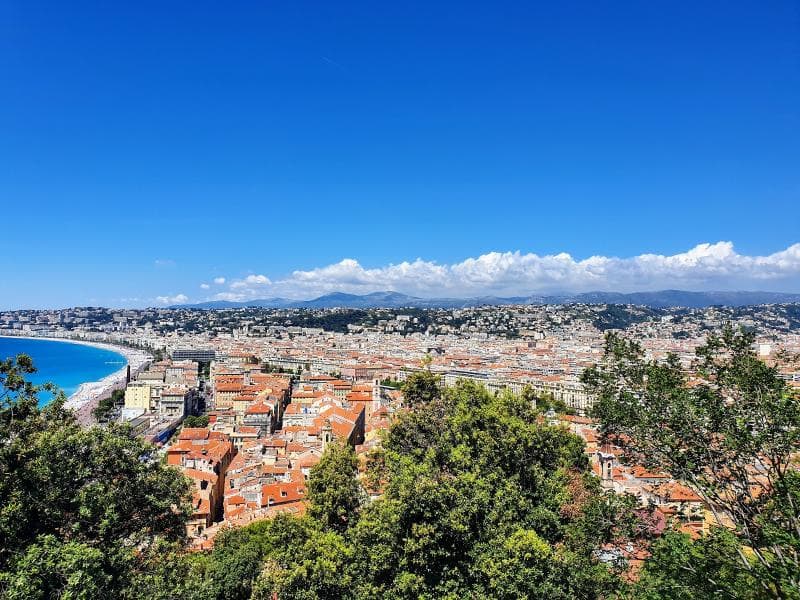
Explore the ancient ruins on Colline Du Château in Nice, France. Uncover centuries of history, from Greek settlement to a destroyed medieval castle. Enjoy panoramic views and archaeological insights.
Overview
Perched majestically above the vibrant city of Nice, France, the Colline du Château, or Castle Hill, offers far more than just breathtaking panoramic views. This historic promontory is home to the evocative ‘Ruins,’ the remnants of a powerful medieval fortress and the birthplace of the city itself. While no complete castle stands today, the vestiges tell a compelling story of centuries of strategic importance and dramatic events. Visitors can explore archaeological excavations, ancient defensive walls, and the foundations of an early Christian cathedral, all integrated into a sprawling park that blends nature with profound historical significance.
History & Cultural Background
The history of Colline du Château stretches back to ancient times, with evidence of human occupation dating to the Neolithic period, around 3000 BC. By the 4th century BC, Greek settlers from Massalia (modern-day Marseille) established a trading post here, naming it Nikaia, meaning 'victory' [7, 16]. The hill's natural freshwater spring and strategic position overlooking the sea made it an ideal settlement location. By the 11th century, it had evolved into a formidable citadel, featuring a medieval castle, a grand cathedral, and a thriving walled village [3, 7].
This impressive fortress served as a crucial defensive stronghold for centuries, enduring numerous sieges. Notable attacks included the Ottoman siege in 1543 and repeated assaults by French troops from 1691 to 1705 [5, 9]. The castle was renowned for its impregnability, yet its fate was sealed during the War of the Spanish Succession. After French forces captured Nice in 1705, King Louis XIV, determined to prevent its recapture and use by enemies, ordered the complete demolition of the fortress in 1706, famously stating 'so that nothing remains.' [3, 5]. The destruction was thorough, dismantling the castle, cathedral, and fortifications stone by stone [10]. For over a century, the hill remained largely in ruins until the 19th century when it was transformed into the beautiful public park that visitors enjoy today [4, 23]. Archaeological excavations continue to unearth new insights, particularly around the remains of the early Christian and medieval cathedral, dating from the 5th to the 13th century [12, 23].
What Makes It Special
The Ruins of Colline du Château are special because they offer a tangible connection to Nice's deep past, layer upon layer of history openly revealed within a serene natural setting. Unlike reconstructed historical sites, these ruins bear the authentic scars of time and conflict. Visitors can trace the outlines of ancient defensive walls, walk among the excavated foundations of the Sainte-Marie Cathedral, whose origins go back to the 5th century, and observe fragments of military architecture that once formed part of the imposing citadel [10, 23, 24]. The site also features the Bellanda Tower, a 19th-century reconstruction built upon the base of the original 15th-century Saint Elmo tower, which was part of the castle's defenses and later destroyed by Louis XIV [23, 29]. The ongoing archaeological work further enhances its uniqueness, providing new discoveries and contributing to our understanding of the city's complex heritage [12, 24].
Stories, Fun Facts & Local Details
- Louis XIV's Decree: The deliberate and thorough destruction of the castle by Louis XIV in 1706, with the directive 'so that nothing remains,' is a powerful historical detail that explains why there is no full castle today [5, 35].
- The Elevator's Past: The convenient elevator that now carries visitors up the hill was ingeniously built into a former well. This well supplied water to the city during past sieges, including the Nazi occupation in 1943 [5, 11].
- Catherine Segurane: Legend tells of Catherine Segurane, a local washerwoman who, during the 1543 Ottoman siege, bravely used her laundry bat to repel an enemy soldier, rallying the city's defenders [7].
- The Noon Cannon: A unique tradition, a cannon is fired precisely at noon each day from Castle Hill. This custom dates back to the 19th century when a Scottish aristocrat living in Nice arranged for a daily cannon shot to remind his wife it was lunchtime [11, 14].
- Artistic Connections: The reconstructed Bellanda Tower once served as a residence for the famed French composer Hector Berlioz, where he composed works such as 'Le Roi Lear' [11, 23, 29].
Visitor Perspective
Today, the Ruins on Colline du Château offer a contemplative and enriching experience for any traveler. As you wander through the expansive park, the remnants of the past appear amidst lush greenery and shaded pathways. Interpretive panels provide context, allowing you to visualize the once-grand structures and understand the lives lived within these ancient walls. The site provides a profound sense of stepping back in time, offering not just archaeological marvels but also unparalleled panoramic views of the Baie des Anges, the Old Town, and the Port of Nice [2, 10, 19]. It's a place where history, natural beauty, and a tangible sense of Nice's enduring spirit converge, inviting quiet reflection on the city's tumultuous yet resilient past.
Coordinates: 7.28049, 43.69631
View on Google Maps💬 How Travelers Describe This Place
Based on community votes
Must See
950Beautiful
287Photogenic
255Unique
231Interesting
86
Traveler Stories
Discover memorable experiences shared by travelers who have visited this place.
No traveler stories yet.
Be the first traveler to share what made this place memorable.

Tour
By
Spot
Discover amazing places around the world. Your journey starts here.
Explore
© 2026 TourBySpot. All rights reserved.