Rudaki Statue
Dushanbe, Tajikistan
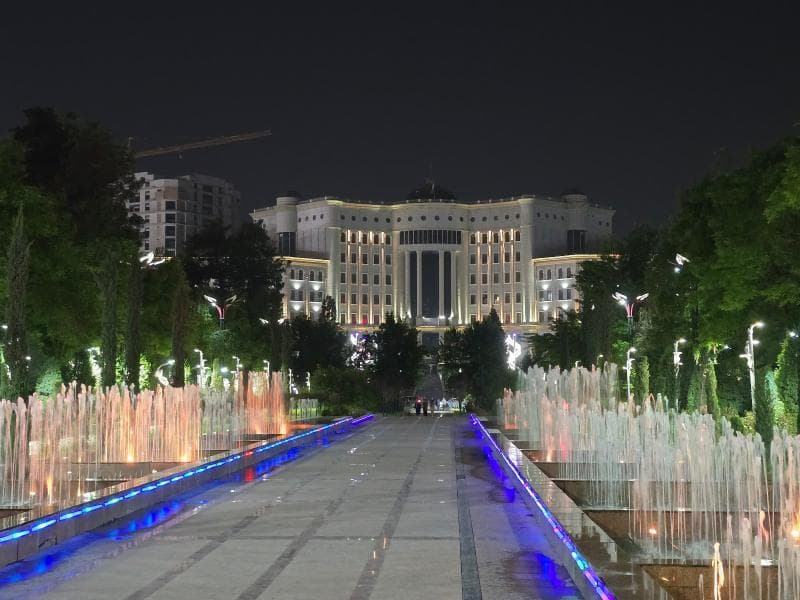
Discover the Rudaki Statue in Rudaki Park, Dushanbe, Tajikistan – a tribute to the 'father of Persian poetry' amidst a serene urban oasis. Explore history, culture, and beauty.
Overview
Rudaki Park, nestled in the heart of Dushanbe, Tajikistan's capital, stands as a verdant oasis and a significant cultural landmark. This meticulously landscaped urban park is named in honor of Abu Abdullah Rudaki, a revered Persian poet considered the founder of classical Persian literature. The park's central feature, the Rudaki Statue, pays homage to his enduring legacy, serving as a focal point for both local residents and curious travelers exploring Tajikistan's rich heritage.
The park offers a harmonious blend of natural beauty and cultural significance, with its wide pedestrian paths, mature plane trees, and vibrant rose gardens providing a serene escape from the city bustle. It is a place where history and modernity intertwine, inviting visitors to reflect on the profound influence of a poet whose words continue to resonate across centuries.
History & Cultural Background
Abu Abdullah Jafar ibn Muhammad Rudaki, born around 858 AD in Panjrud village, near Panjakent, is widely celebrated as the 'father of Persian poetry' and the 'father of Tajik literature'. He was a pioneering figure, being among the first known poets to compose verses in Neo-Persian, thus playing a pivotal role in shaping the literary traditions of the region. Rudaki served as a court poet to the Samanid rulers, most notably under Emir Nasr II, where he led an influential poetic circle for several decades.
His vast body of work, though largely lost over time, is believed to have comprised an astonishing 180,000 bayts (verses), with approximately 1,000 lines surviving today. Rudaki's mastery of language and metaphor significantly influenced the development of Persian and Tajik poetry for centuries to come. The park itself, once known as Lenin Park during the Soviet era, underwent extensive restructuring and was renamed Rudaki Park in 2007, solidifying its dedication to this national icon.
What Makes It Special
The Rudaki Statue is an impressive monument that commands attention at the heart of the park. While some descriptions depict Rudaki seated with a book, others portray him standing atop a tall, grey pedestal, leaning lightly on a cane, a detail often linked to traditions about his blindness in later life. The statue is frequently described as being made of gleaming white marble, standing out against the deep green cypress trees. A striking feature is the large, decorative arch behind the statue, adorned with colorful mosaics arranged in a rainbow-like form, incorporating sun and star motifs that symbolize light, knowledge, and creativity.
Beyond the statue, Rudaki Park is renowned for its vibrant musical fountains, which come alive in the evenings with synchronized light and music shows, offering a captivating spectacle for visitors. The park also boasts beautifully manicured rose gardens, shady areas provided by mature plane trees, and a collection of trees from across the globe, contributing to its reputation as Dushanbe's 'green heart'.
Stories, Fun Facts & Local Details
Rudaki's life is steeped in legend; he is said to have been blind, a detail that only adds to the mystique of his profound poetic insight. Despite this, his ability to compose evocative poems resonated deeply with his audiences. In a remarkable effort to honor his legacy, anthropologists in 1956, using Rudaki's skull found at his burial site in Panjrud, reconstructed his facial features, resulting in a bronze bust of the legendary poet.
Rudaki is not merely a historical figure but a cornerstone of Tajik national identity. His name graces various institutions, avenues, and districts throughout Tajikistan, and September 22nd is celebrated as Rudaki Day. The park serves as a daily gathering place for Dushanbe residents, where families stroll, elderly men play chess, and couples enjoy the cool evenings under soft lights, highlighting its role as a living part of the city's social fabric.
Visitor Perspective
Visiting the Rudaki Statue and Park offers a unique insight into Tajikistan's cultural soul. Entry to the park is free, making it an accessible attraction for all. The atmosphere is generally calm and contemplative during the day, ideal for leisurely strolls amidst the lush greenery and vibrant flowerbeds.
Evenings, especially on weekends, transform the park with the lively musical fountain shows, drawing crowds who enjoy the spectacle and the refreshing mist. The park is centrally located on Rudaki Avenue, easily reachable on foot from many hotels or by local transport. It is a perfect spot to relax, take photographs, and immerse oneself in the everyday life of Dushanbe, gaining a deeper appreciation for the poet who shaped a nation's literary voice.
Coordinates: 68.78356612489027, 38.57621873551088
View on Google Maps💬 How Travelers Describe This Place
Based on community votes
Unique
623Photogenic
545Interesting
343Beautiful
302Must See
88
Traveler Stories
Discover memorable experiences shared by travelers who have visited this place.
No traveler stories yet.
Be the first traveler to share what made this place memorable.

Tour
By
Spot
Discover amazing places around the world. Your journey starts here.
Explore
© 2026 TourBySpot. All rights reserved.