Royal Palace
Budapest, Hungary
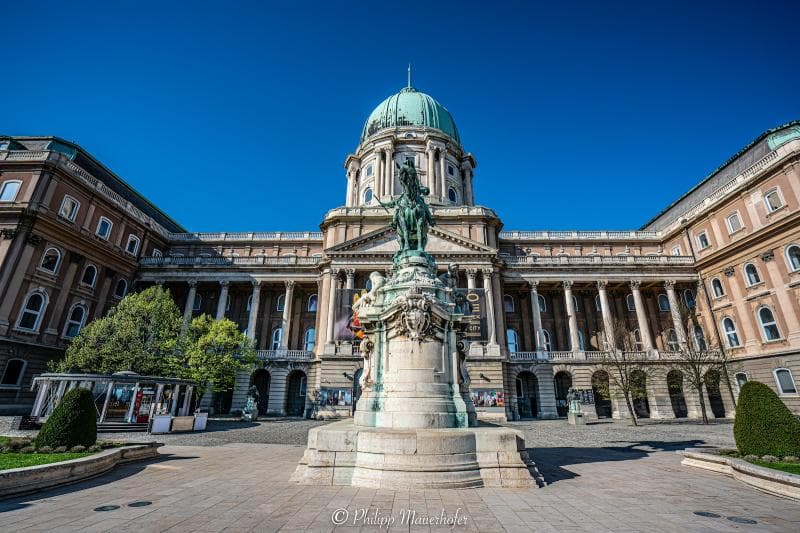
Explore Budapest's Royal Palace within Buda Castle. Discover Hungarian history, art at the National Gallery and History Museum, and stunning Danube views.
Overview
Perched majestically atop Castle Hill, the Royal Palace stands as the crowning jewel of Buda Castle in Budapest, Hungary. This historic complex, a UNESCO World Heritage site, is more than just a former royal residence; it is a vibrant cultural hub offering a profound journey through Hungarian history and art. From its commanding position, the palace offers breathtaking panoramic views of the Danube River, the Chain Bridge, and the Pest side of the city, making it an essential stop for any curious traveler.
Today, the sprawling Baroque palace houses several significant national institutions, including the Hungarian National Gallery, the Budapest History Museum, and the National Széchényi Library. While its courtyards are freely accessible around the clock, the museums within invite visitors to delve deeper into Hungary's rich past and artistic heritage.
History & Cultural Background
The story of the Royal Palace is deeply intertwined with Hungary's turbulent history, marked by numerous destructions and subsequent reconstructions. The first palace on Castle Hill was initiated by King Béla IV of Hungary between 1247–1265, following the devastating Mongol invasion. This initial fortification gradually expanded, with the oldest parts of the present-day palace dating back to the 14th century, built by Prince Stephen.
The palace flourished significantly under King Sigismund in the 15th century, becoming one of Europe's largest Gothic palaces, and later embraced Renaissance influences under King Matthias Corvinus. However, the Ottoman occupation in 1541 led to the palace's decline and partial use as barracks and storage. The medieval palace was largely destroyed during the 1686 siege when Christian forces recaptured Buda.
A Baroque palace, smaller than its medieval predecessor, began construction in the early 18th century, expanding significantly by the late 19th century under architects Miklós Ybl and Alajos Hauszmann. This period saw the palace transform into one of Europe's grandest royal residences. Tragically, it suffered severe damage during World War II's Siege of Budapest. Post-war reconstruction, largely in a simplified Baroque style, rebuilt the palace to house the cultural institutions it hosts today.
What Makes It Special
What sets the Royal Palace apart is its remarkable ability to blend millennia of history with contemporary cultural vibrancy. It's not just a single building but a complex narrative told through its architecture and the institutions it houses. The Budapest History Museum, located in Building E, provides a fascinating look into the city's past, including unearthed rooms of the medieval royal palace.
The Hungarian National Gallery, occupying several wings, showcases a comprehensive collection of Hungarian art from the 11th century to the present day, including medieval stonework, Gothic sculptures, and 19th-century paintings. Meanwhile, the National Széchényi Library holds Hungary's national collection of books and manuscripts. This tripartite function ensures that the palace remains a living entity, constantly engaging with its past, present, and future.
Its location on Castle Hill, a UNESCO World Heritage site, also contributes to its allure, offering not only historical depth but also unparalleled views across the city, reinforcing its status as a symbol of national identity and resilience.
Stories, Fun Facts & Local Details
The Royal Palace is rich with fascinating tales. One such detail greets visitors at the Corvinus Gate: a large raven holding a golden ring in its beak. This symbolizes King Matthias Corvinus, whose name is said to be derived from 'corvus,' the Latin word for raven. Another intriguing aspect is that despite its grand appearance, the palace has been destroyed and rebuilt at least half a dozen times, each iteration adding new layers to its story. During World War II, it served as the last refuge for German troops during the Siege of Budapest, enduring immense damage.
While the palace's lavish royal interiors were largely lost during the wars, the painstaking reconstruction efforts have brought some of its grandeur back, notably the opulent St. Stephen's Hall. This hall can only be visited via guided tours, offering a rare glimpse into what the palace might have looked like during its imperial heyday. The castle's courtyards have even served as backdrops for popular culture, such as Katy Perry's 2010 music video 'Firework.'
Visitor Perspective
Exploring the Royal Palace offers a truly immersive experience. While the surrounding courtyards and grounds are open 24/7 and free to explore, providing ample opportunities for stunning photographs and relaxed strolls, the cultural institutions within have specific operating hours and admission fees. The Hungarian National Gallery and the Budapest History Museum are typically open from Tuesday to Sunday, often from 10:00 AM to 6:00 PM, though it's always wise to check their official websites for the most current information.
Access to Castle Hill is convenient, with options like the historic Castle Hill Funicular from Clark Ádám Square, regular bus services (e.g., bus 16 from Deák Ferenc Square), or a pleasant, albeit steep, walk from the Chain Bridge. Spring and autumn are often recommended as the best times to visit, offering pleasant weather and fewer crowds. A visit here is not just about seeing a building; it's about connecting with the soul of Budapest and understanding its journey through time.
Coordinates: 19.03972, 47.49611
View on Google Maps💬 How Travelers Describe This Place
Based on community votes
Must See
545Unique
211Photogenic
123Interesting
74Beautiful
20
Traveler Stories
Discover memorable experiences shared by travelers who have visited this place.
No traveler stories yet.
Be the first traveler to share what made this place memorable.

Tour
By
Spot
Discover amazing places around the world. Your journey starts here.
Explore
© 2026 TourBySpot. All rights reserved.