Rosenkrantz Tower
Bergen, Norway
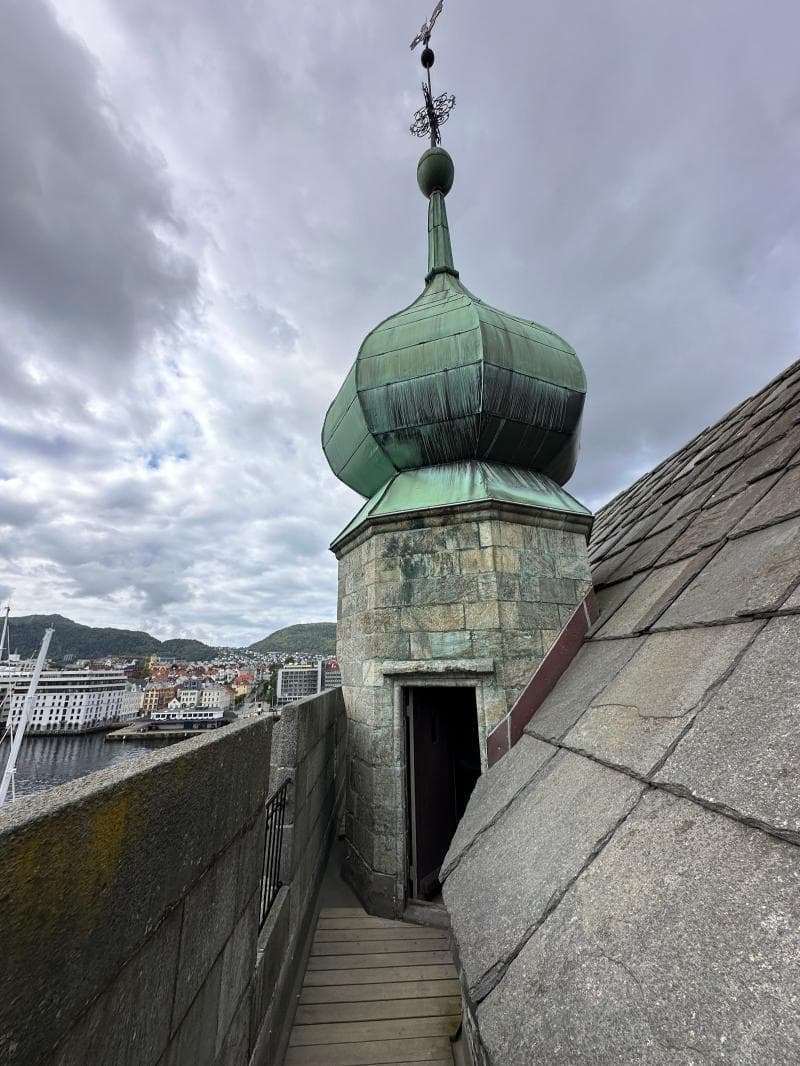
Explore Rosenkrantz Tower, a historic Renaissance monument within Bergenhus Fortress, Bergen, Norway. Discover its royal history, dungeons, and panoramic views.
Overview
Perched majestically at the entrance to Bergen's harbor, within the historic Bergenhus Fortress, stands the Rosenkrantz Tower. This formidable structure, a cornerstone of Norway's rich medieval and Renaissance past, offers a captivating glimpse into centuries of royal power, defensive strategy, and daily life. It's not just a tower; it's a layered tapestry of Norwegian history, combining the functionalities of a royal residence, a fortified stronghold, a grim dungeon, and a strategic cannon platform, all overlooking the vibrant city and its bustling port.
History & Cultural Background
The origins of the Rosenkrantz Tower stretch back to the 13th century, with its innermost core dating to the 1270s. This early medieval keep was constructed during the reign of King Magnus the Lawmender (Magnus Lagabøte) and was an integral part of the royal castle when Bergen served as Norway's capital. It notably served as a residence for King Eirik Magnusson, the last monarch to hold court in Bergen before the capital shifted.
However, the tower as we largely see it today is the result of extensive reconstruction and expansion during the 1560s. This significant transformation was commissioned by the Danish governor of Bergenhus Fortress, Erik Rosenkrantz, from whom the tower derives its present name. Under his direction, with the expertise of Scottish stonemasons and architects, the tower was dramatically reshaped to include residential quarters for the governor, powerful cannon positions on its upper floors, and notorious dungeons at its base. This Renaissance-era expansion served as a stark symbol of Denmark's growing control over Norway during the union period.
Over the centuries, the tower adapted to various roles, from a royal seat to a military base, and even a gunpowder magazine from the 1740s until the 1930s. Its tumultuous history saw a major setback on April 20, 1944, when an ammunition ship exploded in Bergen harbor, severely damaging the tower. Following extensive post-war restoration efforts, the Rosenkrantz Tower was reopened to the public in 1966, allowing visitors once again to explore its storied past.
What Makes It Special
The Rosenkrantz Tower is widely regarded as one of Norway's most important Renaissance monuments, showcasing a unique architectural blend of its Gothic medieval foundations and the later Renaissance additions. Its construction reveals layers of history, where each era left an indelible mark on its stone walls, reflecting evolving military technology and political power. Its strategic placement at the harbor's edge not only provided a formidable defense but also offered a commanding view, historically asserting authority over Bergen's trade and its often-influential foreign merchants.
A visit here is a journey through these historical layers, from the chilling depths of its ancient dungeons, which held prisoners well into the 19th century, to the spacious governor's chambers and the panoramic rooftop. The ascent itself is an experience, climbing through narrow, winding staircases that speak to the tower's original design as a functional, defensive structure, rather than a comfortable palace.
Stories, Fun Facts & Local Details
The tower's name, Rosenkrantz, immortalizes Governor Erik Rosenkrantz, whose ambition and influence transformed the structure into its present form. It's a name that resonates beyond Norway, as the noble Rosenkrantz family is also known through William Shakespeare's famed play, 'Hamlet.'
Imagine the stark contrast between the royal banquets held in the adjacent Håkon's Hall and the grim reality of the Rosenkrantz Tower's dungeons, which housed less fortunate individuals. The cellar, a chilling remnant of its past, served as a prison well into the 19th century, echoing tales of confinement and despair.
Further up, the cannon positions highlight its military significance, designed to guard the city from both external threats and to project power towards the city itself, particularly towards the Hanseatic merchants of Bryggen. For many decades, it ceased its defensive role to store gunpowder, a testament to its enduring structural integrity. Today, the tower, along with the broader Bergenhus Fortress area, often hosts cultural events, bringing new life to these ancient grounds.
Visitor Perspective
Stepping inside the Rosenkrantz Tower is to step directly into history. As a museum, it invites curious travelers to explore its various levels, each offering a unique perspective. The self-guided tour allows you to wander through ancient chambers, discover informative exhibitions that detail medieval life, and even delve into stories like the witch trials of Anne Petterpeder.
For the adventurous, the climb up the narrow, often dimly lit, and uneven stone staircases is part of the authentic experience. It's a physical reminder of the tower's age and original purpose. The reward at the top is immense: breathtaking, panoramic views of Bergen, its bustling harbor (Vågen), and the surrounding landscapes. You can almost feel the centuries of history beneath your feet, imagining kings, governors, and soldiers who once stood on the very same battlements.
Coordinates: 5.31833, 60.39903
View on Google Maps💬 How Travelers Describe This Place
Based on community votes
Unique
996Interesting
726Photogenic
717Must See
494Beautiful
193
Traveler Stories
Discover memorable experiences shared by travelers who have visited this place.
No traveler stories yet.
Be the first traveler to share what made this place memorable.

Tour
By
Spot
Discover amazing places around the world. Your journey starts here.
Explore
© 2026 TourBySpot. All rights reserved.