Roman Columns
Split, Croatia
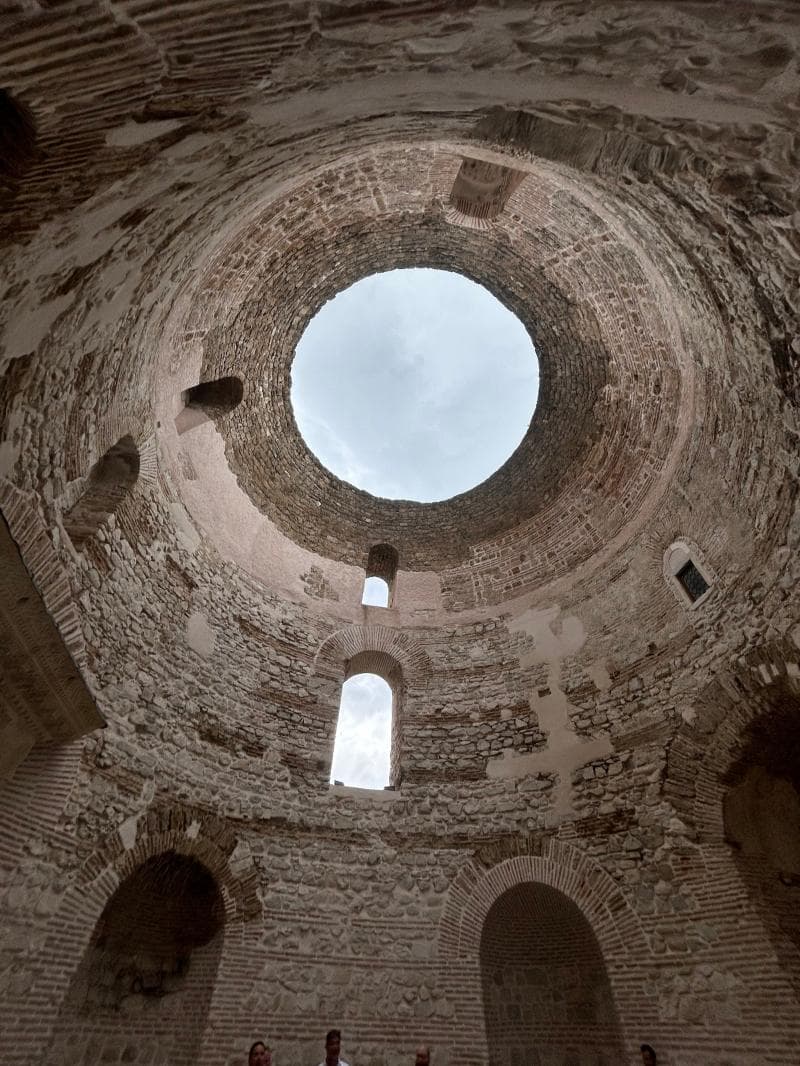
Explore the iconic Roman Columns of Peristyle Square in Split, Croatia, an ancient heart of Diocletian's Palace, rich in history and culture.
Overview
Stepping into Peristyle Square in Split, Croatia, is like walking onto a stage set by history. At its heart stand the magnificent Roman Columns, silent witnesses to nearly two millennia of human activity. This grand courtyard, an integral part of Diocletian's Palace, serves as a central meeting point and a vibrant public space, where ancient architecture seamlessly blends with modern daily life. The columns, with their striking appearance and historical depth, immediately transport visitors to the grandeur of the Roman Empire.
Originally conceived as the formal northern entrance to Emperor Diocletian's private apartments, the Peristyle, and its prominent columns, symbolized the power and prestige of the imperial residence. Today, it remains a focal point for visitors and locals alike, offering a tangible connection to Split's rich past.
History & Cultural Background
The Roman Columns of Peristyle Square are relics of Emperor Diocletian's retirement palace, constructed between approximately 295 and 305 AD. This monumental complex was not just a home but a fortified residence, reflecting a blend of imperial villa and military fortress architectural styles. Diocletian, a Roman Emperor who ruled from 284 to 305 AD, was born near Split and chose this location for his elaborate retreat. The Peristyle was designed for ceremonial purposes, a place where Diocletian, revered as a living son of Jupiter, would make public appearances before his subjects, who would approach him with ritualistic reverence.
Over centuries, as the Roman Empire faded, the palace transformed. In the 7th century, refugees from nearby Salona found sanctuary within its walls, gradually adapting the ancient structures into a living city. Diocletian's mausoleum became the magnificent Cathedral of St. Domnius, and a temple dedicated to Jupiter was converted into a baptistery. This continuous habitation has made Diocletian's Palace, and by extension Peristyle Square, a unique UNESCO World Heritage Site since 1979, embodying layers of history and culture within its ancient stones.
What Makes It Special
The defining feature of Peristyle Square is undoubtedly its majestic Roman Columns. Many of these colossal columns are crafted from striking red granite, specifically Aswan granite, which was meticulously imported from Egypt. Diocletian's choice of this exotic material was deliberate; it was the same prestigious stone used in the grand imperial monuments of Rome and Alexandria, signaling that his palace was not a mere provincial dwelling but an imperial center of the Roman world. Transporting these massive, multi-tonne columns by ship up the Adriatic and lifting them into place was an immense undertaking, a testament to Diocletian's vision and resources.
These impressive columns, crowned with Corinthian capitals, frame the square, creating a dramatic architectural statement. Among them, a 3500-year-old black granite sphinx, also brought from Egypt by Diocletian, stands guard, adding an element of ancient mystique and global reach to the Roman setting. The square's architectural details also feature local limestone from Brač island, alongside marble from Greece, showcasing a blend of materials chosen for both aesthetic impact and structural integrity.
Stories, Fun Facts & Local Details
Imagine the spectacle of Emperor Diocletian appearing beneath the central architrave, his scarlet cloak on display, as his subjects knelt before him. This was not just a square but a stage for imperial theater. The red granite columns were carefully selected to emphasize this ceremonial function, as purple, and by extension deep red, became the imperial color during Diocletian's reign.
A poignant observation by Pope John Paul II, 'Dear God, how many feet have stepped through here,' beautifully encapsulates the enduring legacy and continuous flow of life through the Peristyle. The square's exceptional acoustics are another intriguing detail, often transforming it into an open-air venue for classical concerts, opera performances, and theatrical plays, particularly during the Split Summer Festival. This allows the ancient stones to resonate with contemporary culture, offering a unique sensory experience.
Today, the steps surrounding the Peristyle are a favorite spot for locals and travelers to sip coffee, relax, and soak in the atmosphere. This informal gathering transforms a historical monument into a living, breathing part of the city's social fabric, where one might even encounter performers dressed as Roman soldiers or enjoy live guitar music, further blurring the lines between past and present.
Visitor Perspective
Visiting the Roman Columns in Peristyle Square offers a profound connection to history. It's an opportunity to pause, sit on the ancient steps, and observe the layers of time etched into the stone. The square acts as a dynamic hub, constantly bustling with activity, yet maintaining an aura of ancient majesty. It is often the starting point for exploring the wider Diocletian's Palace, providing a grand introduction to the architectural wonders and narrow lanes that lie within.
As you stand surrounded by these imposing columns, gazing at the ancient sphinx, you gain a sense of the immense history that has unfolded here. It's a place where the past feels remarkably present, allowing curious travelers to immerse themselves in the stories of emperors, citizens, and the continuous evolution of Split. This blend of historical significance and lively atmosphere makes Peristyle Square an unforgettable experience for anyone exploring Croatia.
Coordinates: 16.4402, 43.5085
View on Google Maps💬 How Travelers Describe This Place
Based on community votes
Interesting
539Beautiful
424Photogenic
251Unique
234Must See
30
Traveler Stories
Discover memorable experiences shared by travelers who have visited this place.
No traveler stories yet.
Be the first traveler to share what made this place memorable.

Tour
By
Spot
Discover amazing places around the world. Your journey starts here.
Explore
© 2026 TourBySpot. All rights reserved.