Riverside Paths
Vilnius, Lithuania
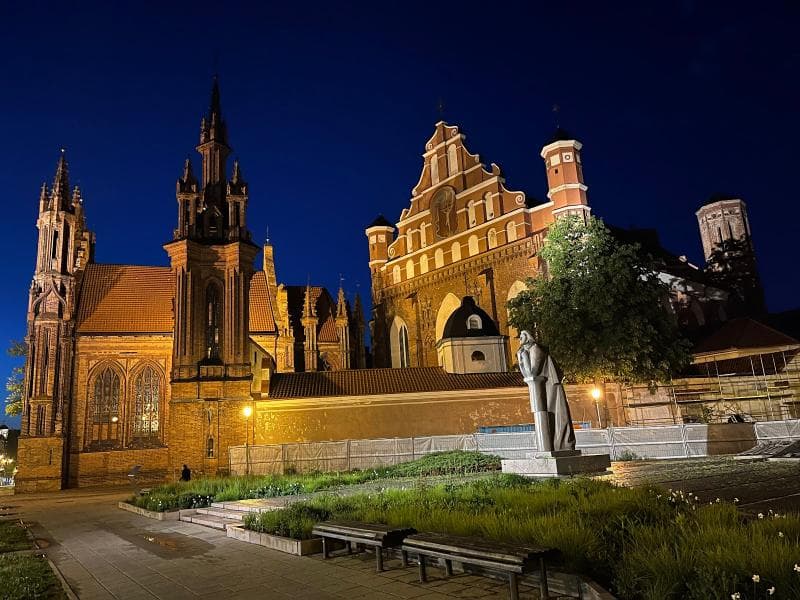
Discover the 'Riverside Paths' near St. Anne’s Church in Vilnius, Lithuania, offering stunning views and a unique perspective of this Gothic masterpiece.
Overview
While the architectural masterpiece of St. Anne’s Church in Vilnius, Lithuania, draws all eyes to its soaring brick facade, a unique perspective awaits visitors who explore the surrounding 'Riverside Paths'. These pathways, tracing the picturesque Vilnia River, do not exist literally 'inside' the church, but rather offer an intimate connection to its grandeur from the scenic banks of the waterway that flows beside it. The church, a stunning example of Flamboyant and Brick Gothic styles, stands proudly on the right bank of the Vilnia River, forming an integral part of the city's UNESCO World Heritage-listed Old Town. Strolling along the river provides not only refreshing views of nature but also unparalleled vistas of St. Anne’s and the adjacent Bernardine Church, revealing how this remarkable complex is woven into the urban and natural landscape of Vilnius. It's a place where history, architecture, and tranquil natural beauty converge, inviting a deeper appreciation of the city's heritage.
History & Cultural Background
St. Anne's Church boasts a rich history, dating back to the late 15th century when its current brick structure was erected between 1495 and 1500, consecrated in 1500. It replaced an earlier wooden church, which was destroyed by fire in 1419. The construction was initiated by King of Poland and Grand Duke of Lithuania Alexander I Jagiellon. The exterior of the church has remained remarkably unchanged since its completion, a testament to its enduring architectural brilliance. This iconic red-brick edifice is part of a larger ensemble that includes the much larger Gothic Church of St. Francis and Bernardine, along with a monastery. The entire complex is a significant part of Vilnius' Old Town, contributing to its designation as a UNESCO World Heritage Site. The river itself, the Vilnia, is believed to have influenced the naming of Vilnius and has long been a vital artery through the city, witnessing centuries of its development.
What Makes It Special
The true magic of the 'Riverside Paths' lies in the unique perspective they offer of St. Anne's Church. While the church's facade is a marvel up close, featuring 33 different types of clay bricks arranged in a dynamic, lace-like pattern, viewing it from across the Vilnia River provides an entirely different, expansive appreciation. From these paths, one can witness the church's full silhouette, its intricate Gothic arches, and its slender towers against the sky, often reflected in the river's calm waters. The church's distinctive red hue stands out beautifully against the surrounding greenery and the often contrasting Baroque architecture of the Old Town. The proximity of the Vilnia River also connects St. Anne's to other picturesque spots like Bernardine Park, enhancing the overall experience of this historic quarter.
Stories, Fun Facts & Local Details
One of the most enduring legends associated with St. Anne's Church involves Napoleon Bonaparte. During his 1812 campaign, he was reportedly so captivated by the church's beauty that he expressed a wish to carry it back to Paris 'in the palm of his hand'. This anecdote, while likely folklore, underscores the church's undeniable allure and its status as an architectural masterpiece. The church's construction utilized a novel approach to brickwork, employing a remarkable 33 different kinds of clay bricks to achieve its elaborate Flamboyant Gothic facade. This intricate detail makes it a subject of fascination for architects and historians alike. The surrounding 'Riverside Paths' along the Vilnia River are not merely for sightseeing; they are a part of Vilnius' vibrant outdoor life, enjoyed by locals for leisurely walks, cycling, and kayaking. It is also said that the patterns from the Columns of Gediminas, an important symbol of Lithuania, are echoed in the church's facade, offering a subtle nod to national heritage.
Visitor Perspective
For the curious traveler, exploring the 'Riverside Paths' in conjunction with a visit to St. Anne's Church is essential for a complete experience. Starting with an appreciation of the church's interior, with its Baroque altar and serene atmosphere, provides a historical and spiritual foundation. Then, stepping outside to wander along the Vilnia River offers a fresh, dynamic perspective of the church's exterior, particularly its famed facade. The paths are easily accessible, allowing for a tranquil stroll that provides numerous photo opportunities, especially when capturing the Gothic spires across the water. It’s a chance to witness the interplay of urban architecture with natural elements, to see how the river has cradled this historic complex for centuries. The experience of the 'Riverside Paths' allows visitors to slow down, as if practicing 'slow travel,' to truly absorb the intricate details and the timeless charm of St. Anne's Church, away from the immediate bustling crowds.
Coordinates: 25.29333, 54.68306
View on Google Maps💬 How Travelers Describe This Place
Based on community votes
Beautiful
804Unique
733Must See
563Interesting
404Photogenic
336
Traveler Stories
Discover memorable experiences shared by travelers who have visited this place.
No traveler stories yet.
Be the first traveler to share what made this place memorable.

Tour
By
Spot
Discover amazing places around the world. Your journey starts here.
Explore
© 2026 TourBySpot. All rights reserved.