Richard’s Castle
Kiev, Ukraine
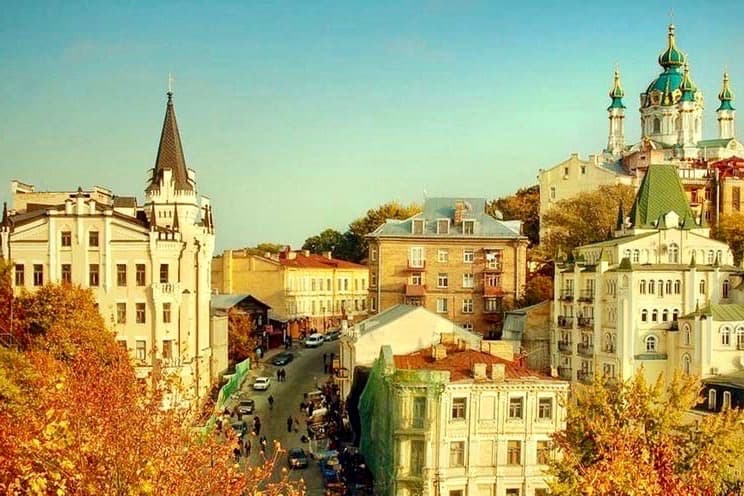
Explore Richard's Castle, a mysterious Neo-Gothic landmark on Andriyivskyy Descent in Kyiv, Ukraine, famed for its architecture and 'haunted' past.
Overview
Perched dramatically on the steep incline of Andriyivskyy Descent in Kyiv, Ukraine, stands a building often referred to as 'Richard’s Castle'. This captivating structure, with its distinctive Neo-Gothic architecture, is an immediate eye-catcher for anyone exploring the historic street. While its name conjures images of medieval European fortresses and legendary kings, Richard's Castle is not an ancient stronghold but rather a grand residential building erected in the early 20th century. Its fortress-like appearance, complete with towers, spires, and crenellated walls, has earned it a place in Kyiv's lore and a prominent spot in the city's architectural landscape, drawing curious travelers to its mysterious facade.
History & Cultural Background
Richard's Castle, located at Andriyivskyy Descent 15, was constructed between 1902 and 1904. It was originally commissioned by a wealthy contractor named Dmytro Orlov, who intended it as a profitable apartment building, reflecting the booming urban development in Kyiv at the turn of the century.
The building's design is notably English Neo-Gothic, and it is believed that the plans were adapted from a published design for a Saint Petersburg building by architect R. Marfeld, or designed by engineer Krauss. Its monumental facades feature castle-palace architectural elements, including various towers, steeples, and cogged walls, which set it apart from other structures in the area.
The construction, however, was not without controversy; a significant scandal arose because Orlov reportedly failed to clear the building's construction with city authorities. Tragically, Orlov died mysteriously in 1911 while working on a railway project in the Russian Far East. His widow, left with five children, was forced to sell the building to settle debts.
Andriyivskyy Descent itself is one of Kyiv's most historic streets, often likened to the 'Montmartre of Kyiv'. It connects the ancient Upper Town with the commercial Podil district and is renowned for its art galleries, souvenir shops, and vibrant atmosphere. The street also features other significant landmarks, such as the baroque St. Andrew's Church and the house of celebrated writer Mikhail Bulgakov.
What Makes It Special
The primary allure of Richard's Castle lies in its distinctive and somewhat anachronistic architecture. Its Neo-Gothic style, a deliberate nod to medieval castles, makes it a unique architectural anomaly on Andriyivskyy Descent. The building's intricate brickwork, pointed turrets, and defensive-looking elements create a dramatic silhouette against the Kyiv skyline.
Beyond its striking appearance, the castle's location on the steep Vozdyhalnitsa mountain offers breathtaking panoramic views of the Podil district and the Dnieper River. This strategic placement enhances its imposing presence and contributes to its photogenic charm.
Moreover, the building holds a significant cultural legacy. After the resolution of the 'ghostly' mysteries that once plagued it, Richard's Castle became a sought-after residence for Kyiv's artistic community. Painters, poets, and musicians transformed its apartments into creative studios, fostering a bohemian atmosphere that added to its mystique.
Stories, Fun Facts & Local Details
The name 'Richard’s Castle' was not its original designation. It was given by the renowned Ukrainian writer Viktor Nekrasov in the 1960s, who was captivated by its fortress-like appearance and its resemblance to the castles described in Walter Scott's novel 'Ivanhoe', featuring Richard the Lionheart. Some accounts also suggest it was named after a long-term resident, Richard Yurevich. Regardless, the name stuck, adding a layer of romantic fantasy to the building.
Perhaps the most famous tales associated with the castle involve its supposed haunting. Tenants frequently reported eerie howling, moaning, and other unsettling sounds emanating from within the walls, particularly during windy weather. These mysterious noises gave rise to widespread rumors of evil spirits and a 'cursed' house, frightening residents and even leading some to believe the building was possessed.
The mystery was eventually solved by Stepan Holubiev, a professor at the Kyiv Theological Academy and a resident of the building. He discovered that the strange sounds were caused by eggshells and other small objects intentionally placed in the chimneys and ventilation systems by disgruntled construction workers. These objects acted as resonators, creating the terrifying noises when air passed through them – a clever, albeit unsettling, act of revenge for alleged underpayment.
Over the years, Richard's Castle attracted many prominent figures, particularly artists. Famous Ukrainian painters like F. Krasnitskiy, I. Makushenko, and G. Diadchenko were among its residents, turning its halls into vibrant cultural spaces.
Today, the building largely stands empty. There have been several attempts and plans to renovate it, with some aiming to convert it into a luxury hotel. However, these efforts have largely been unsuccessful, leaving the iconic structure in a state of ongoing, or sometimes stalled, reconstruction.
Visitor Perspective
For visitors to Kyiv, Richard's Castle remains a must-see landmark on Andriyivskyy Descent. While access to the interior is typically restricted due to its private ownership and current state, its exterior offers a fantastic photographic opportunity and a profound sense of historical intrigue.
The castle serves as a focal point within the broader experience of exploring Andriyivskyy Descent. A stroll along this cobblestone street allows travelers to immerse themselves in a lively atmosphere filled with street artists, musicians, artisan shops, and charming cafes, all while admiring the architectural grandeur of Richard's Castle from various vantage points.
Coordinates: 30.516014, 50.460159
View on Google Maps💬 How Travelers Describe This Place
Based on community votes
Unique
912Beautiful
820Must See
718Interesting
479Photogenic
181
Traveler Stories
Discover memorable experiences shared by travelers who have visited this place.
No traveler stories yet.
Be the first traveler to share what made this place memorable.

Tour
By
Spot
Discover amazing places around the world. Your journey starts here.
Explore
© 2026 TourBySpot. All rights reserved.