Revolution Displays
Vientiane, Laos
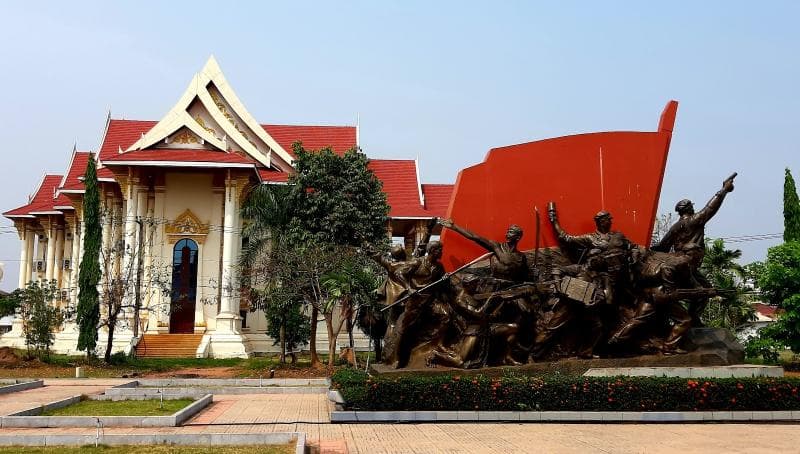
Explore the Revolution Displays at the Lao National Museum in Vientiane, Laos, delving into the nation's struggle for independence and modern history.
Overview
Within the heart of Laos's capital, Vientiane, lies the Lao National Museum, a vital institution dedicated to safeguarding and showcasing the nation's rich historical and cultural tapestry. While the museum itself spans from prehistoric times to the present, a significant and particularly compelling portion of its collection is dedicated to the country's turbulent modern history, often referred to as the 'Revolution Displays'. These exhibits immerse visitors in the story of Laos's struggle for independence and the establishment of the Lao People's Democratic Republic.
It's important for curious travelers to note that the Lao National Museum, which once occupied the historic French Governor's Mansion, relocated to a new, modern facility approximately six kilometers from central Vientiane in 2017. This move aimed to provide better preservation conditions and expanded exhibition spaces for its extensive collections.
History & Cultural Background
The origins of the current Lao National Museum are deeply intertwined with the country's revolutionary past. The institution was first established in 1980 as the 'Lao Revolutionary Exhibition Hall' in the former French Governor's Residence. This colonial building held historical significance itself, as it was where Laos officially declared independence from France on October 12, 1945. In 1985, it was formally renamed the 'Revolutionary Museum', before being upgraded to the 'Lao National Museum' in 2000.
The museum's initial focus, and a prominent theme that continues to this day, was to document and celebrate the Pathet Lao movement and the broader struggle against foreign intervention. The revolutionary narrative covers significant periods, including the French colonial era, the Japanese occupation, and especially the 'American War' (also known as the Secret War) and its profound impact on Laos. The collection culminates with the victory of the revolution and the establishment of the Lao People's Democratic Republic in 1975.
What Makes It Special
The 'Revolution Displays' at the Lao National Museum are not merely a collection of artifacts; they are a powerful narrative woven through photographs, documents, military equipment, and personal effects of revolutionary leaders. Visitors encounter a vivid portrayal of the Pathet Lao's fight, featuring weaponry used in the conflict, propaganda posters, and detailed accounts of key events. One of the most thought-provoking sections often highlights the legacy of unexploded ordnance (UXO) from the American War, serving as a stark reminder of the immense human cost of conflict.
The museum's presentation offers a unique perspective on these historical events, reflecting the official Lao viewpoint. This perspective is crucial for understanding the nation's identity and the foundations of its modern political system. The exhibits convey the deep resilience and determination of the Lao people in overcoming colonial rule and external pressures to forge their own path.
Stories, Fun Facts & Local Details
Wandering through the revolutionary exhibits, one might come across surprisingly personal items, such as the gun, briefcase, and even tea kettle said to belong to Comrade Kaysone Phomvihane, the leader of the Pathet Lao. These artifacts provide a tangible connection to the individuals who shaped Laos's destiny. The displays also feature poignant photographs of children being educated in underground caves during the intense bombing campaigns, illustrating the civilian population's struggle and adaptation.
A notable aspect of these displays, often commented on by international visitors, is the unapologetically nationalistic and sometimes anti-Western tone, particularly in older exhibits or labels. French colonizers are occasionally depicted as 'ogres' and Americans as 'imperialists', complete with images of protests and effigies. While this might be a stark contrast to narratives found elsewhere, it offers an unfiltered glimpse into how Laos remembers and teaches its history, providing invaluable insight into the collective memory of the nation. The narrative underscores the country's journey through immense hardship to achieve self-determination.
Visitor Perspective
A visit to the Lao National Museum, particularly its revolutionary sections, offers a profound educational experience for anyone seeking to understand modern Laos. While some older displays might exhibit signs of age, and English translations for all labels are a continuous project, the sheer volume and emotional weight of the artifacts and photographs communicate a powerful story. It provides essential context for the country's political evolution and national identity, which is often distinct from Western interpretations of the same historical periods.
Visitors are typically required to store bags and cameras in lockers at the entrance, ensuring a focused and respectful viewing experience. For those who want to move beyond the temples and scenic landscapes, dedicating a couple of hours to these Revolution Displays provides an unparalleled opportunity to connect with the enduring spirit of Laos.
Coordinates: 102.64313, 17.99948
View on Google Maps💬 How Travelers Describe This Place
Based on community votes
Must See
873Photogenic
521Unique
477Beautiful
422Interesting
157
Traveler Stories
Discover memorable experiences shared by travelers who have visited this place.
No traveler stories yet.
Be the first traveler to share what made this place memorable.

Tour
By
Spot
Discover amazing places around the world. Your journey starts here.
Explore
© 2026 TourBySpot. All rights reserved.